
Aviation News

Aviation News

FG Approves Establishment of Nigerian Aircraft Leasing Company

The federal government has approved the establishment of a Nigerian Aircraft Leasing Company, marking a major milestone in the ongoing transformation of the nation’s aviation sector. The Minister of Aviation and Aerospace Development, Festus Keyamo, said this significant development followed the conclusion of the Federal Executive Council (FEC) meeting held yesterday. The initiative entails the creation of a private-sector-led Special Purpose Vehicle (SPV), backed by the federal government, designed to provide sustainable and structured access to aircraft for domestic and regional airline operators. According to the minister, the establishment of the leasing company will fundamentally reshape aircraft acquisition in Nigeria and across Africa by offering a centralised, sovereign-backed platform through which airlines can access modern fleets. Keyamo in a statement issued yesterday by his SA Media and Communications, Tunde Moshood, said: “This initiative is a game-changer for our aviation industry. It eliminates the long-standing challenges Nigerian airlines face in accessing aircraft on competitive terms and positions the country as a hub for aviation financing in Africa.” He added that the new leasing framework will significantly enhance fleet access for Nigerian carriers, allowing them to acquire aircraft through a single, credible, government-backed entity rather than navigating the complexities of individual financing arrangements. According to him, this access will also be extended to operators across West Africa and the broader African continent. In terms of operational capacity, the initiative, he noted, is expected to strengthen the ability of local airlines to efficiently service domestic routes, reducing the frequency of flight cancellations and delays. It will also empower Nigerian carriers to better compete with international airlines that currently dominate the market. “Notably, the structure of the SPV ensures a zero-cost revenue model for the Federal Government. Through the Ministry of Finance Incorporated (MOFI), the government will hold equity and earn revenue without direct financial investment. Its primary obligation will be to provide sovereign guarantees to lessors and financiers, particularly in ensuring the repossession of aircraft when necessary. “The initiative has already generated strong investor confidence, with leading African financial institutions and international investors expressing keen interest in participating. Nigeria’s high passenger traffic volume and its strategic geographic position continue to make it an attractive destination for aviation investment.” Keyamo emphasised further that this approval aligns with the broader vision of the administration to deepen private sector participation, improve infrastructure, and position Nigeria as a leading aviation hub on the continent. “This is not just a policy decision; it is a strategic intervention aimed at unlocking growth, creating jobs, and ensuring long-term sustainability in our aviation ecosystem,” he added. “The establishment of the Nigerian Aircraft Leasing Company represents a bold step toward strengthening the aviation value chain, fostering regional connectivity, and enhancing Nigeria’s competitiveness in the global aviation market,” he concluded.

Aviation News

Aviation Fuel Hike Threatens 2026 Hajj Operations

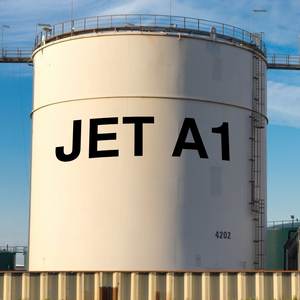
Stakeholders in Nigeria’s aviation sector have called on the Federal and State Governments to urgently intervene in the rising cost of aviation fuel, warning that the development could disrupt the successful airlift of pilgrims for the 2026 Hajj. The group, operating under the aegis of Concerned Aviation Stakeholders, said the sharp increase in the price of Jet A1 fuel poses one of the most serious logistical and financial challenges to Hajj operations in recent times. In a statement issued on Sunday, the President of the group, Alhaji Bukalti Gamawa, noted that the escalating cost of aviation fuel was already threatening the ability of airlines to transport thousands of Nigerian pilgrims to Saudi Arabia. He explained that most airlines engaged for the Hajj exercise rely on leased aircraft to meet capacity demands, saying that the surge in fuel prices has significantly eroded their profit margins. According to him, “Many airlines may be forced to operate at break-even or even at a loss after covering lease and operational costs. If urgent action is not taken, some may be unable to commence or sustain operations.” Gamawa stressed that although government subsidies for Hajj operations have been withdrawn, there was need for emergency measures such as pricing regulation, foreign exchange support, or strategic fuel supply arrangements to avert a crisis. He warned that without swift and coordinated intervention from government, regulators, airlines, and fuel marketers, the 2026 Hajj could witness unprecedented fare increases or even operational failure. Providing further insight, he noted that Jet A1 fuel, which sold for about ₦1,000 per litre during contract negotiations, now sells for as high as ₦3,000 per litre across major airports, representing a 200 percent increase. This, he said, has placed airlines under intense financial pressure. “For a single flight consuming about 70,000 litres of fuel, costs have risen from ₦70 million to as much as ₦196 million, creating an additional burden of over ₦100 million per flight,” he explained. Gamawa also highlighted the challenge of rising fuel costs in Saudi Arabia, where prices have increased from about 68 cents to $1.40 per litre, further compounding the financial strain on return flights. He added that while local interventions may ease the burden on outbound flights, airlines must still procure fuel at international market rates in foreign currency for return journeys.

Aviation News

Ibom Air warns of imminent flight reductions over skyrocketing aviation price

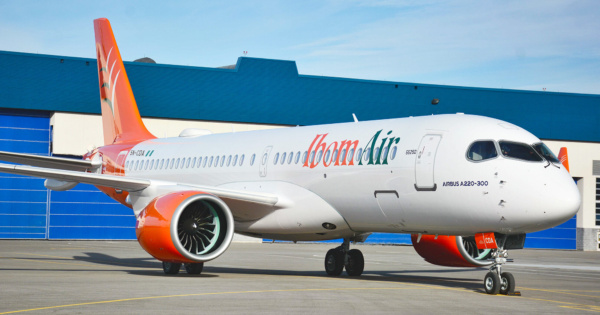
Ibom Air has warned that it may be forced to reduce its flight frequency in the coming days as the cost of aviation fuel reaches a breaking point. In a stark update released today, April 27, 2026, the airline described the current pricing situation as an “unprecedented crisis” that has become financially unsustainable for domestic carriers. According to a statement signed by Aniekan Essienette, group manager of Marketing and Communication, the cost of fuelling a single flight has more than tripled in just seven weeks. In January, the airline spent an average of N2.1 million per flight; as of April 26, that figure has surged to approximately N7.6 million—a staggering 350% increase since the beginning of March. The “Dangote Paradox” Despite the emergence of the Dangote Refinery, which now supplies over 95% of the country’s Jet A1 fuel, Ibom Air expressed bewilderment that local prices remain significantly higher than global averages. “Domestic airlines are baffled at why the price of aviation fuel in Nigeria has ballooned to this level, way above the rest of the world,” the statement read. The airline noted that while international carriers often reduce capacity to manage much smaller price hikes, Nigerian airlines have, until now, absorbed these massive losses out of patriotism and a desire to keep fares affordable. The airline, which operates a modern fleet of Bombardier CRJ 900s and Airbus A220s, emphasised that it can no longer maintain normal operations under these conditions. “It is clear to us that the current conditions are unsustainable,” Essienette stated. “We will have to take whatever ameliorating actions we can in the days ahead, including reducing our capacity if necessary.” The warning comes at a critical time for the industry. Beyond fuel prices, the sector is also facing a total shutdown by the Aviation Ground Handlers Association of Nigeria (AGHAN) over a separate N9 billion debt dispute with airlines. Ibom Air concluded with an urgent call to fuel marketers to reconsider their pricing models, warning that if the trend continues, airlines will soon be operating “just to pay for fuel and nothing else”.

Aviation News

NCAA raises concern over domestic airlines’ service failures

Nigeria Civil Aviation Authority (NCAA) has expressed concern over the growing number of passenger complaints among the indigenous airlines in the country. This came as aviation stakeholders called on the Federal Government to urgently intervene in the rising cost of aviation fuel, warning that the situation could threaten the successful airlift of pilgrims for the 2026 Hajj. The Director, Public Affairs and Consumer Protection, NCAA, Michael Achimugu, in a post in his verified X handle, said while there were challenges such as high jet fuel costs, bird strikes and other factors in the sector, the regulatory authority received the majority of complaints against just two airlines. He, however, remained silent on the names of the two airlines with the most passenger complaints of poor service. While insisting that operators must improve crisis management, Achimugu maintained that airlines must provide timely and accurate information to passengers and ensure prompt refunds and compensation where applicable. He said: “You cannot take money from passengers and refuse to refund. It gives us a bad image. Circumstances are as difficult for passengers as they are for operators, if not more so. When a disruption occurs, airline staff must be available to provide information and provide care. The behaviour of running away (sometimes due to fear of being attacked by passengers) has to be adjusted.” The director warned that failure to address the issues could erode public confidence in Nigeria’s aviation industry at a critical time, when the sector was recording notable progress. He further commended the Federal Government for its continued support of industry stakeholders. According to him, recent interventions have not only boosted airlines, but they have also strengthened other service providers, including local catering companies now patronised by international carriers. Achimugu noted that such support places a responsibility on operators to uphold service standards and avoid situations that could cast the government and regulators in a negative light.   He added that the NCAA had also worked to bridge the gap between regulators, airlines and passengers while ensuring greater awareness and compliance with aviation regulations. PRESIDENT of the Concerned Aviation Stakeholders, Bukalti Gamawa, in an appeal yesterday, said the sharp increase in Jet A1 prices poses a serious threat to the planned airlift of thousands of Nigerian pilgrims to the Kingdom of Saudi Arabia. He explained that the ongoing conflict involving the United States of America, Israel, and Iran drove up global oil prices, affecting economies and businesses worldwide. In Nigeria, the aviation industry has recorded more than a 300 per cent increase in aviation fuel prices, forcing some airlines to cut operations, and others to warn they might suspend services. Reacting, the aviation stakeholders urged immediate action to rescue the 2026 Hajj operation from “one of the toughest logistical and financial crises” in recent times, caused by the rising cost of aviation fuel. The stakeholders stated, “Many of the airlines contracted for the 2026 Hajj operations are expected to lease aircraft to meet capacity demands. With the current fuel price increase on both legs, much of their projected profit margin has already been wiped out. “In some cases, airlines may end up operating at break-even or even at a loss, effectively flying ‘for free’ after covering lease and operational expenses. If urgent action is not taken, some airlines may find it financially impossible to even commence operations from Nigeria or sustain return operations from Saudi Arabia.” The group’s president noted that although the federal and state governments no longer subsidise Hajj operations, stakeholders say urgent policy actions – such as price regulation, forex support, or special fuel arrangements – are needed to avert a crisis.

Aviation News

Flights delayed, rescheduled as jet fuel shortage deepens

Air travellers across Nigeria are facing growing frustration as a deepening shortage of aviation fuel, commonly known as Jet A1, continues to disrupt flight operations, causing widespread delays and uncertainty across major airports, Daily Trust can report. Airlines have warned that the persistent scarcity of fuel is affecting their ability to maintain schedules, with several flights either delayed, rescheduled, or, in some cases, cancelled at short notice. The situation has become more pronounced in recent days, leaving hundreds of passengers stranded and forcing many to reconsider travel plans. Amidst this development, the ground handling companies have threatened to withdraw their services to indigenous airlines over N9bn debt. Already, operators say the price of Jet A1 has ballooned by over 300 per cent since the start of the US-Israel war in Iran and the shutdown of the Strait of Hormuz, a waterway route responsible for one fifth of the global fuel supply. The operators under the aegis of Airline Operators of Nigeria (AON) had threatened to shut down operation last Monday but they were prevailed upon by the federal government to suspend the shutdown while a meeting was held with stakeholders spearheaded by the Ministry of Aviation and Aerospace Development on Wednesday last week. A follow-up meeting with oil marketers was also held on Thursday but as of the time of filing this report there was no relief to airlines over the acute shortage of aviation fuel. The only take away from the meeting was the approval of 30 per cent discount on debt owed by airlines to service providers while the airlines are seeking a total waiver on their indebtedness to the Federal Airports Authority of Nigeria (FAAN), Nigeria Civil Aviation Authority (NCAA), the Nigerian Airspace Management Agency (NAMA), among others. However, the scarcity of jet fuel and the hike in price is putting intense pressure on airline operations in a sector already grappling with high operating costs. The impact is evident at airports in Lagos, Abuja, and other key domestic routes, where passengers now face extended waiting times. Many travellers report spending hours at terminals with little clarity on departure times, while others have had flights rescheduled multiple times within the same day. A social media influencer at the weekend called out one of the airlines for allegedly issuing boarding passes when it knew there was no fuel. It was gathered that some of the operators have also begun to rationalise routes and reduce flight frequencies in a bid to manage limited resources. For instance, Air Peace slashed its London-Heathrow flight to three frequencies in response to the shortage. As the shortage persists, concerns are mounting that the aviation sector could face more severe disruptions if urgent steps are not taken to stabilise fuel supply. …Ground handlers threaten service withdrawal Meanwhile, domestic and international flight operations of indigenous airlines may be disrupted from Tuesday, following a seven-day ultimatum issued by the Aviation Ground Handlers Association of Nigeria (AGHAN) over an outstanding debt exceeding N9 billion by the airlines. Daily Trust reports that ground handling companies offer safety critical services including passenger check-in, baggage handling, refuelling coordination and ramp services to airlines. The ground handling companies are Skyway Handling Company of Nigeria (SAHCO) Plc; Nigerian Aviation Handling Nigeria (NAHCO) Plc, Butake Handling Company, Precision Handling Company Limited and Swissport Handling Company. A letter which was jointly signed by AGHAN Chairman and Vice Chairman, Olaniyi Adigun and Ahmed Bashir, respectively, addressed to the President of Airline Operators of Nigeria (AON), is dated April 21, 2026 with the head: ‘Outstanding Indebtedness and Notice of Possible Withdrawal of Services.’ The letter that was also copied the Minister of Aviation and Aerospace Development, Festus Keyamo; Director-General Civil Aviation (DGCA), Chris Najomo; Managing Director, Federal Airports Authority of Nigeria (FAAN), Olubunmi Kuku; Director-General, Department of State Services (DSS), Oluwatosin Ajayi and the Inspector General of Police, Olatunji Disu, was obtained by The Guardian over the weekend. AGHAN in the letter warned that its member companies could be forced to suspend ground handling services from Tuesday, April 28, 2026 if the debts were not settled within the stipulated timeframe. The letter read in part: “This situation has continued to exert significant pressure on the operational capacity of our members, adversely affecting their ability to deliver sustainable, efficient and safe services. It has also created considerable financial strain on the management and workforce of the affected organizations. “Despite repeated engagements and efforts made in good faith by our members to secure settlement of these obligations, the responses received thus far have not yielded the desired outcomes, with payment commitments largely unmet. “In light of the foregoing, and to safeguard the continued viability of our members’ operations, we wish to respectfully notify you that our members may be constrained to withdraw services should these outstanding debts remain unresolved within seven days from the date of this letter.” The handlers also apologised to air travellers for any inconvenience the situation may cause and reiterated their commitment to a peaceful resolution on the matter. Stop Scapegoating Air Peace Meanwhile, aviation analyst, Fred Chukwuelobe yesterday warned against scapegoating Air Peace over the recent aviation fuel shortage, noting that the crisis is global. “There is a renewed and rather orchestrated onslaught against Air Peace over the current shortage of aviation fuel (Jet A-1). Let’s be clear from the outset: this is not a crisis created by one airline, nor is it peculiar to Nigeria. It is a global aviation challenge driven by supply constraints, price volatility, and persistent disruptions in the fuel value chain as a result of the Middle East crisis,” he said. According to him, it is “baffling and disappointing” the “deliberate attempt in some quarters to personalise a systemic problem.” “The issue has already been escalated to the appropriate authorities, particularly the federal government and engagements have been held, and efforts are ongoing to stabilise supply. Yet, rather than direct attention to the root causes, a chorus of social media commentators and disgruntled passengers has chosen the easier […]

Scroll to Top