Aviation News

Aviation News

Tinubu Welcomes Airbus Plan To Establish Aircraft Maintenance, Hangar Facilities In Nigeria

President Bola Tinubu has welcomed aircraft manufacturer Airbus’ proposal to establish maintenance and hangar facilities in Nigeria as part of efforts to position the country as a regional aerospace and aviation services hub. The President also stressed Nigeria’s urgent need for modern helicopters and fixed-wing aircraft capable of supporting security operations, logistics, and national development priorities as part of ongoing efforts to tackle insecurity across the country. Tinubu spoke during a meeting with a delegation from Airbus led by the Head of Regional Business Growth Africa and the Middle East, Thierry Cloutet, on the sidelines of the Africa CEO Forum in Kigali, Rwanda. According to a statement issued on Saturday by presidential spokesperson, Bayo Onanuga, the President said his administration was determined to deepen collaboration with Airbus by leveraging the company’s expertise in military aircraft and aerospace development. Tinubu specifically called for the accelerated delivery of three Apache helicopters already ordered by Nigeria to support ongoing counter-terrorism and security operations nationwide. “Nigeria needs attack helicopters urgently that can be used to confront and overwhelm terrorists. That is my priority now,” Tinubu said. Discussions at the meeting also focused on Nigeria’s acquisition of the Airbus C-295 platform, broader defence aviation cooperation, and financing arrangements aimed at improving access to aircraft for domestic operators. The talks explored aircraft leasing and financing models, including export credit arrangements, sale-and-lease-back structures, and long-term financing solutions designed to reduce constraints within Nigeria’s aviation sector. As part of efforts to strengthen the partnership, Tinubu also discussed the possibility of establishing an aviation leasing company in Nigeria to unlock value across the aviation value chain and improve financing access for local airlines and operators. Cloutet commended the Tinubu administration’s economic reforms and efforts to stabilise Nigeria’s aviation sector, reaffirming Airbus’ interest in supporting the country’s long-term aerospace development goals. He also proposed what he described as a “360-degree engagement” model with Nigeria, covering commercial aviation, military aircraft cooperation, human capital development, sustainability initiatives, operational hubs, and maintenance infrastructure. The proposal forms part of broader efforts by the federal government to modernise Nigeria’s aviation sector, strengthen local capacity, and position the country as a key aviation hub in Africa.

Aviation News

Naira-For-Jet Fuel Policy May Spark Fresh Aviation Crisis

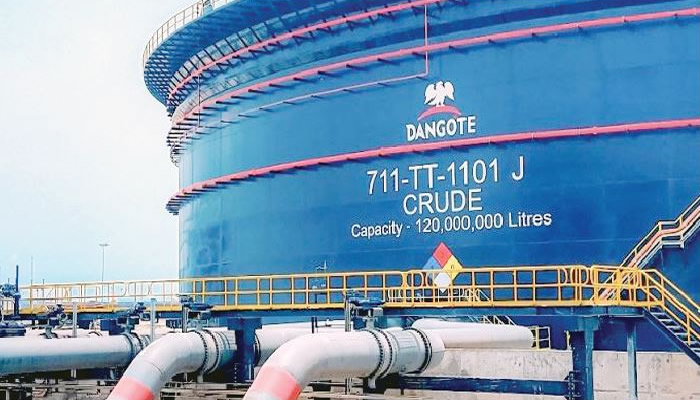
Fresh tension is brewing in Nigeria’s avi­ation industry over the extension of the Federal Government’s naira-for-crude initiative to aviation fuel, with major Jet A1 marketers warning that the policy could trigger a serious operational and financial crisis across the sector within weeks. President Bola Ahmed Tinubu intro­duced the naira-for-crude policy in Oc­tober 2024 as part of efforts to stabilise the local currency, reduce pressure on foreign exchange demand, and encour­age domestic refining. But its extension to Jet A1 pricing appears to have failed on arrival because aviation fuel remains a globally traded commodity benchmarked in United States dollars. The concerns were raised by Dr. Thomas Ogungbangbe, founder and Chief Executive Of­ficer of CITA Energies Ltd, one of Nigeria’s leading aviation fuel suppliers, during an interview with Daily Independent, where he warned that the policy, if not urgently reviewed, could destabi­lise the aviation fuel supply chain and spark another round of con­frontation between airlines and fuel marketers. Tinubu’s naira-for-crude pol­icy, introduced amid Nigeria’s worsening foreign exchange cri­sis and rising petroleum import costs, was designed to allow local refineries, including Dangote Pe­troleum Refinery, purchase crude oil from the Nigerian National Petroleum Company Limited (NNPCL) in naira instead of dol­lars. Under the arrangement, lo­cal refineries would refine petro­leum products domestically and sell products such as Premium Motor Spirit (PMS) in naira to Nigerian consumers, thereby reducing dollar demand in the downstream petroleum sector and helping to stabilise pump prices. The policy was initially wel­comed by many analysts as a strategic move to deepen local refining capacity and reduce de­pendence on imported fuel. How­ever, the aviation sector now fears that extending the arrangement to Jet A1 without considering the international pricing structure governing aviation fuel may worsen existing pressures on airlines and marketers. Speaking on the development, Ogungbangbe said the market had largely rejected the naira-de­nominated pricing framework for Jet A1 because aviation fuel pricing globally is tied to interna­tional benchmarks and formula pricing systems. “Yes, it’s currently being sold in naira but it’s not appre­ciated,” he said. “Because it’s a global commodity that is priced anywhere. I’m not sure anybody complained about selling Jet fuel in dollar because it’s dollarised and there’s formula pricing.” He described the policy as “a major disservice” to the aviation industry, insisting that the cur­rent framework heavily favours the refinery at the expense of marketers and airlines. “So taking it to naira now is a major disservice which is not ap­preciated,” he stated. “If they are going to do naira, whatever, then they should make it either-or. That is, if you want to buy in naira, fine. If you want to buy it in dollar, fine.” According to him, marketers are currently unable to align the refinery’s naira pricing with their existing contractual obli­gations to international airlines whose agreements are bench­marked against global Platts pricing indices and denominated in dollars. He claimed that the discrepan­cy between global pricing bench­marks and Dangote Refinery’s naira-based pricing structure could lead to massive financial losses for fuel suppliers. “If we do dollars out today, you are going to be buying at $15.64 but Dangote is selling at $17.50,” he alleged. “So it’s just engaging everybody like J.R.” Ogungbangbe warned that the industry may witness anoth­er major uproar in the coming month if authorities fail to re­view the policy direction. “Returning to naira is a major disservice to the industry, which will cause another uproar very soon. That’s probably what you can expect next month,” he said. “Most of the people making pol­icy lack knowledge of what the market is all about. When you put a square peg in a round hole, that’s what you get.” He further accused policy­makers of failing to understand the operational dynamics of the aviation fuel market. “That’s why we keep doing dilly-dally. The people taking decisions are people that do not understand the dynamics of the markets.” The CITA Energies boss pro­posed a dual-pricing structure that would allow marketers to buy Jet A1 either in naira or dol­lars depending on the nature of their transactions and customer obligations. “They can sell in naira for those who cannot access dollars, but they should also allow dollar pricing and formula pricing,” he said. “Leaving Dangote to be announcing refinery price is against the international norm on Jet fuel. You can do that for PMS or AGO.” He insisted that the present arrangement was unsustainable and tilted entirely in favour of the refinery. “We are not satisfied with the policy, and people are starting to be more agitated. Be expecting that there’s going to be a major showdown next month because he’s just ripping off everybody and nobody’s making profits.” Explaining the potential fi­nancial impact, he stated that marketers fixing forward prices in dollars were now exposed to se­vere exchange and pricing losses under the current regime. “For example, now I’m going to be selling next month, buying at $17.50 and I will be selling at 15-something. I’ll be losing N200 per litre. “So if I sell 10 million litres in a month, I’ll be losing N2 billion.” He added that many mar­keters might soon stop lifting products entirely if the pricing imbalance persists. “Instead of selling, we only declare that there is no product. Meanwhile, there is product and he will say ‘I have product’. So how do I buy when you have lev­eraged my price? The lever is tilt­ed. Everything is in his favour.” The growing disagreement has now culminated in a formal letter written by CITA Energies Ltd to Dangote Refinery request­ing the immediate introduction of a dual-pricing mechanism for Jet A1 purchases. In the letter addressed to Pres­ident of Dangote Group, Aliko Dangote, the company argued that restricting aviation fuel transactions to naira pricing was creating “a mismatch” within its commercial structure. The letter partly reads: “A significant portion of our clients are international airlines whose contracts, pricing benchmarks, and payment obligations are de­nominated in USD, with month­ly pricing differentials aligned to global market indices. “Restricting our purchases solely to naira pricing creates a mismatch in […]

Aviation News

A’Ibom To Launch Maiden Int’l Flight From Uyo To Accra

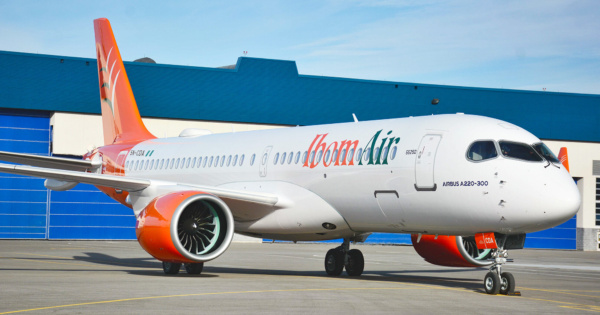
The Akwa Ibom State Government has announced that the maiden international flight from Victor Attah International Airport will take off on Saturday, May 2, 2026. According to a press release issued by the Commissioner for Information, Aniekan Umanah, on Tuesday, the flight will depart Uyo for Kotoka International Airport and will be operated by Ibom Air, the state-owned flagship airline. A return flight is scheduled for Sunday, May 3, 2026. The development follows presidential approval for the upgrade of the Uyo airport to international status, alongside significant investments by the administration of Governor Umo Eno to provide the required infrastructure and technical facilities. The state government described the launch as a strategic step toward boosting international connectivity, enhancing tourism, and attracting investment to Akwa Ibom State. It noted that while the maiden flight signals the start of international operations, full commercial flight schedules and the official commissioning of the new terminal building will be announced later. The government also expressed appreciation to President Bola Tinubu for approving the upgrade, and to the Minister of Aviation and Aerospace Development, Festus Keyamo, for his role in facilitating the project. Additionally, the contributions of past administrations in developing the state’s aviation sector were acknowledged, as the government recommits to sustaining growth in the aviation ecosystem for economic advancement.

Aviation News

IATA names Nigeria among countries with aviation charges above global average

Nigeria has been named among countries with above-global aviation charges, raising concerns over the cost burden on passengers and airlines operating in the country. The disclosure was made by the International Air Transport Association (IATA) at its Focus Africa Conference held in Addis Ababa, Ethiopia. The classification places Nigeria among African markets where aviation taxes and fees remain significantly higher than global averages, contributing to higher airfares and weaker regional connectivity. The development adds renewed attention to longstanding concerns about the cost structure of aviation in West Africa and across the continent. What they are saying  IATA said aviation charges in Africa are about 15% higher than the global average, with several countries driving the continent’s elevated cost structure. It specifically named Nigeria alongside Angola, Democratic Republic of Congo, Ghana, and Kenya as countries where aviation-related charges remain above global norms. “The cost of doing aviation business in Africa is high. The taxes and charges imposed by governments and infrastructure providers are about 15% higher in Africa than the global average.”   “To address this, IATA called for reversing the trend of increasing API-PNR charges.”   “Tanzania’s API-PNR charge of $45 one-way is the highest globally, while charges in Angola, D.R. Congo, Nigeria, Ghana, and Kenya also exceed global norms.”   The association said these elevated costs continue to push up airfares, weakening demand and limiting connectivity across African aviation markets. Get up to speed West Africa has been at the centre of ongoing aviation cost reforms, with regional governments attempting to address long-standing complaints about high taxes and charges. In December 2025, the Economic Community of West African States (ECOWAS) agreed to reduce select aviation charges by 25% and eliminate certain aviation taxes as part of a broader push to lower the cost of air travel and improve regional connectivity. The decision was seen as a key step toward boosting intra-African trade, tourism, and mobility. IATA also pointed to the need for full implementation of the ECOWAS December 2025 decision to eliminate aviation taxes and reduce select charges by 25%. It stressed that consistent application at the national level, without further delay, is critical to ensure the intended benefits of lower aviation costs are fully realised. More insights Beyond ticket taxes and charges, IATA highlighted deeper structural challenges affecting African aviation, particularly the issue of blocked airline revenues. The region accounts for the largest share of global trapped airline funds, estimated at $774 million as of March 2026. Algeria leads with $258 million, followed by the XAF Zone at $105 million, Mozambique at $82 million, Eritrea at $78 million, and Angola at $73 million. IATA warned that restricted access to airline funds reduces investor confidence and affects operational stability, especially in markets heavily dependent on international carriers. The association also flagged visa restrictions as another major barrier, noting that nearly half of intra-African travel still requires visas obtained before departure. It said this continues to suppress tourism, business travel, and regional integration efforts. On sustainability, IATA pointed to Africa’s long-term potential in sustainable aviation fuel (SAF) production and carbon markets. It estimated that Sub-Saharan Africa could supply up to 106 million tonnes of SAF-suitable feedstock by 2050 and generate significant emission credits under global aviation climate frameworks. Countries including Nigeria, Tanzania, Rwanda, Malawi, Gambia, Sierra Leone, and Madagascar have begun early participation steps, though IATA urged wider adoption across the continent. What you should know Nigeria remains among African countries with relatively high aviation-related charges, according to IATA data. In 2024, the country generated about $62 million from airline ticket taxes, contributing to Africa’s total aviation tax revenue of $1.97 billion during the period. Africa’s aviation taxes averaged about $14.9 per passenger, with West Africa recording some of the highest levies on the continent. Nigeria introduced an additional $11.5 security levy under the Advance Passenger Information System (APIS) effective December 1, 2025. The total security-related charge per ticket now stands at $31.50 for international travel to and from Nigeria. Airlines are responsible for collecting and remitting the levy to the Nigerian Civil Aviation Authority (NCAA). The NCAA said the APIS system is designed to strengthen border security, improve passenger tracking, and streamline clearance processes through advance data sharing with immigration authorities. While regional reforms have been agreed, aviation charges in Nigeria and several African markets remain above global averages, continuing to influence airfares and travel demand across the sector.

Aviation News

Dangote refinery’s jet fuel price to stabilise market – NMDPRA

The Nigerian Midstream and Downstream Petroleum Regulatory Authority has said the indicative gantry price for aviation fuel released by Dangote Refinery will ensure market stability and compliance by marketers. The Director, Public Affairs, Mr George Ene-Ita, made this known in an interview with the News Agency of Nigeria in Abuja on Saturday. Ene-Ita was reacting to the pricing and high cost of Aviation Turbine Kerosene, known as aviation fuel or Jet A1 fuel. NAN reports that the Dangote Petroleum Refinery has fixed its gantry price of ATK at N1,820 per litre, a move aimed at enhancing transparency in the sector. This development comes at a time when Nigerians and airline operators have raised concerns over the high cost of the product and its heavy impact on the aviation industry. In a move to ensure market stability, fair pricing, and ease mounting pressure on airline operators and passengers, NMDPRA had earlier set Jet fuel price cap for marketers, ordering direct sales to airlines. The NMDPRA had issued a directive that the cost of Jet A1 fuel for end-users should range between N1,760 and N1,988 per litre in Lagos, and N1,809 to N2,037 per litre in Abuja. In spite of the advisory guidance from the NMDPRA, oil marketers have continued to sell aviation fuel to airlines at N2,230 per litre and above, deepening concerns across Nigeria’s aviation sector. Ene-Ita said that although petroleum product prices had been deregulated, the latest indicative gantry price for ATK disclosed by the refinery would further support its monitoring efforts. “All petroleum product prices have been deregulated. “However, with particular emphasis on ATK, the Dangote refinery, having released its latest indicative gantry prices, which they promised to publish daily going forward, will enable us to ensure tacit compliance by marketers and operators during our routine surveillance operations nationwide. “We are not unmindful of the fact that what the Dangote Refinery is doing is a concession to help ease overhead cost pressures in the Aviation sector in order not to truncate its operations. “So, we will play our part to see that Nigerians benefit from the gesture,” he said. NAN reports that the NMDPRA pricing framework was derived from Platts average figures recorded between April 17 and 23, reflecting prevailing global oil market conditions. According to the regulator, while the benchmarks provide guidance for fair pricing, actual market prices may fluctuate outside the stated range depending on purchase timing and external factors. It specifically cited heightened global volatility driven by geopolitical tensions, including the ongoing U.S.–Iran crisis, as a key contributor to the recent hike in aviation fuel prices. NAN

Scroll to Top