Author name: admin

Aviation News

ICAO audit: Nigeria scores 91.4% in aviation safety rating – Keyamo

Nigeria has recorded a major milestone in its aviation sector, emerging with a 91.4 per cent safety score in the latest audit conducted by the International Civil Aviation Organisation. Speaking during a high-level meeting in Abuja on Wednesday evening, the Minister of Aviation and Aerospace Development, Festus Keyamo, said, “The International Civil Aviation Organization today concluded its audit of the Nigerian aviation industry. “The last time this audit took place was 2023. So this is an audit that takes place every three years. In 2023, Nigeria scored 70%, which is considered very, very low in terms of safety. “And that, of course, affects the rating of our airlines internationally too. Now, after three years of the administration of President Bola Ahmed Tinubu and this team in place — the DG NCAA, the MD FAAN, the MD NAMA, and the team — today, the audit was concluded by the International Civil Aviation Organization. And for the first time in the history of Nigeria, since 1960, we have recorded the highest score in terms of safety of the aviation industry in Nigeria.” “The heads of the agencies have been hands-on on this issue. For more than two years, we had a central committee under my leadership. “The ministry had to set up a committee on this audit alone because we were not happy with the last scores that we recorded. So this is out already. This is just to announce and to congratulate ourselves and everybody, even the airlines that were audited. They all contributed to this,” he said. In 2023, Nigeria’s aviation sector underwent an International Civil Aviation Organization audit and scored 70 per cent in safety rating. The result was described at the time as below expectations and raised concerns within the industry about compliance levels and safety oversight mechanisms. The 2023 outcome formed the baseline for subsequent reforms within the aviation sector, as regulatory agencies intensified efforts to improve safety standards, strengthen oversight, and address identified gaps ahead of the next audit cycle. Source – Punch So This Happened (EP 389) reviews: FG budgets ₦1.37bn for terrorism trials 0:00 / 1:01 He added, “We have recorded 91.4%. This is because of the deliberate policies of President Bola Ahmed Tinubu, the kind of support he has given the aviation industry, and the type of initiatives that he has told us to initiate in the aviation industry. And the International Civil Aviation Organization is very happy with us. And this is a big thank you to the heads of the agencies.

Aviation News

Nigeria moves to avert airline shutdown with debt relief, tax review

Nigerian President Bola Tinubu has agreed in principle ​to write off part of domestic ‌airlines’ debts to aviation agencies following successful talks, after carriers threatened to halt operations over crippling ​fuel prices, Aviation Minister Festus ​Keyamo said on Wednesday. Tinubu asked for ⁠a formal request to be submitted ​immediately, with the percentage of the write‑off ​to be determined by him, Keyamo said. The government will also set up a committee to ​review taxes, levies and fees charged ​on domestic air tickets, to recommend cuts to ease ‌pressure ⁠on airlines and passengers. Fuel marketers will sit with officials on Thursday to try and quickly resolve the disputes over ​fuel pricing, ​oil ⁠ministry secretary Patience Oyekunle said after today’s round of talks. NOTE: ​Soaring jet fuel prices have upended ​the ⁠global aviation industry as a consequence of the Iran war, forcing airlines to ⁠raise ​fares, curb growth plans ​and rethink forecasts. Source – Reuters

Aviation News

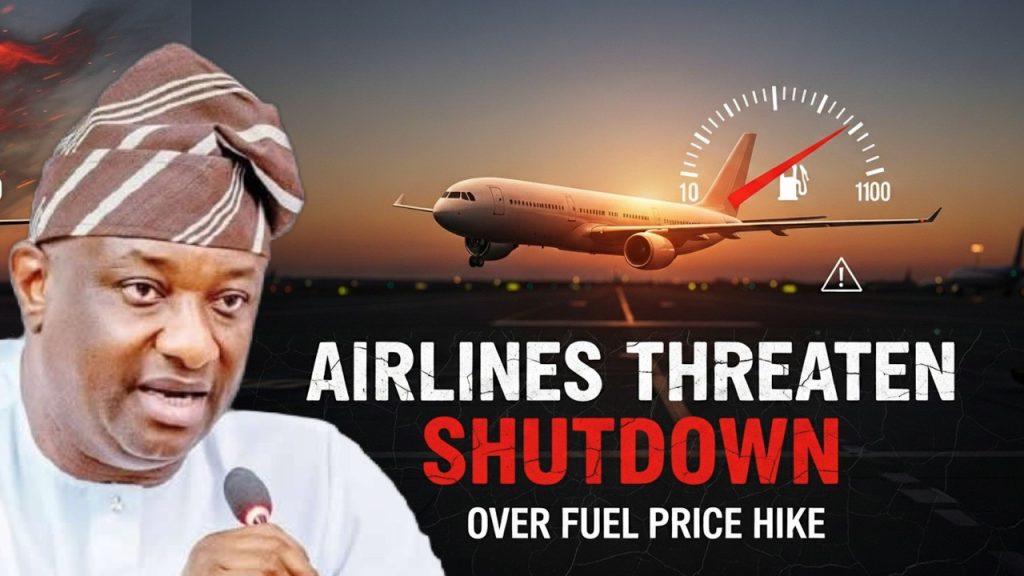
Airlines threaten shutdown over hike in aviation fuel price

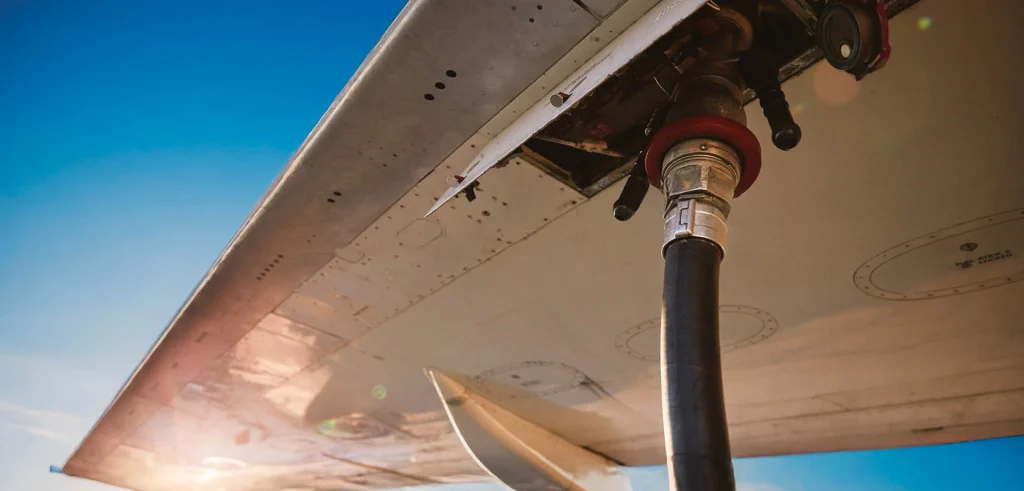
Domestic airlines in Nigeria have threatened to suspend operations from Monday, April 20, 2026, following a sharp spike in the price of aviation fuel, raising concerns over a potential shutdown of the country’s air transport sector.   The planned action was disclosed in a letter dated April 14, 2026, by the President of the Airline Operators of Nigeria (AON), Abdulmunaf Sarina.  According to the association, the price of Jet A1 has risen from N900 per litre as of February 28 to over N3,300 per litre within less than two months—an increase of more than 300 per cent. In the letter addressed to the Executive Secretary of the Major Energies Marketers Association of Nigeria (MEMAN), Mr. Clement Isong, and copied to top government officials including President Bola Ahmed Tinubu, the airlines warned that the situation has become unsustainable.   However, in a swift reaction, the MEMAN Executive Secretary told Daily Trust that he is unaware of the prices being quoted by the airlines even as he dismissed the allegation of extortion leveled against marketers, clarifying that the price hike, which is not as bad as the figure being quoted by the airlines, was driven by the geopolitical tensions in the Middle East which has caused disruption in the global oil market. The latest letter by the AON was a follow-up to the one earlier written on March 30, 2026 with the heading, “Urgent Call for Proportionate Review of Jet A1 Price.”   In the follow-up letter, AON said, “Therefore, we hereby give notice that if the current trend persists, all the airlines in Nigeria will be forced to suspend operations with effect from Monday, April 20, 2026. This is our final plea.” The AON stressed that aviation fuel, which accounts for over 40 per cent of operational costs, has severely impacted airline revenues, pushing operators to the brink. “The airlines are now facing existential threats with grave attendant consequences to the overall well-being of the nation. If we price our tickets to reflect the current price of aviation fuel, we will be flying empty planes,” it said. The group disclosed that one airline has already been forced to halt operations since March 13, 2026, warning that others could follow if urgent action is not taken. “For the avoidance of doubt, this arbitrary increase has already seriously impacted a particular airline and forced it to ground all its operations since March 13, 2026. This is an inevitable consequence for all other airlines if the situation does not change immediately.” The airlines also accused fuel marketers of taking advantage of global tensions, particularly in the Middle East, to inflate prices beyond what is justified by international market trends. “The actions of fuel marketers are effectively decimating the aviation industry and putting the country’s economy, safety, and security at risk as airlines are gradually being forced to suspend operations.” They argued that while global crude oil prices have risen by about 30 per cent, the over 300 per cent increase in Jet A1 prices in Nigeria is excessive and unjustifiable. The AON further warned of the wider economic implications of a shutdown, noting that the collapse of airline operations would affect multiple sectors. “If the airlines go out of business, banks will take a hit, millions of people will lose their means of livelihood, and insecurity will be on the rise.” The association urged the marketers, through their umbrella body, to urgently intervene and ensure that aviation fuel prices are adjusted in line with global benchmarks. The latest ultimatum follows an earlier warning issued on March 30, 2026, when Jet A1 prices climbed to N2,557 per litre. At the time, the airlines had demanded a reversal within 48 hours, describing the increase as “astronomical” and inconsistent with global pricing standards. …Marketers explain price hike Speaking exclusively with Daily Trust, MEMAN ES while dismissing the N3000 per litre or N2,550 per litre being quoted by the airlines however said the price hike was due to the challenges in the Middle East especially the Strait of Hormuz closure. He stated that marketers are also finding it extremely difficult to access the product even as Jet A1 also known as ATK (Aviation Turbine Kerosene) is managed differently. While clarifying the price, he disclosed that the gantry price of Jet A1 as of yesterday was N1,799.15 per litre from Dangote Refinery while the landing cost (the cost of imported product) is N1,832. “So I am completely unaware of the price they are quoting.  I am not so sure that those numbers are correct. But the solution is to go to Dangote or go and buy it at an ex-depot where the price is much cheaper. Some unscrupulous people might try to take advantage but what we do in MEMAN is we try to bring transparency into the market. So we publish Dangote price and we publish the landing cost so that you know about how much the product costs so that when you are negotiating or when you are buying, you know that somebody is not trying to profiteer and you can go and buy from somebody else,” he explained. He further dismissed the allegation of extortion even as he reiterated that the cost of managing the product is expensive. He said, “Access to the product is extremely difficult and it is managed differently from the way you manage other products. The pipelines that carry aviation fuel, the vessels that carry aviation fuel, the trucks that carry aviation fuel are all specialised to protect the quality of the product. “There is also a lot of monitoring and surveillance of every single molecule of this product, from the refinery all the way into planes. So to protect the quality of the product, there is a lot of expenses along the way and then finally, all the lab tests, all the equipment used to remove water (H2O) on the product so that when the product is high in the sky, it doesn’t freeze, there is no water, all those […]

Aviation News

Domestic airlines threaten shutdown April 20 over surge in aviation fuel price

The Airline Operators of Nigeria has warned that domestic airlines may suspend operations nationwide from April 20, if the rising cost of aviation fuel is not urgently addressed. In a letter issued to journalists on Wednesday, dated April 14, 2026, and addressed to the Executive Secretary of the Major Energies Marketers Association of Nigeria, Clement Isong, the President of AON, Abdulmunaf Sarina, said the surge in the price of Jet A1 had become unbearable for operators. The letter read, “Our letter dated March 30, 2026, on the above subject matter refers. Permit us to further bring to your notice that the price of Jet A1 as sold by marketers has risen significantly from the initial N900/litre as at February 28, 2026, to N3,300/litre as of today. “This represents an increase of over 300%. This astronomical and artificial increase is not commensurate with the rise in crude oil prices and is well above international market benchmarks, which reflect approximately a 30% increase in crude oil cost.” The airline operators said they had continued to operate for weeks despite the financial strain. “For the past four weeks, airlines have endured this burden and continued operations out of patriotism and in the spirit of service to the nation. However, the situation has now become unbearable and clearly unsustainable,” the letter stated. AON added that revenue generated by airlines was no longer enough to cover the cost of fuel, which represents only one component of operational expenses. “Currently, airline revenues are insufficient to cover the cost of fuel alone, which is only one of many operational expenses incurred daily. The situation continues to deteriorate,” it said. The group accused fuel marketers of threatening the survival of the aviation sector and warned of wider economic implications if the situation persists. The operators stated, “The actions of fuel marketers are effectively decimating the aviation industry and putting the nation’s economy, safety, and security at risk, as airlines are gradually being forced to suspend operations. “For the avoidance of doubt, this arbitrary increase has already severely impacted one airline, forcing it to ground all operations since March 13, 2026. This may become inevitable for other airlines if the situation does not change immediately.” The operators further noted that aviation remains critical to national development and warned that the continued rise in fuel prices could trigger severe consequences for the economy. “If ticket prices are adjusted to reflect the current cost of aviation fuel, flights will operate with low passenger loads. Conversely, if airlines cease operations, financial institutions will be impacted, millions of livelihoods will be lost, and insecurity may increase,” the operators said. The association therefore appealed to the marketers to review the price of Jet A1 in line with global market realities. “We therefore urge you to prevail on marketers to proportionately adjust jet fuel prices in line with international market realities, as airlines can no longer sustain purchases at the current exorbitant rates.” The group warned that airlines may be forced to halt operations if the situation persists. “Accordingly, we hereby give notice that if this trend persists, all airlines in Nigeria will be compelled to suspend operations effective Monday, April 20, 2026. This serves as our final appeal,” it said Copies of the letter were also sent to Bola Ahmed Tinubu, Kashim Shettima, the Minister of Aviation and Aerospace Development, Festus Keyamo, the Director-General of the Nigerian Civil Aviation Authority, and the Director-General of the Department of State Services. The sharp rise in aviation fuel, also known as Jet A1, has been driven by a combination of global and domestic factors, including fluctuations in crude oil prices, foreign exchange constraints, and supply chain challenges. In Nigeria, the situation has been worsened by the deregulation of the downstream oil sector, which allows market forces to determine fuel prices, as well as limited local refining capacity, forcing marketers to rely heavily on imports. Industry stakeholders have also pointed to distribution bottlenecks, logistics costs, and the influence of a few dominant suppliers as contributing factors to the steep price increase. Source – Punch

Aviation News

Airfares hold steady as new airlines offset jet fuel price surge

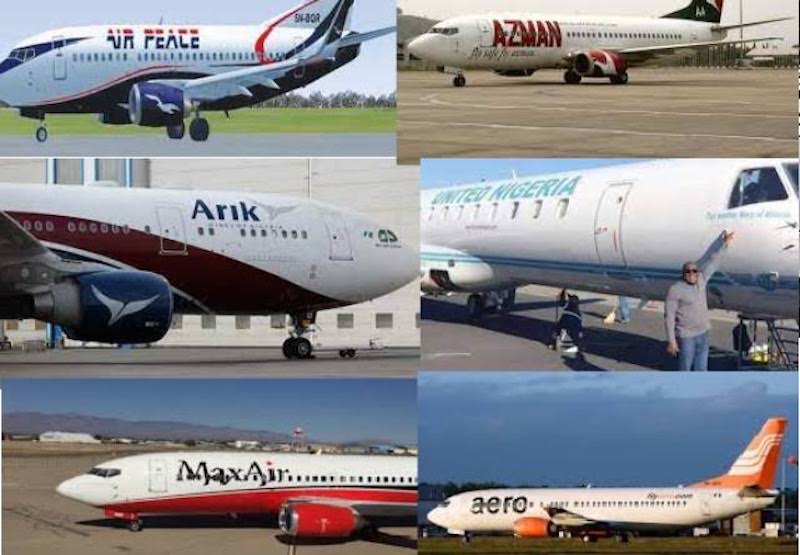
The influx of new carriers into Nigeria’s aviation sector has triggered a surge in competition, keeping airfares stable across local destinations despite a sharp rise in the price of aviation fuel. A wave of new airlines has emerged in recent months, including Pioneer Airlines, backed by the Bayelsa State Government; Binani Airlines, owned by Senator Aishatu Binani; K-Impex Airlines, promoted by a consortium of Northern businessmen; and Enugu Air, an initiative of the Enugu State Government. Most recently, Gateway Airline announced the commencement of flight operations effective Monday, April 13, 2026. The carrier will service key routes including Iperu to Abuja, and connections from Abuja to Port Harcourt, Calabar, and Jos. Meanwhile, Caliphate Air, backed by the Sokoto State Government, is preparing for a second-half 2026 launch. This initiative is expected to drive significant socio-economic gains for Sokoto and the wider Northwest region. The airline has already secured its Air Transport Licence (ATL) and is currently finalizing its Air Operator Certificate (AOC) with the Nigeria Civil Aviation Authority (NCAA). These new entrants join established local carriers including Air Peace, Arik Air, Ibom Air, Max Air, Xejet, Green Africa, United Nigeria Airlines, Aero Contractors, and ValueJet, all vying for a share of a market currently stunted by stagnant growth and diminished consumer purchasing power. BusinessDay findings reveal that since the onset of the US-Iran conflict, aviation fuel prices have surged from N995 per litre in January 2026 to between N2,700 and N3,000 in recent weeks. Given that aviation fuel accounts for over 40 percent of total operating costs, such a spike would typically trigger a sharp rise in fares. However, the aggressive competition among a growing number of airline all scrambling for a shrinking pool of passengers has kept ticket prices relatively low. “New entrants into the aviation business tend to keep the fares low or tolerable since they need to attract passengers to themselves. We have to also notice that since the state governments own or are the primary promoters of these new airlines, they have a significant financial capacity to endear the air market to themselves,” Seyi Adewale, the chief executive officer of Mainstream Cargo Limited, told BusinessDay. According to Adewale, Nigeria’s air capacity is still limited and air fleet is still few when compared to the need of the country, its population size, area or scope of coverage, and to that of similar countries. He said as a result of the gap, states are connecting the dots to their region in order to promote business, facilitate trade, access to other states (or even countries), invest in air infrastructure amidst increasing revenue, attract tourism, and possibly generate fair revenues. “It appears no state wants to be left behind in development coupled with the fact that aviation creates jobs and other multiplier effects or impact on the state economy,” Adewale said. Ibironke Rotimi-Olajide of Air Peace who also confirmed this situation, said that as new airlines are joining the market, the demand is getting lower with increase in supply. “Right now, I think the demand is lower as new airlines are coming up; although they are coming with small number of aircraft. So, how do you match demand and supply? With all these airlines coming up, airlines hardly fill up their aircraft because of this depleting passenger traffic,” Rotimi-Olajide said. BusinessDay findings show that an economy class return ticket from Lagos to Abuja between the months of April and May cost between N150, 000 to N158,000, showing a stable price since mid-January 2026. Within the same period last year when there were fewer airlines cost of ticket on the same route was between N200,000 to N220,000. Also, an economy class return ticket from Lagos to Port Harcourt between the month of April and May cost between N150, 000 to N170,000, also showing a stable price since mid-January. The same route last year saw price surge to an average of N250,000. An economy class round-trip flight from Lagos to Kano cost between N200,000 and N300,000 a sharp contrast from last year which sold for N350,000 or more for same route. The same price stability is seen in other domestic routes, making it affordable to travel. The NCAA disclosed that it has issued about eight Air Operator Certificate (AOC) recently which implies more local airlines would be gracing the Nigeria airspace. Chris Ona Najomo, the director general and CEO of the NCAA in a recent interview said in six months time, there would be an influx of aeroplanes as new and existing airlines build capacity. “I can tell you that we have issued between seven to eight AOCs recently. AOC issuance process usually takes between two to three years in the past but now within six to nine months, the process is completed without compromising safety,” Najomo said. Olumide Ohunayo, industry analyst and director of research at Zenith Travels told BusinessDay that the influx of new airlines which the aviation sector is experiencing is as a result of states’ recent interest in aviation sector. “Seeing the success story of Ibom Air which has served as a template for a state-run airline, most of the states are now doing same. States are not only working on the airlines but also owning airports. “Enugu has started their own airline. Gateway of Ogun State has come up with the same initiative. With what we see, I think the idea is for them to have that control. In doing that, they are going beyond just having the airline but also having the airport to complement it,” Ohunayo said. He stressed that airlines’ decision to reduce fares may not be sustainable on the long run because of operating costs but if local carries can come together to build critical mass, it would be more sustainable.   Source: BusinessDay

Scroll to Top