

Author name: admin

Aviation News

Airport Police Foil Dangerous Stowaway Attempt by Teen at Lagos Airport

The Airport Police Command has intercepted a 14-year-old boy in a stowaway attempt at the Murtala Muhammed International Airport. The incident occurred on Monday, 30 March 2026, raising fresh concerns about access control and perimeter security at Nigeria’s busiest international gateway. The minor, identified as Eke Miracle, was discovered on the airport tarmac attempting to gain unlawful access beneath an aircraft. Stowaway Attempt Story Preliminary investigations reveal that the teenager breached restricted zones without authorisation, violating Sections 2 and 3 of the byelaws of the Federal Airports Authority of Nigeria. His actions were consistent with a stowaway attempt, a serious aviation security offence with potentially fatal consequences. Such breaches underscore persistent vulnerabilities within highly sensitive airport environments, despite existing regulatory frameworks and enforcement mechanisms. According to the Police Public Relations Officer, Airport Police Command, ASP Mohammed Adeola, ANIPR, the minor was immediately taken into protective custody following interception. Meanwhile, authorities adhered strictly to established child protection procedures throughout the process. His parents were promptly notified, and the interview was conducted in their presence, ensuring compliance with legal and welfare standards applicable to minors. In addition, the Command ensured the boy received appropriate care and support during custody. This approach reflects a balance between enforcing aviation security laws and safeguarding the rights of juveniles. However, the incident highlights how easily determined individuals can exploit security gaps, especially in complex airport operations where multiple agencies share responsibility. Reacting to the development, the Commissioner of Police, Airport Police Command, CP Ogunbode Olufunke, MNIPS, PhD, reaffirmed the Command’s commitment to protecting aviation infrastructure. She described the airport as a critical national asset requiring strict and continuous enforcement of security protocols. Therefore, any breach, including a stowaway attempt, must be treated with urgency and zero tolerance. Furthermore, CP Ogunbode emphasised that due process would be followed in handling the case. She urged parents and guardians to monitor their children closely, particularly in high-risk and restricted environments like airports. Her remarks highlight a broader societal responsibility in preventing incidents that could escalate into major aviation security threats. Meanwhile, aviation experts note that a stowaway attempt is not only illegal but extremely dangerous. Individuals who attempt to hide in aircraft compartments face life-threatening risks, including hypoxia, extreme cold, and mechanical hazards. Globally, such incidents have often resulted in fatalities, reinforcing the need for strict surveillance and rapid response systems across airport facilities. The case will proceed under applicable juvenile justice procedures, with the minor expected to be charged before the appropriate juvenile court. This ensures that legal accountability is maintained while recognising the unique considerations involved in handling underage offenders. It also aligns with international best practices in aviation security and child protection frameworks. However, this incident raises critical questions about perimeter fencing, surveillance systems, and human patrol efficiency at Nigerian airports. While agencies like the Nigeria Civil Aviation Authority continue to enforce safety regulations, gaps in real-time monitoring and access control remain a concern. Strengthening inter-agency coordination will be essential in closing these vulnerabilities. In addition, global standards set by the International Civil Aviation Organization emphasise layered security systems, including physical barriers, electronic surveillance, and personnel training. Nigeria’s aviation ecosystem must continuously align with these standards to prevent incidents like a stowaway attempt from recurring. The Airport Police Command reiterated its resolve to maintain safety, security, and order within the aviation sector. It also reaffirmed its commitment to upholding the rights and welfare of all individuals, particularly minors. Therefore, while enforcement remains strict, authorities continue to prioritise humane and lawful treatment in every case. Ultimately, the intercepted stowaway attempt at MMIA serves as both a warning and a learning point. It highlights the urgent need for stronger security architecture, increased public awareness, and proactive parental guidance. As Nigeria’s aviation industry grows, safeguarding airport infrastructure must remain a top priority to ensure passenger safety and operational integrity.

Capt. Chris Najomo, Director-General of the Nigeria Civil Aviation Authority
Aviation News

DGCA Says Nigeria Aviation Builds Capacity as MRO Gap Threatens Growth

The Director-General of the Nigerian Civil Aviation Authority, Captain Chris Najomo, has emphasised that capacity remains central to unlocking Nigeria’s aviation growth, even as gaps in Maintenance, Repair and Overhaul (MRO) infrastructure persist. Speaking at the maiden Nigeria Aircraft Acquisition and Investment Summit (NAAIS) 2026 in Lagos, he said the sector’s future depends on three interconnected pillars: capital, confidence, and capacity. “The theme of this summit, ‘Unlocking Capital, Confidence and Capacity in Nigeria Aviation,’ is both timely and instructive,” Najomo stated. “It captures… the three interconnected pillars upon which the future of our aviation sector must be built.” He explained that without sufficient capacity, investments in aircraft acquisition may not translate into sustainable operational gains across the industry. Capital Constraints and Financing Barriers Najomo noted that aircraft acquisition remains highly capital-intensive, making access to funding a persistent challenge for airlines. Therefore, strengthening financing structures and legal frameworks is essential to unlocking fleet expansion. “Aircraft acquisition is capital-intensive, and without access to sustainable and affordable financing, fleet expansion and modernization may remain limited,” he said. He urged stakeholders to adopt innovative financing approaches tailored to Nigeria’s environment. In addition, he stressed that reforms must support long-term investment while reinforcing the sector’s overall capacity. Building Investor Confidence Through Regulation Investor confidence was described as a critical driver of aviation investment. Najomo explained that financiers and lessors require assurance of regulatory predictability and compliance with international standards. “At the NCAA, we are resolute in abiding by the Cape Town Convention through a firm implementation of the Irrevocable De-registration and Export Request Authorization (IDERA),” he stated. He added that Nigeria’s regulatory framework is being strengthened through digital systems and improved manpower. These measures, he said, enhance transparency and reinforce trust, thereby supporting both investment inflows and sectoral capacity. MRO Infrastructure: A Key Capacity Gap A major concern highlighted in the speech was the limited development of domestic Maintenance, Repair and Overhaul (MRO) facilities. Najomo warned that expanding fleets without matching MRO capacity could undermine operational efficiency and increase costs. Airlines may continue to depend heavily on foreign maintenance providers if local infrastructure is not developed. “At the same time, national capacity must be strengthened through… the development of local Maintenance, Repair and Overhaul (MRO) facilities,” he said. He further explained that inadequate MRO infrastructure leads to capital outflow, as aircraft are sent abroad for maintenance. Strengthening local capacity would help retain value within the economy while improving turnaround times and operational reliability. Aligning Fleet Growth with Operational Capacity Najomo cautioned airlines against uncoordinated fleet expansion, stressing the need for strategic planning. Aircraft acquisition must align with route demand, operational needs, and maintenance capacity. “Aircraft selection should align with route structures, market demand, and maintenance capability,” he said. “Uncoordinated fleet expansion often leads to inefficiencies and increased operational challenges.” He emphasised that sustainable aviation growth requires synchronization between fleet size and supporting infrastructure. Without this alignment, investments may not deliver optimal returns. Human Capital as a Pillar of Capacity Human capital development was also identified as a critical element of capacity. Najomo noted that training and competence-building among aviation professionals are essential for sustaining growth. Investment in skilled personnel, including pilots, engineers, and technical staff, ensures that the industry can safely manage modern aircraft and evolving technologies. Therefore, workforce development must progress alongside infrastructure and financing reforms. Regulatory Efficiency and Investment Outlook Najomo reaffirmed the NCAA’s commitment to ease of doing business without compromising safety standards. He noted that certification processes have been streamlined to improve transparency and decision-making timelines. Nigeria, he said, is signalling to global aviation financiers that its market is structured, reform-driven, and aligned with international frameworks. This includes strict enforcement of IDERA and adherence to global leasing standards. He concluded that Nigeria’s aviation sector can achieve meaningful transformation if capital access, investor confidence, and capacity development are pursued in a coordinated manner. Without this balance, the full benefits of aircraft investment and industry growth may remain constrained.

Aviation News

NCAA, NASS COMMITTEE TO STRENGTHEN COLLABORATION ON SAFETY COMPLIANCE

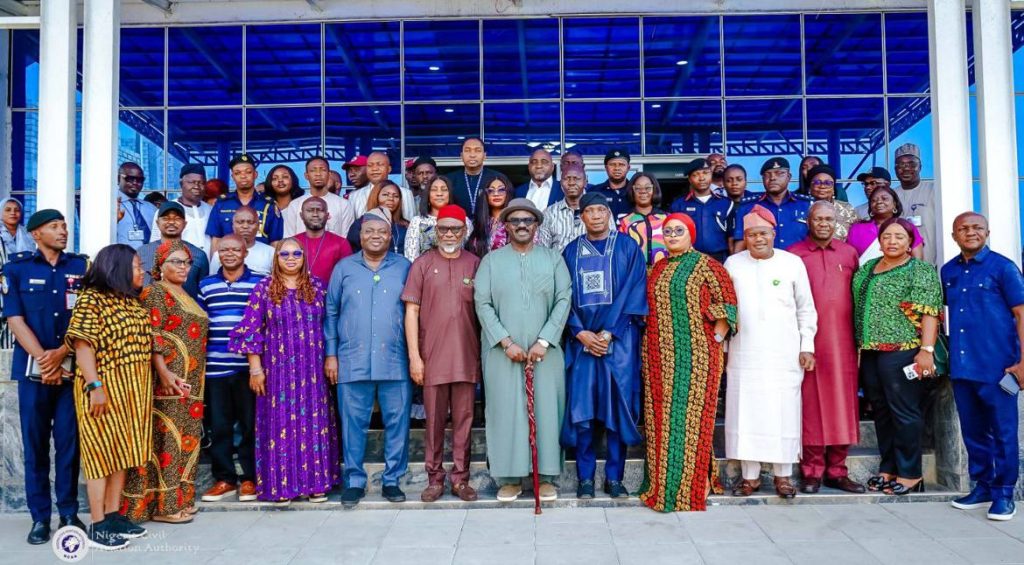
The Nigeria Civil Aviation Authority (NCAA) and the House of Representatives (HoR) Committee on Safety Standards and Regulations have expressed readiness to strengthen collaboration over safety compliance across the aviation sector. This commitment was expressed when the House committee paid an oversight visit to the NCAA headquarters in Abuja on the 30th of March, 2026, as part of its mandate to assess adherence to safety standards among Ministries, Departments, and Agencies (MDAs). In his remarks, the Director-General Civil Aviation (DGCA), Capt. Chris Najomo reiterated the Authority’s commitment to maintaining high safety standards, noting that several initiatives are already underway to address identified gaps and enhance operational efficiency. During the engagement, the Chairman, Hon. David Idris Zacharias, stressed that the oversight visit was part of a broader initiative to support institutions in strengthening safety culture and ensuring continuous improvement rather than a fault-finding mission. He acknowledged the efforts of the NCAA in strengthening its safety framework, particularly in areas such as emergency response planning, staff training, and regulatory oversight of aviation operators. The visit, forming part of ongoing nationwide assessments, is focused on reviewing existing safety systems, emergency preparedness measures, and institutional compliance with national occupational safety and health regulations to promote safer work environments and strengthen regulatory compliance across critical sectors in Nigeria to align with global best practices. This is in addition to highlighting opportunities for further improvements in facility management, safety awareness, and infrastructure upgrades.

Scroll to Top