Aviation News

Keyamo Rules Out National Carrier, Expands Support For Nigerian Airlines

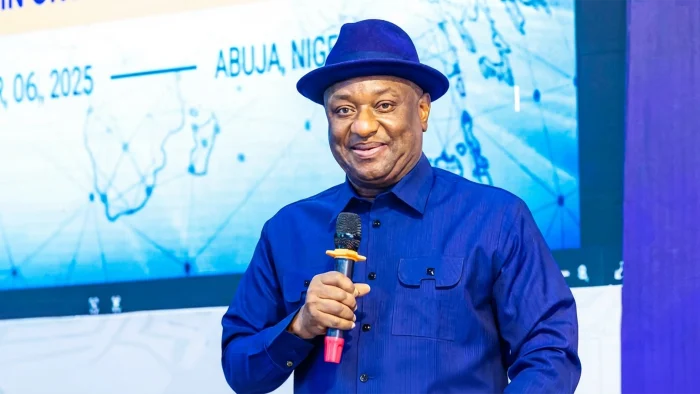
Minister of Aviation and Aerospace Development, Festus Keyamo, said the federal government had done a lot to support domestic airlines in line with President Bola Tinubu’s focus on empowering domestic airlines to take advantage of the multibillion dollars Nigeria air travel market. Keyamo spoke at the unveiling of two aircraft acquired by the fast-rising carrier, United Nigeria Airlines (UNA), state-of-the-art Boeing B737-800 aircraft with registration numbers 5N-CFC and 5N-CFB, respectively. The minister said the first target of the Tinubu administration in the aviation sector was to get the right policy direction and to give full support to domestic airlines. He commended United Nigeria Airlines on its rapid rise, and disclosed that government was fully in support of the airline and the others. On the issue of national carrier, Keyamo explained that the federal government had kept mum on the establishment of a national carrier because after various case studies it realised that a national carrier could not thrive under a democratic setting like Nigeria’s. He said that was why government was focused on supporting Nigerian airlines owned by the private sector, under strict government regulation. Keyamo stated, “All governments in the world are divesting from national airlines. It is not possible to run a national carrier under a bureaucratic setup without it collapsing into a bottomless pit.” The minister stated that the federal government’s five-point agenda was strictly centred on the aggressive empowerment of local carriers, dropping policies that undermined the growth of domestic airlines. He said this explained why Ministry of Aviation and Aerospace Development approved major international routes for United Nigeria Airlines, which included Canada, Dubai, and United States. He said, “We are giving United Nigeria Airlines fruitful reciprocal routes, including New York, Canada, and Dubai. We are only looking for the equipment to run these routes right now.” Keyamo said with the growing passenger throughput, it was important that domestic operators captured a larger share of Nigeria’s 16 million annual passengers’ market. He regretted that, currently, over 90 per cent of the market was dominated by foreign carriers. The minister said it was the changes that the Tinubu administration brought into the aviation industry that made banks, which had hitherto shunned the aviation sector, to return to financing aircraft acquisitions and providing other funding services. He said banks were also encouraged by the way the country’s biggest operator, Air Peace, promptly serviced its credit facilities. The minister said government had moved to solve a major challenge for the domestic carriers, aircraft acquisition, disclosing that Tinubu approved the creation of a state-backed leasing company to resolve long-standing aircraft leasing barriers for local operators. He stated, “I went to Mr. President to advocate for local operators who face strict international leasing hurdles. “He has formally approved the establishment of the Nigerian Aircraft Leasing Company. This company will exist solely to bring in aircraft under a solid government guarantee through private dry-lease agreements, which will then be sub-leased directly to our domestic airlines. “We are already in the process of taking this.” Keyamo also spoke on how he pushed to get the federal government to earmark funds for the building of an airstrip in Abia State, the only state in the South-east that does not have an airport. He stated, “The first thing we did when we came to power was that I went to Mr. President and said, ‘Abia does not have an airstrip or airport in the whole of the South.’ President was surprised, and we ensured it was captured as one of our first critical projects in the 2024 budget.” Keyamo credited Governor Alex Otti’s aggressive counter-funding strategy for scaling up the scope of the project to a full airport. He explained, “Credit to Dr. Alex Otti—he did not stop at that. When we scheduled an airstrip, he went straight to Mr. President behind me and said, ‘Sir, bring the money budgeted for the airstrip, I have counterpart funding. I will now make it a full international airport.’ “He is bringing his own state’s resources to the table. In fact, let me confess today, Abia State has injected its counterpart funding far ahead of the federal government’s allocation. Our money is coming, but work has advanced rapidly under his guidance.” Keyamo confirmed the ministry’s long-term plan to actively guide United Nigeria Airlines to position its main hub within Abia State upon completion to link the commercial clusters of Aba and Umuahia directly to global trade routes. The minister also spoke about how the federal government supported Enugu State Government when it wanted to develop the Akanu Ibiam International Airport to increase flight operations and other activities at the airport. He stated, “One of our prides in the South is the Enugu International Airport. The Enugu governor approached Mr. President, noting that the airport was not maximizing its economic potential under standard bureaucratic structures, and requested to bring in private investors to run it. Mr. President gave the green light,” Keyamo explained. “As I speak with you, Enugu Airport is now fully privately owned and run under the direction of the state government, with the clear objective of turning it into a dedicated cargo hub for the entire South-east.” To operationalise the new status, Keyamo revealed that high-level bilateral trade negotiations were underway to secure direct logistics route between China and the South-east by the end of the year. He said, “Just two days ago, the Enugu governor and I were actively negotiating the first direct cargo flight from Guangzhou, China, straight into Enugu. “We are targeting December for the maiden flight. This will allow our South-east merchants and traders in China to consolidate their goods into unified cargo accounts twice a week, flying straight into Enugu for seamless delivery to hubs, like Onitsha and Aba.”
Aviation News

Air Peace aircraft grounded after bird strike at Kano airport

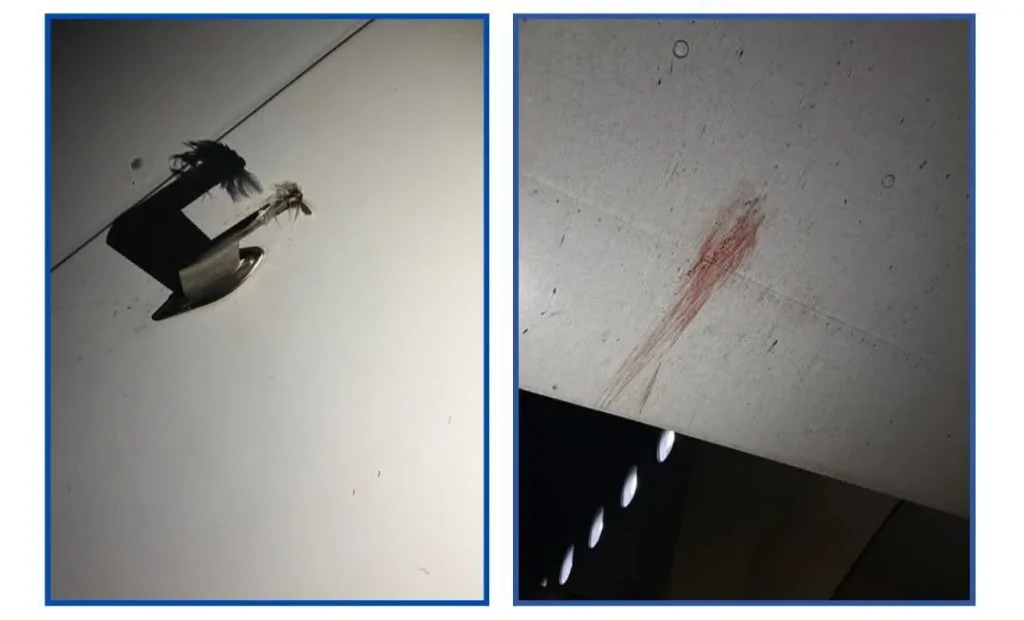
An Air Peace aircraft operating a scheduled flight from Abuja to Kano has been grounded after experiencing a bird strike upon arrival at the Mallam Aminu Kano International Airport. The airline disclosed the incident on Wednesday, saying the aircraft was withdrawn from service in line with aviation safety procedures. According to Air Peace, the bird strike occurred shortly after the aircraft landed in Kano. The airline said the aircraft is undergoing technical assessments to determine the extent of any damage before it can return to service. “In strict compliance with aviation safety protocols, the affected aircraft has been grounded for comprehensive technical assessments,” the airline said. Alternative plane deployed Air Peace said it immediately deployed another aircraft to continue operations on the route and reduce inconvenience to affected passengers. The airline noted that the decision was taken to ensure passengers reach their destinations safely in accordance with operational standards. The carrier expressed regret over the disruption and appealed for understanding from affected passengers. Concern over bird strikes The incident adds to a growing number of bird strike cases affecting airline operations across Nigeria in recent months. Bird strikes occur when birds collide with aircraft during take-off, landing or flight. While many incidents cause minor damage, some can result in costly repairs, flight delays, and operational disruptions. Aviation experts have linked the challenge to environmental conditions around airports, including open refuse dumps, waste disposal sites, water bodies and other factors that attract birds. In Nigeria, rapid urban development around airport corridors and waste management challenges have also been identified as factors increasing the risk of bird strikes. Although airport authorities deploy wildlife patrol teams and bird-control measures to reduce the threat, incidents continue to occur at airports across the country. The recurring cases have renewed attention on wildlife hazard management, with aviation stakeholders increasingly viewing bird strikes as both an environmental and operational challenges. Safety remains priority Air Peace said safety remains its foremost priority and reiterated its commitment to complying with all regulatory and operational requirements. “We deeply empathise with our esteemed passengers affected by this unforeseen operational disruption,” the airline said. The airline thanked passengers for their patience and understanding, adding that it remains committed to maintaining the highest standards of safety across its operations.

Aviation News

Nigeria’s aviation sector receives boost with advanced engineer training program

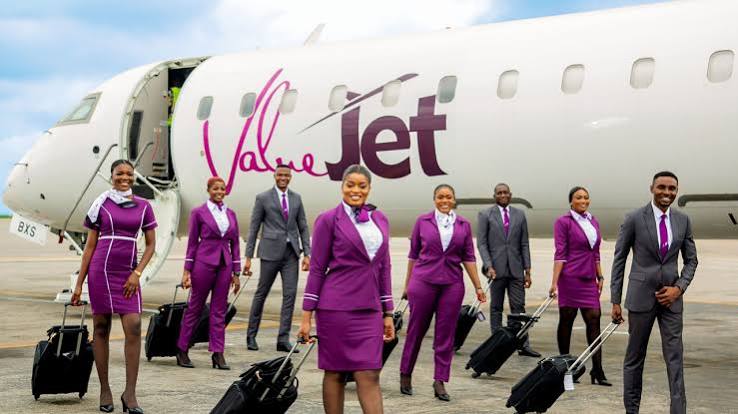
AS part of efforts to improve operational excellence, transfer skills and support long-term growth of Nigeria’s aviation ecosystem, Boeing has partnered with Aviation Techniks Academy (ATT Academy) to deliver a six weeks specialised training engagement delivered by Boeing for personnel from United Nigeria Airlines and ValueJet Aviation. The Boeing Technical Maintenance Training Programme will hold at the ATT Academy, which will serve as the host training facility, providing a professional learning environment for the programme. CEO, Aviation Techniks and Training International Limited, Odutola Joshua Olawale, hailed the partnership, noting that bringing together aviation giants means a lot to the industry and will open it up to world class opportunities.  Expressing optimism that the training will provide opportunities in terms of expansion and transfer of skills and knowledge, he said traveling abroad to access this level of specialised training has become harder but with Boeing coming to Nigeria, he described it as a big win for the industry. He added that ongoing reforms have renewed investors’ confidence in the sector and predicted a boom in Nigeria’s air travel business in the nearest future. Speaking, Executive Sales Director, African region, Boeing commercial airplanes, Moore Ibekwe Jnr, said four factors have boosted the aviation sector n Nigeria. He went on to list access to credit and dry lease, improved technical capabilities, improved airport infrastructure and a stronger regulatory environment as the factors that have repositioned the industry in recent times. He revealed that an MoU between Boeing and Nigeria, with nine pillars, was signed in August 2024. “We intend to enhance technical support and have specialists some in from time to time to maintain the Boeing aircrafts operating in the Nigerian airspace among other things. We also talked about airline operational safety support. We have several initiatives to work with the NCAA on improving air safety in Nigeria.” He added that the understanding also covers airport infrastructure development, improving the runways and airport infrastructure. He stressed that aircraft maintenance has always been a major issue and with their forecast of 1200 airplanes to be delivered on the continent in the next 20 years; about 77,000 aviation professionals will be needed to maintain these aircrafts. “The service industry is a huge one and worth about $130 billion. Bringing in these airplanes would create jobs not just directly but also indirectly and develop the capabilities of our people as well.” He said their goal is to ensure Nigeria is one of the countries in Africa with a fully well developed aviation sector, promising that a lot will change over the next few years. Consul General of the United States consulate in Lagos, Rick Swart, hailed the partnership, saying it will help young Nigerians develop capability in the sector without having to leave the country. Hailing the thriving aviation sector in the country, he highlighted the company’s long-standing commitment to the sector. “Boeing continues to invest in the people who keep Nigeria’s aviation industry moving safely and efficiently and today’s training programme is just another example of that commitment. Our efforts at the U.S. mission in Nigeria is to advance economic growth and strengthen commercial ties between the U.S and Nigeria. “Companies like Boeing help strengthen critical sectors of the economy by bringing world-class technology, expertise, innovation and training to the market. In 2025, bilateral trade between both countries grew by 15 per cent or $15 billion, making Nigeria the US’ number two trading partner in Africa.” He vowed to continue to work with the Nigerian government and private sector to support stakeholders to expand trade, encourage investment and support economic growth, with the aviation sector being a key part of this. He noted that by investing in workforce development, Boeing is helping to strengthen aviation safety, improve operational excellence and support the long-term growth of Nigeria’s aviation ecosystem. “Across Africa, nearly 70 per cent of commercial aircraft in service are Boeing airplanes, underscoring the company’s long-standing partnership with the continent’s aviation trajectory. We appreciate Boeing’s commitment to developing the next generation of aviation professionals and look forward to continued collaboration that strengthens the commercial trade ties between the US and Nigeria,” he said. Representing the minister of aviation and aerospace development, Festus Keyamo, Special Adviser, foreign direct investment and capital improvement programs, Samuel Obafemi Bajomo, hailed the partnership, noting that repressive policies that were holding back the aviation sector have been reviewed in the last few years. He said this partnership stems from those reforms and a market that has opened up. “We’ve been able to restore lessor confidence and brought back one of the largest lessors in the world to Nigeria after 10 years.” He said the next step is building capacity and talent development to better serve the sector. “Like Moore said, training, building capacity, technology transfer, increasing capacity in terms of technical knowledge and technology for our operators, engineers and service providers is key and this is something that Boeing has been doing. Managing Director, United Nigeria airlines, Osita Okonknwo, hailed the training, noting its importance to the sector. He said a training of this magnitude would ordinarily have been done in England, expressing happiness at bringing it to Lagos. Managing Director, ValueJet, Captain Omololu Majekodunmi, also hailed the partnership, adding that it would be great to see a Boeing stimulator in Nigeria so they don’t have to take that money out of Nigeria. “In the next 15 years or so, it would be great also to start assembling Boeing aircrafts here in Nigeria. We would have built the capacity and manpower,” he said.

Aviation News

ValueJet seeks Boeing simulator in Nigeria to cut FX losses

Managing Director and Chief Executive Officer of ValueJet, Capt Omololu Majekodunmi, Tuesday, urged American aircraft manufacturer, Boeing, to establish a flight simulator in Nigeria. Majekodunmi said it would reduce foreign exchange outflows, lower training costs and improve aviation safety. He spoke as Boeing commenced the first tranche of its advanced technical training programme for Nigerian airline engineers, hosted by Techniks and Training Academy, ATT Academy, in Lagos. The training, which stems from a 2024 Memorandum of Understanding between Boeing and the Ministry of Aviation and Aerospace Development, is taking place from June 16 to July 29 and will train 16 engineers from Nigerian carriers, United Nigeria Airlines and ValueJet. Majekodunmi said hosting the training in Nigeria had helped save foreign exchange and delivered economic benefits. Speaking during the opening ceremony, he said: “We have saved foreign exchange that would otherwise have been spent abroad. Also, our engineers, both from United Nigeria Airlines and ValueJet, can all be in the same classroom receiving the same quality of training. “Meanwhile, we want to see a Boeing simulator in Nigeria. We don’t have to take the money out again. It is also about safety. I have been in this business for seven years, and if, for any reason, you do something wrong or there is a procedural error, the airline, the Director of Flight Operations or the company simply pulls you offline and says: ‘please go back to the simulator for the next one, two or three days and repeat that procedure.’ It is not easy to do that under the current arrangement. “You can’t do it in this kind of economy. I can’t send you to America or the UK for a simulator procedure that lasts only three days. But when you have a simulator within your environment, it becomes much easier. We would also like to see, perhaps in the next 10 to 15 years, Boeing aircraft being assembled in Nigeria.” Also speaking at the event, Minister of Aviation and Aerospace Development, Mr Festus Keyamo, said policy reforms introduced by the current administration were driving investments into the aviation sector, adding that there was also a need to build technical and human capacity. Keyamo, represented by his Senior Special Adviser on Foreign Direct Investment and Capital Improvement Programmes, Samuel Bajomo, said: “What Boeing has been doing in accordance with our existing MoU is centred on one of its key pillars, which is training. Training, capacity building, technology transfer, and increasing technical knowledge and expertise for our operators, engineers and service providers are among the major contributions Boeing has been making. “Also, in terms of driving investments, there have been a lot of policy reforms introduced by the current administration. These policy directions have helped open up the industry. “So, Nigeria is on the cusp of positioning itself to ensure it has the technical capacity, human capital and industry readiness to take advantage of the opportunities coming its way. I really appreciate the efforts of industry players, especially the Airline Operators of Nigeria and other airline operators.” Meanwhile, Managing Director of United Nigeria Airlines, Mr Osita Okonkwo, said: “I think it is through this kind of relationship and teamwork that Nigeria’s aviation sector market will be developed and fully exploited by Nigerians, rather than leaving the market for others to exploit. In terms of aircraft, personnel and training, this capacity building will be one of the first steps towards making that a reality. We are happy that Boeing has come on board, and more importantly, that this is evolving into a long-term relationship.” For his part, Executive Sales Director, Africa Region, Commercial Airplanes at Boeing, Moore Ibekwe, noted that the global aerospace giant was exploring pathways to assist domestic operators, adding that Nigeria’s improved standing on the Cape Town Convention compliance index has significantly eased lessor anxieties regarding fund tracking.

Aviation News

United Nigeria Airlines booking now on GDS

United Nigeria Airlines (UNA) has officially gone live on the Amadeus Global Distribution System (GDS), a move the airline says marks a major milestone in its commercial and distribution strategy. The integration means travel agents, corporate clients, and travel management companies around the world can now search, book, and manage United Nigeria Airlines flights directly through the Amadeus platform, instantly boosting the carrier’s visibility and accessibility across the global travel marketplace. Speaking on the launch, United Nigeria Airlines’ Chief Commercial Officer, Adedayo Olawuyi, described the Amadeus integration as a major leap forward for the airline’s distribution capabilities. “Our integration with Amadeus represents a major leap forward in our commitment to providing convenient and efficient access to our services. It opens up United Nigeria Airlines to a wider global audience and strengthens our ability to serve both domestic and international travelers through trusted travel partners, while also enabling us to scale distribution, deepen market penetration, and enhance overall customer convenience. With this launch, UNA joins a network of leading global carriers leveraging Amadeus GDS to deliver improved booking experiences, real-time inventory access, and enhanced fare management capabilities,” Olawuyi said. The airline has recently added more Boeing 737-800NG aircraft to its fleet, with a new addition set to be unveiled on Thursday, June 18,  a development the carrier says will help it meet rising passenger demand and improve operational efficiency. UNA also confirmed it is exploring regional expansion opportunities and new strategic partnerships aimed at strengthening connectivity and supporting long-term growth across its network. Reacting to the partnership at UNA’s Lagos office, Amadeus Regional General Manager, Yaan Gilbert said the deal underscores the company’s broader strategy for Africa’s aviation sector. “This major partnership perfectly illustrates Amadeus’ core commitment: focusing and investing deeply in Africa to support the region’s booming aviation market, modernize travel tech infrastructure, and connect local carriers to the global stage.

Scroll to Top