Aviation News

Airline’s Direct Flight Cuts Nigeria-Brazil Travel Time To 7 Hours

Air Peace said on Saturday that Brazil’s National Civil Aviation Agency (ANAC) has approved it to operate scheduled air services between Nigeria and Brazil. The airline said that ANAC Ordinance No. 19.449/2026 authorised the carrier to operate regular passenger, cargo and mail services between Brazil and destinations across its international network. The approval, it said,  allows for direct flights that would reduce travel time between the two countries from about two days with stopovers to roughly seven hours. Observers say a direct route could increase tourism, trade, investment and people-to-people exchanges, and expand cargo links between Nigeria, Brazil and the South American region. Air Peace has also applied for landing rights in Toronto and New York, and is finalising arrangements to resume flights to Jeddah and Guangzhou. The airline plans three weekly flights to Manchester and recently announced new regional services to Libreville, Conakry, Bamako and Douala starting August 1. Its current international network includes London, Barbados and a number of West African cities such as Accra, Freetown, Dakar, Banjul, Monrovia and Abidjan.

Aviation News

From airports to airlines, govs sink over N500b in new carriers, fleet

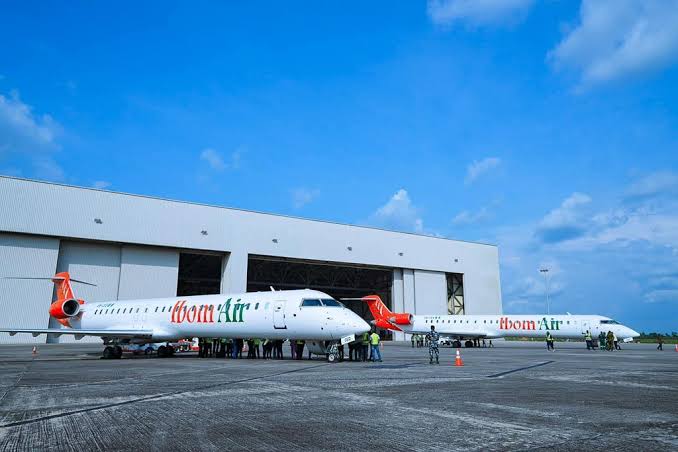
No fewer than four state governments have set up their own airlines in the last seven years, spending an estimated N500 billion in the carriers’ set-up and fleet acquisition. Apart from the four states, at least three others – Ogun, Anambra and Lagos – are at different stages of establishing their own carriers, with a promise to provide jobs for hundreds of their indigenes and Nigerian aviation professionals. The emergence of state-owned airlines has further increased the number of scheduled carriers to about 15, serving a stagnant 15 million passengers over almost a decade, except in 2021, when the country recorded about 16 million travellers locally and on international routes. The emerging trend has raised questions among aviation experts on the logic and viability of state governments investing billions in airline operations at a time of pressing basic infrastructure deficits, healthcare challenges, educational funding gaps, and rising expenditure. Moreover, only a handful of Nigerian states can survive on internally generated revenue (IGR), while the majority depend on monthly disbursements from the Federal Allocation Account Committee (FAAC) to pay salaries and cover other essential spending. Recall that the first state-owned airline was Imo Air, launched in January 2017 by the past Imo State Governor, Rochas Okorocha, in partnership with the former Dana Air. Despite the fanfare that accompanied the launch, the 10-year partnership deal between Dana Air and the Imo State government did not stay in the air long before it was eclipsed. And none of the plans itemised for the airline’s growth materialised. Okorocha had promised to acquire five airplanes under the Imo Air project within a year, while hundreds of the state’s indigenes were also promised employment. Today, state-owned airlines in the country include Ibom Air (owned by the Akwa Ibom State Government), Cally Air, backed by Cross River State, Enugu Air (the Enugu State Government’s carrier) and Bayelsa State’s newly launched Pioneer Airline. Ibom Air was launched in 2019, while Cally Air (operated by Aero Contractors and later ValueJet was unveiled in 2020. Also, Enugu Air (operated by XeJet) was established last July, while Pioneer Airlines was born last month. In 2019, the Akwa Ibom State government claimed to have spent over N10 billion on Ibom Air during its startup phase and fleet acquisition, including three leased Bombardier CRJ900 aircraft. Also, in February 2023, the Akwa Ibom State Executive Council approved a major capital injection of N14 billion to recapitalise the airline and prepare it for regional flight expansion across Africa. The state government’s overall investment has grown significantly over time as it has made heavy capital commitments, including a commercial agreement to purchase 10 brand-new Airbus A220-300 aircraft to drastically expand the airline’s operations, valued at several billion naira. For Cally Air, the Cross River State Government said its initial acquisition of two aircraft cost it about $32.5 million. It has also expanded its fleet with an additional two aircraft, but has not made the cost implications public. Also, the Enugu State Government spent an initial N62 billion on startup and fleet acquisition for the establishment of Enugu Air, while plans were laid to further expand the fleet in subsequent budgets. The initial fleet was financed in partnership with a commercial bank in Nigeria. The Bayelsa State government budgeted about N25 billion to purchase aircraft for commercial operations for Pioneer Air. The state government recently acquired two aircraft – ATR 72-600 turboprops for non-scheduled flight operations. The costs are not static, as state governments continue to increase their spending on state-owned airlines by ordering brand-new aircraft. Of all the state-owned carriers, only Ibom Air has opened its books to the public, while Enugu Air and others are projecting profits. At its maiden Annual General Meeting (AGM) in June 2025, Ibom Air reported N96 billion in revenue and N16.6 billion in operating profit, with net profit of N6.8 billion. Imo also planned to divest some of its shareholding and bring on board new investors. Earlier in the year, the Enugu State government projected a net profit of N60 billion for Enugu Air over four years. The state’s Commissioner for Transportation, Dr Obi Ozo, said that setting up the airline and acquiring the three Embraer jets through outright purchase cost the government between $28 and $40 million, with plans for a gradual increase in the fleet. Ozo also said that Enugu State owns 100 per cent stake in the airline with a management agreement with Xejet Airline. According to him, the airline forms part of the state’s broader economic development strategy aimed at transforming Enugu into a major investment and tourism destination. All the state governments have expressed optimism about the success of the new airlines and the projected contributions to their economic development. But despite the optimism, concerns continue to mount over whether Nigeria’s aviation market is large enough to sustain the growing number of operators. Also, experts are concerned about continuity and transparency, especially when the costs of acquiring some equipment are not made public by the State governments. The Managing Director of Mainstream Cargo Limited, Seyi Adewale, in an interview with The Guardian, said that Nigeria’s air passenger growth remained tied to the expansion of Nigeria’s middle class. According to him, the upper-income segment of the population already flies regularly and contributes a stable share of passenger traffic. Adewale stated that, irrespective of the number of indigenous airlines, as long as the middle class remained stretched, the sub-sector would continue to record low traffic. He, however, argued that the country needed more airlines to serve yet-untapped routes across the country. He said, “The good thing about it is that we are connecting the dots and expanding the potential and the capacity to move ourselves around. When the middle-class blossoms, you see a quick jump in that passenger number. It is because we are correcting our economy that it appears stagnant, but when we stabilise, and the middle class begins to grow, then you will see an increase in passenger numbers. “Now, why are they setting up airlines? Because they have seen models that work. It will not surprise you that […]

Aviation News

FG approves New York, Dubai, Canada routes for United Nigeria Airlines — Keyamo

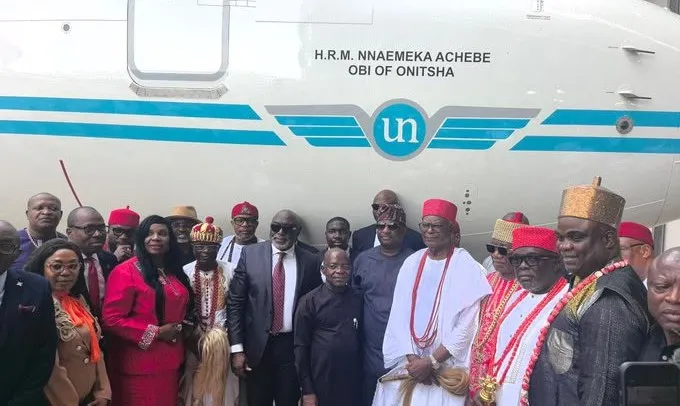
The federal government has approved several international routes for United Nigeria Airlines, including services to New York, Dubai and Canada, in what authorities describe as part of a broader strategy to strengthen Nigerian carriers and increase their share of international passenger traffic. The Minister of Aviation and Aerospace Development, Festus Keyamo, disclosed this on Thursday during the unveiling of two newly acquired Boeing 737-800 Next Generation aircraft by the airline. According to Mr Keyamo, the route approvals form part of ongoing efforts to reposition domestic airlines to compete more effectively on international routes, traditionally dominated by foreign operators. “We are giving United Nigeria Airlines about four or five routes. We are giving them New York, Canada, Dubai and some other viable destinations,” the minister said. Mr Keyamo said Nigerian airlines currently account for only a small fraction of international passenger traffic originating from the country despite bilateral agreements that provide reciprocal operating rights. According to him, foreign airlines transport between 90 and 95 per cent of passengers travelling from Nigeria to destinations across Europe, North America, the Middle East and other regions. “That market belongs to Nigeria as much as it belongs to any foreign airline. Our carriers must be empowered to participate meaningfully in that space,” he said. The minister explained that the approvals were granted ahead of the airline’s planned expansion to allow it build capacity and prepare for future international operations. He said the government’s aviation policy has focused on removing barriers that previously constrained the growth of domestic operators. Support for fleet expansion Mr Keyamo also linked the route approvals to ongoing government efforts to improve access to aircraft acquisition and leasing opportunities for Nigerian airlines. He disclosed that President Bola Tinubu had approved the establishment of a Nigerian aircraft leasing company aimed at helping domestic carriers secure aircraft through government-backed arrangements. According to him, the initiative is expected to reduce some of the financing challenges that have historically limited the expansion of local airlines. The minister said the government’s preference is to support privately owned Nigerian carriers rather than revive a state-owned national airline. He argued that many successful global airlines operate under commercial structures that minimise political interference and enhance efficiency. The route announcement came as United Nigeria Airlines unveiled two Boeing 737-800NG aircraft named after the Obi of Onitsha, Nnaemeka Achebe, and renowned Nigerian novelist, Chinua Achebe. The acquisition forms part of the airline’s fleet expansion programme. PREMIUM TIMES earlier reported that the airline recently disclosed losses of about N10 billion over a three-month period, blaming rising operating costs and a surge in aviation fuel prices linked to disruptions in global oil supply routes. Despite the financial pressures facing the industry, the airline said it remains committed to expanding its operations and improving connectivity across domestic and international markets. Beyond airline expansion, Mr Keyamo said the federal government is working with the Abia State Government on the development of the proposed Abia International Airport. He added that the long-term plan is for United Nigeria Airlines to establish a major operational hub at the airport when completed. The minister also reiterated plans to transform the Akanu Ibiam International Airport in Enugu into a dedicated cargo hub serving businesses across the South-east. According to him, discussions are ongoing to facilitate direct cargo flights between China and Enugu, a move expected to improve trade logistics for importers and exporters in the region. Mr Keyamo said reforms introduced over the past two and a half years are beginning to yield results across the aviation sector. He noted that the government spent considerable time engaging operators, regulators and other stakeholders to address longstanding industry concerns before implementing policy changes. “We took the issues one after another and focused on creating an environment where airlines can grow sustainably,” he said. Industry stakeholders at the event also highlighted improvements in aircraft financing, regulatory processes and technical training, while stressing the need for continued investment to support the growth of Nigeria’s aviation sector. They noted that expanding access to newer aircraft and strengthening local technical capacity would be critical to enabling Nigerian airlines to compete more effectively in regional and international markets.  

Aviation News

Operators seek reforms as United Nigeria honours Achebe with aircraft

Airline operators have renewed calls for urgent reforms in Nigeria’s aviation sector, warning that rising operating costs and funding constraints are threatening the long-term survival of domestic carriers. The concerns were raised in Lagos during the unveiling of two newly acquired Boeing 737-800NG aircraft by United Nigeria Airlines at the Murtala Muhammed Airport. The event, which attracted aviation stakeholders, government officials, and industry players, also served as a symbolic moment of cultural recognition as the airline named the aircraft after two prominent Nigerians –the Obi of Onitsha, Igwe Nnaemeka Achebe and the late literary icon Prof. Chinua Achebe. Speaking at the ceremony, the Chairman of United Nigeria Airlines, Prof. Obiora Okonkwo, said Nigerian airlines continue to operate in one of the most expensive and difficult aviation environments globally, quoting a recent report by the International Air Transport Association (IATA). He noted that airlines face heavy financial pressure from aircraft acquisition costs, maintenance, insurance, training of technical personnel abroad, and limited access to affordable financing. Okonkwo also drew attention to the impact of operational disruptions in recent months following the jet fuel crisis triggered by the US-Iran war and the closure of the Strait of Hormuz, estimating that flight cancellations and related interruptions have cost the industry about N10 billion in the last three months. He said such losses highlight the fragility of the sector and the urgent need for coordinated action to improve efficiency and reduce avoidable disruptions. He called for a review of the aviation sector’s revenue-sharing structure, urging the Federal Government to allow aviation agencies to retain a larger portion of their internally generated revenue. According to him, the current arrangement, which channels most earnings into the federation account, leaves key agencies underfunded and unable to deliver the infrastructure and services required to support airlines effectively. Improved funding, he said, would enhance regulatory capacity, upgrade infrastructure, and ultimately reduce the financial burden on operators through lower charges and better service delivery. He stressed that a more sustainable aviation ecosystem would benefit not only airlines but also passengers and the broader economy. Despite the challenges, Okonkwo expressed optimism about the future of United Nigeria Airlines and the Nigerian aviation industry as a whole. He described the acquisition of the two Boeing 737-800NG aircraft as a significant milestone in the airline’s growth strategy and a reflection of its commitment to improved operational reliability and passenger experience. On why the aircraft was named after the two icons, he said the decision was intentional, aimed at honouring individuals whose contributions to leadership, culture, and intellectual development have had lasting impact on Nigeria and Africa. The Obi of Onitsha, who attended the event, described the honour as deeply meaningful, particularly because one of the aircraft bears the name of his longtime friend and kinsman, Chinua Achebe. He reflected on Achebe’s global literary legacy, noting that the author’s works helped shape international understanding of Africa and gave voice to African stories on the global stage. He said Achebe’s influence continues to be felt across generations and continents, adding that it was common for people abroad to associate Onitsha with the celebrated writer. According to him, the recognition through aviation represents more than personal honour—it symbolizes the enduring impact of excellence and cultural identity. In his remarks, the Minister of Aviation and Aerospace Development, Mr. Festus Keyamo, SAN, reaffirmed the Federal Government’s commitment to strengthening indigenous airlines through targeted reforms and supportive policies. He said the government’s aviation roadmap is designed to ensure that local carriers are not only sustained but also positioned to compete effectively on regional and international routes. Keyamo highlighted ongoing reforms such as the implementation of the Cape Town Convention and the Irrevocable Deregistration and Export Request Authorisation (IDERA), which are aimed at improving investor confidence and easing aircraft leasing arrangements. He added that these measures have helped restore confidence among financial institutions, which had previously been reluctant to engage in aviation financing due to perceived risks. He also disclosed that the Federal Government has secured approval for the establishment of a national aircraft leasing company backed by government guarantees. The initiative, he said, will make it easier for Nigerian airlines to access aircraft under more favourable financial terms and reduce dependence on costly foreign leasing arrangements. According to him, the administration is also working to allocate more international routes to domestic carriers, as part of efforts to rebalance Nigeria’s aviation market, where foreign airlines currently dominate passenger traffic. He noted that strengthening local operators is central to the government’s broader economic and connectivity goals.

Aviation News

United Nigeria inks Air Bissau relaunch with Guinea-Bissau

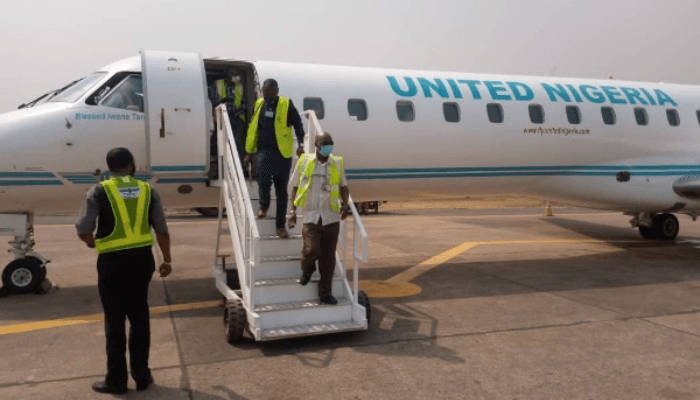
United Nigeria Airlines (UN, Enugu) has signed a memorandum of understanding with the government of Guinea-Bissau to re-establish the country’s national carrier, Air Bissau (Bissau), the Nigerian airline announced. The agreement was signed in Bissau by Guinea-Bissau’s Transport Minister, Florentino Mendes Pereira, and United Nigeria Airlines majority shareholder, chairman and CEO, Obiora Okonkwo. Under the agreement, the parties will establish a joint venture (JV) to operate the new iteration of Air Bissau, which closed down in 1998. Under the JV, United Nigeria Airlines will provide most of the investment, aircraft – most likely the airline’s E145s – plus operational expertise and management. The Nigerian carrier will also supply an executive jet for use by the president and government of Guinea-Bissau. For its part, the government has committed to designating Air Bissau as the country’s official national carrier, giving it access to traffic rights under the country’s bilateral air services agreement. It will also facilitate the airline’s certification and licensing through the civil aviation authorities of Guinea-Bissau and Nigeria, while supporting airport infrastructure, customs, immigration, and security arrangements at Bissau, which will serve as the airline’s base. United Nigeria Airlines will also support the training of Air Bissau pilots, cabin crew, and maintenance personnel and employ local staff where feasible. The memorandum stipulates that operational control and day-to-day management of the airline will rest with United Nigeria Airlines. The MOU takes immediate effect and will remain valid for 18 months or until the parties conclude a definitive joint venture agreement. The old Air Bissau operated between 1960 and 1998, serving domestic and regional routes with B727-200s, Fairchild F-27s, An-24s, and An-26s. Since then, the country has relied on ASKY Airlines, Royal Air Maroc, and TAP Air Portugal for international connectivity. Fleet expansion Meanwhile, United Nigeria Airlines has taken delivery of the first of six B737-800s acquired from Southwest Airlines as part of its fleet expansion programme. The 11.8-year-old N8642E (msn 42525) and 12.1-year-old N8627B (msn 36895) have been re-registered as 5N-CFC and 5N-CFB, respectively. According to ADS-B flight tracking data, 5N-CFB arrived in Lagos on June 13 after being ferried from Tallinn Lennart Meri via Algiers. Both aircraft were in Estonia since April 30 for painting and cabin reconfiguration in dual-class layouts. In an interview with ch-aviation in May 2026, Okonkwo said United Nigeria Airlines was targeting a fleet of 22 aircraft by the end of 2026 as it expands into at least five or six African destinations and launches intercontinental operations. Apart from the B737-800s, the in-house fleet comprises three E145s. The airline currently relies heavily on wet leases, including two A320-200s from Fly2Sky; two CRJ900s from CemAir; and one E190 from Windrose Airlines. According to Okonkwo, United Nigeria Airlines plans to wet-lease five more aircraft, including two A330-200s from Air Anka, two E190s from TrueNoord, and one more E190 from Windrose Airlines, all still to be deployed.

Scroll to Top