Aviation News

Aviation News

House Reaffirms Commitment to Global Aviation Standards

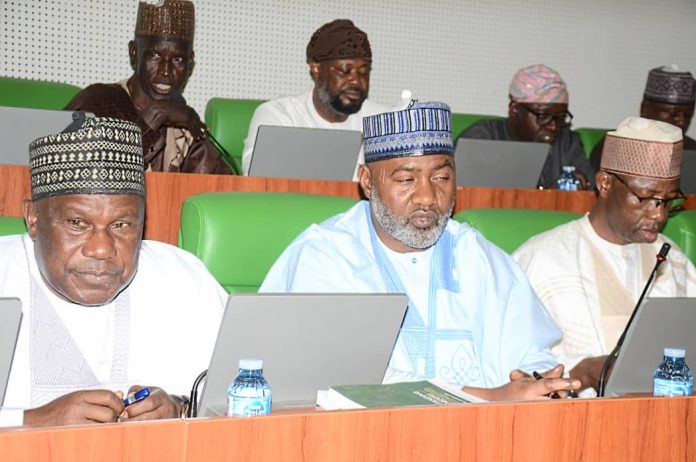
Nigeria’s House of Representatives has reaffirmed its commitment to aligning the country’s aviation laws with international best practices to strengthen the sector’s regulatory framework. The Speaker of the House of Representatives, Mr Tajudeen Abbas, made the commitment at a public hearing by the Committee on Aviation to consider two significant Bills currently before the House, in Abuja. He said that the Bills aim to update and strengthen the financial framework of Nigeria’s aviation industry by introducing transparent, automated remittance of the statutory 5% Passenger/Cargo Service Charges, improving how revenues are shared among key aviation institutions, and enhancing the capacity of these agencies to effectively manage and safeguard our airspace. He said that at their core, the proposals are about improving safety, efficiency, investor confidence, and the quality of service enjoyed by the Nigerian travelling public. “The first is a Bill for an Act to Amend the Civil Aviation Act, 2022, to provide for the automated remittance of funds accruing to aviation agencies, revise the revenue-sharing formula, reflect the renaming of the Accident Investigation Bureau to the Nigerian Safety Investigation Bureau, and for related matters. “The second is a Bill for an Act to Amend the Nigerian Airspace Management Agency (Establishment) Act, 2022, to revise the percentage of statutory charges accruing to the Agency, and for related matters,” Mr Abass said. He noted that the House is committed to making laws that guarantee stable and sustainable funding for vital agencies, and promote the growth of aviation as a driver of commerce, tourism, and national development. He therefore encourages all stakeholders to be candid, precise, and solution-driven in their submissions. “We expect you not only to identify areas that may raise concern, but also to suggest practical alternatives that will help us realise our shared goals of safety, transparency, accountability, and long-term sustainability,” he added. The Chairman, House Committee on Aviation, Mr Abdullahi Garba, commended the stakeholders for attending the public hearing. “Your presence reflects your commitment to the safety and development of Nigeria’s aviation sector,” Mr Garba said. In his remarks, the Chairman Senate Committee on Aviation, Senator Abdulfatai Buhari, said that the Nigerian aviation sector deserves legislation that would improve safety, regulations and services. Stakeholders at the public hearing made various proposals on the way forward for the aviation sector. The Managing Director/Chief Executive, Nigerian Airspace Management Agency, Mr Farouk Ahmed Umar, said that the aviation training must be excellent. He said that “Today, NAMA receive on every ₦1,000 of qualifying ticket, charter or cargo sales, the five per cent charge produces ₦50. NAMA receives ₦11 from that ₦50. Our effective share is therefore 1.10 per cent of the underlying sale. If this number is changed to 56 per cent, NAMA would receive ₦28 from the same ₦50. The five per cent charge itself would not increase.” He said that the increment would not burden the passenger. The Nigeria Civil Aviation Authority (NCAA) and other stakeholders called for an increase in revenue, especially an increase in the 5% ticket fee. The African Aviation and Aerospace University urged the National Assembly to recognise AAAU as a statutory beneficiary of the 5% Ticket Sales Charge. The Ag. Vice Chancellor of the University, Prof. Mustapha Abdullahi, said that the amendment presents an opportunity to strengthen Nigeria’s aviation sector by ensuring that funding is aligned not only with operational responsibilities but also with the long-term sustainability of aviation manpower development. Agencies in the sector and industry players commended the public hearing, saying it would address challenges in the aviation sector.

Aviation News

Nigeria, Canada approve 14 weekly passenger flights under new air deal

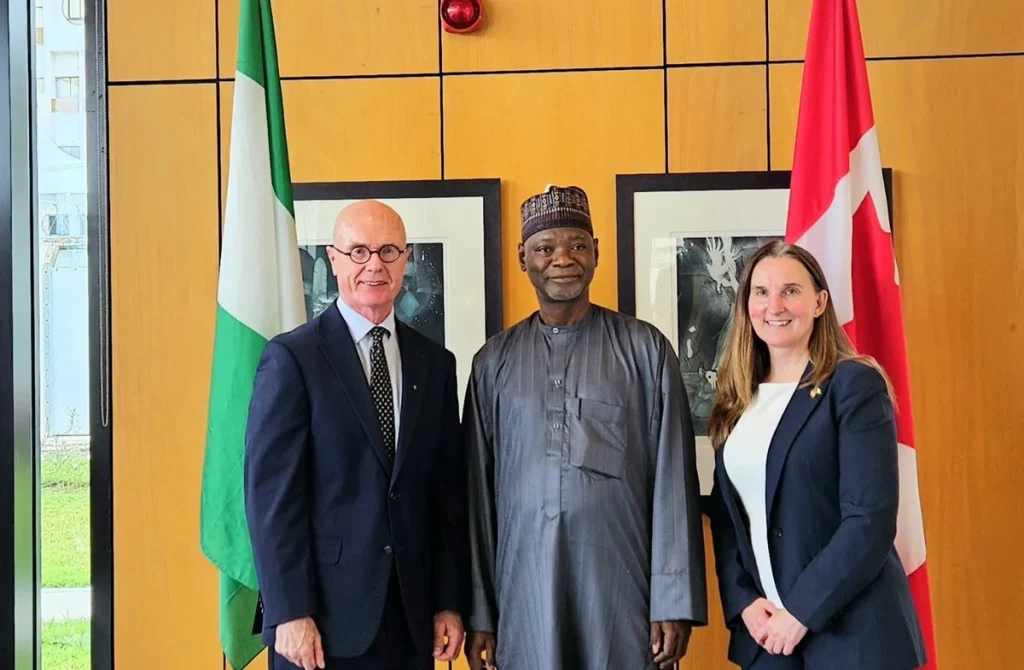
Nigeria and Canada have signed an expanded Air Transport Agreement that paves the way for direct scheduled passenger and cargo flights between both countries for the first time, with each side permitted to operate up to 14 weekly passenger flights. The development was announced separately by the Canadian and Nigerian governments on Thursday, August 6, following the signing of the expanded bilateral air transport agreement in Abuja. The agreement expands the existing code-share-only arrangement by allowing multiple designated airlines to operate scheduled services, increasing market access for passengers and cargo operators while laying the groundwork for direct commercial flights. What they are saying Canada and Nigeria said the expanded agreement is expected to improve connectivity, strengthen bilateral trade and provide more travel options for passengers and businesses. “By expanding our air transport agreements, we are creating new opportunities for Canadian airlines and giving travellers more choice. The newly expanded Canada-Nigeria Air Transport Agreement will strengthen our economic ties, support tourism and trade, and make it easier for people and businesses in both countries to connect,” Canada’s Minister of Transport and Leader of the Government in the House of Commons, Steven MacKinnon, said. Canada’s Minister of International Trade, Maninder Sidhu, said the agreement reflects Nigeria’s growing importance as a commercial partner and would strengthen trade, business and family ties between both countries. Nigeria’s Federal Ministry of Aviation and Aerospace Development described the agreement as a major milestone in bilateral aviation relations, saying it would pave the way for direct flights, reduce travel time, improve passenger convenience, lower logistics costs and strengthen commercial and cultural ties. Both governments expressed confidence that the agreement would create new opportunities for airlines, businesses and travellers while supporting stronger economic cooperation. Key provisions According to both governments, the expanded agreement introduces new operating rights for passenger and cargo airlines while broadening market access between Nigeria and Canada. Multiple airlines can now be designated by both Nigeria and Canada to operate scheduled air services. Each country is permitted to operate up to 14 weekly passenger flights and 10 weekly all-cargo flights. Cargo airlines will enjoy fifth freedom traffic rights, allowing them to transport freight between two foreign countries, provided the service originates or terminates in their home country. The agreement was signed on Nigeria’s behalf by the Director of Air Transport Management at the Federal Ministry of Aviation and Aerospace Development, Mohammed Ahmed Tijjani, representing the Minister of Aviation and Aerospace Development, Festus Keyamo. Canada’s Chief Air Negotiator for Global Affairs Canada, Shendra Melia, signed on behalf of the Canadian government following technical negotiations between officials of both countries. What you should know The expanded agreement marks the first major revision of the Nigeria-Canada Air Transport Agreement since it was negotiated in 2014 as a code-share-only arrangement and formally signed in March 2025. According to the Canadian government, Nigeria is Canada’s third-largest bilateral air market in Africa after Morocco and Algeria, while passenger traffic between both countries has more than doubled over the past decade. More than 25,000 Nigerians held valid Canadian study permits as of March 31, 2026, reflecting growing demand for travel between the two countries. National Bureau of Statistics data show Canada was Nigeria’s ninth-largest trading partner in the first quarter of 2026, with bilateral trade valued at N775.40 billion. Nigeria exported N670.29 billion worth of goods to Canada and imported N105.11 billion, resulting in a trade surplus of N565.17 billion. While the agreement creates the legal framework for direct scheduled air services, designated airlines from both countries will still need to obtain the necessary approvals and commence operations before passengers can begin flying directly between Nigeria and Canada.

Aviation News

LAAC’s 30th Conference targets balance between government revenue, aviation growth

Festus Keyamo, the Minister of Aviation and Aerospace Development, Wale Babalakin, Chairman of Bi-Courtney Aviation Services Limited, and Allen Onyema, Chairman of Air Peace Limited, are the leading dignitaries billed to lead discussions at the 30th edition of the League of Airports and Aviation Correspondents (LAAC) Annual Conference schedule to hold on Thursday, September 10, 2026, at the Providence Hotel, Ikeja, Lagos. The conference, which has become Nigeria’s foremost aviation industry dialogue platform, will bring together top government officials, aviation regulators, airline operators, airport managers and other stakeholders in the aviation industry to deliberate on the theme: “Towards a Sustainable Aviation Industry: Balancing Government Revenue Demands with Sector Growth.” The event will witness the unveiling of the second edition of LAAC’s Champions of Aviation publication which chronicles the achievements and exploits of aviation agencies, airline operators, and other industry players. Festus Keyamo, the Minister, is the Special Guest of Honour, while the Chairman of Bi-Courtney Aviation Services Limited (BASL), Dr. Wale Babalakin, SAN, will chair the event. Allen Onyema, Chairman of Air Peace Limited, will deliver the keynote address, bringing his extensive industry experience to bear on discussions expected to shape policy recommendations for sustainable growth in Nigeria’s aviation industry. Speaking on the forthcoming conference, Wole Shadare, Chairman of the LAAC Conference Committee, described this year’s theme as timely, noting that the aviation industry is at a critical point where government revenue expectations must be carefully balanced with policies that encourage investment, competitiveness and long-term sustainability. According to Shadare, “The aviation industry remains a strategic driver of economic development, trade, tourism and national integration. However, increasing fiscal pressures and multiple charges have continued to generate conversations about the need to strike a balance between government revenue generation and the growth of the industry.” He added that the conference would provide a credible platform for robust engagement among policymakers, regulators and operators, with the objective of developing pragmatic recommendations that would support a more competitive and sustainable aviation sector. “We have assembled some of the most respected voices in the industry to examine these issues from different perspectives. We expect meaningful conversations that will ultimately contribute to policy reforms capable of strengthening Nigeria’s aviation ecosystem,” Shadare said. On his part, Sulaiman Idris, Chairman of LAAC, affirmed the conference underscores the association’s commitment to promoting informed discourse on issues affecting the aviation industry through constructive engagement with stakeholders. He noted that for three decades, the annual conference has served as an important platform for shaping conversations around aviation development and policy in Nigeria. “Our annual conference has earned the confidence of industry stakeholders because it consistently addresses contemporary issues affecting aviation. As we mark the 30th edition, we remain committed to fostering dialogue that supports sustainable growth, enhances operational efficiency and promotes policies that will make Nigeria’s aviation industry more competitive,” he said. He urged aviation professionals, government agencies, private operators, financial institutions, and members of the public with an interest in aviation to participate in the conference. The 30th LAAC Annual Conference is expected to attract a broad spectrum of participants from across the aviation value chain, with discussions focusing on sustainable financing, regulatory policies, investment climate, infrastructure development, operational efficiency and strategies for ensuring that government’s efforts at ramping up revenue do not undermine the growth and competitiveness of Nigeria’s aviation industry.

Aviation News

Air traffic engineers warn against reducing NCAA ticket charge share

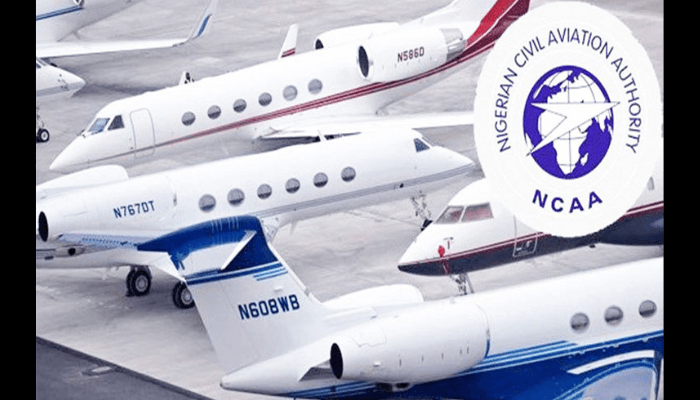
The Nigerian Civil Aviation Authority (NCAA) chapter of the National Association of Air Traffic Engineers (NAAE) has warned that any reduction in the Authority’s share of the Ticket Sales Charge (TSC) could undermine aviation safety oversight and weaken regulatory effectiveness nationwide. In an official communiqué, the association distanced itself from recent media reports attributed to the NAAE national president that supported a review of the TSC sharing formula. The NCAA chapter stated that the position expressed by the national leadership did not represent its views, stressing that it was neither consulted nor carried along before the publication was made. “As a national association with members spread across various aviation agencies, it is expected that matters of such national importance receive broad consultation before any public position is adopted,” the communiqué stated. Essential role of statutory funding in regulatory oversight The association noted that the Ticket Sales Charge is a statutory levy collected from airline passengers and shared among aviation agencies to enable them to discharge their respective mandates. It added that the existing formula reflects the complementary roles each agency plays in maintaining a safe, secure, and efficient aviation system. According to the chapter, the NCAA depends substantially on its allocation from the TSC because, unlike service providers, it does not operate airports, provide air navigation services, or generate significant commercial revenue. It explained that these funds support critical regulatory responsibilities, including the certification and licensing of airlines, airports, air navigation service providers, maintenance organisations, and aviation training institutions. Furthermore, the allocation finances safety inspections, economic regulation, consumer protection, and the enforcement of aviation regulations. It also funds inspector training, the procurement of specialised oversight equipment, information technology infrastructure, cybersecurity, laboratory services, and statutory financial obligations to global bodies such as the International Civil Aviation Organisation (ICAO), the African Civil Aviation Commission (AFCAC), and the Banjul Accord Group Aviation Safety Oversight Organisation. Strategic threats to safety compliance and audit performance The chapter cautioned that any significant reduction in the NCAA’s TSC allocation could lead to fewer safety inspections, delayed certification processes, and reduced capacity for training and equipment procurement. It warned that a diminished allocation would result in weaker compliance with ICAO standards and reduced oversight across airlines, airports, and navigation service providers. The association highlighted that such a deficit could increase the risk of adverse findings during ICAO Universal Safety Oversight Audit Programme assessments, erode international confidence in Nigeria’s aviation safety framework, and damage the country’s overall compliance status. “A strong regulator remains the foundation of every safe aviation system,” the statement read. “Effective regulation provides oversight over every operator, every airport, every air navigation service provider, and every aviation organisation. Weakening the regulator through reduced funding ultimately weakens the entire aviation industry.” Call for constructive dialogue and sustainable funding solutions While acknowledging the Nigerian Airspace Management Agency’s funding needs for communications, navigation, surveillance, and air traffic management infrastructure, the chapter argued that strengthening one aviation agency should not come at the expense of another. Rather than viewing the issue as a competition among agencies, the association called on stakeholders to pursue sustainable funding solutions capable of supporting all aviation institutions without compromising their statutory responsibilities. The chapter urged the national leadership of the NAAE and other industry stakeholders to embrace wider consultation, constructive dialogue, and evidence-based engagement before adopting public positions on national aviation policy. It reaffirmed its commitment to promoting aviation safety, regulatory excellence, and institutional cooperation in the overall interest of Nigeria’s aviation industry.

Aviation News

Latest!! Kano state to announce own airline

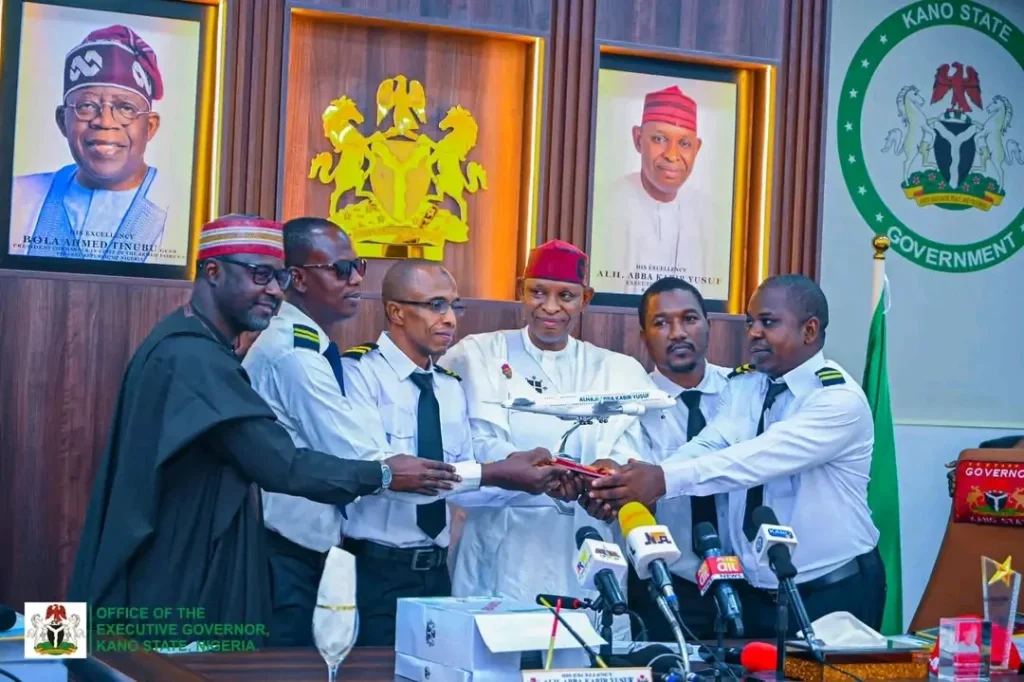
Another Nigerian state has revealed plans for a state-owned airline, this time Kano State, with Governor Abba Yusuf announcing that the proposed Kano Airline is expected to begin operations within the next year to create jobs for locally trained pilots. Yusuf unveiled the plan during the state’s 40th executive council meeting at Government House in Kano after receiving an award from the Kano State Pilot Association recognising his administration’s support for pilots completing their aviation training, the newspaper Punch reported. “By the grace of God, the proposed Kano Airline will commence operations within the next one year. We are committed to providing all the necessary support to actualise the project and ensure its successful operation,” the governor said. He said the airline would provide employment opportunities for Kano indigenes who had completed professional pilot training, including graduates of a state-sponsored programme in Jordan launched by a previous administration. The announcement adds Kano to a growing list of Nigerian state governments pursuing airline ventures. According to ch-aviation research, Nigeria currently has five state-backed airlines in operation or under development: Ibom Air (Akwa Ibom), Cally Air (Cross River), Enugu Air (Enugu), Air Bayelsa (Bayelsa), and Ebonyi Air (Ebonyi). Other states, including Anambra, Edo, Lagos, and Sokoto, have announced ambitions to establish their own carriers or partner with existing operators, while six northeastern states are jointly developing a proposed North-East Air Shuttle regional airline.

Scroll to Top