
Aviation News

Aviation News

Air Peace Denies Debt Reports, Cites Agreed NCAA Remittance Framework

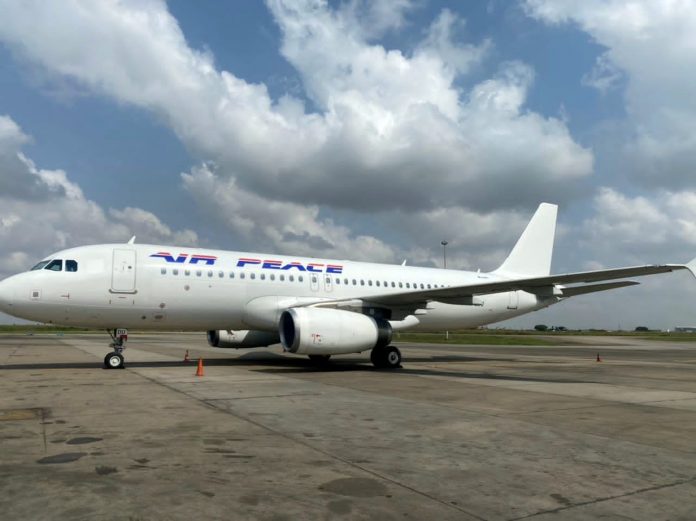
The Chief Operating Officer of Air Peace, Mrs. Toyin Olajide, has condemned the recent picketing of the airline by aviation unions over the alleged non-remittance of the five per cent Ticket Sales Charge (TSC), describing the action as unlawful, violent and financially damaging. Speaking during an interaction with newsmen in Lagos, Mrs. Olajide alleged that the unions ignored an existing court judgment restraining their actions and unlawfully disrupted the airline’s operations, resulting in losses exceeding ₦2 billion in a single day. According to her, the protest escalated into physical assaults on members of staff, with one female employee sustaining injuries. “They had no business coming to Air Peace. It was completely unacceptable and a violation of the court judgment against them. They had no right to board Air Peace aircraft or disrupt our operations. If you watch the video, you will see that one of our female staff members was bleeding. This is something we cannot tolerate.” Mrs. Olajide said beyond the immediate operational disruption, the airline suffered significant financial losses from flight cancellations and delays, in addition to compensation claims from affected passengers. “Yesterday alone, we lost over ₦2 billion. That is outside any compensation that will now be paid to passengers. Those liabilities arose because of the unions’ actions, and they should be held responsible.” The Air Peace COO dismissed reports circulating online on the airline’s alleged indebtedness to aviation agencies, insisting that discussions on the remittance of Ticket Sales Charges are already being handled through a structured arrangement coordinated by the Nigeria Civil Aviation Authority (NCAA). She explained that the issue is not peculiar to Air Peace but involves several airlines operating in the country. “The Director-General of the NCAA has already stated publicly that airlines have been complying. Meetings were held, and there is an agreed framework between the NCAA and the airlines on how outstanding obligations will be addressed. Air Peace is part of that arrangement.” Mrs. Olajide noted that aviation agencies issue invoices after services have been rendered, making it impossible to state an exact outstanding figure at any given time. “I cannot categorically tell you today that Air Peace owes a specific amount because invoices are issued after services are provided. What I can say is that the figures being circulated online are completely false.” She added that Air Peace has contributed substantially to the revenues of aviation agencies over the years and questioned why the airline was singled out despite ongoing engagements with the regulator. “This is not an Air Peace issue alone. Every airline is involved in the discussions with the NCAA. So why was Air Peace selectively targeted when there is already a court judgment and a structured repayment process?” The airline maintained that while workers have the constitutional right to pursue their welfare, industrial actions must be conducted within the law and should not endanger lives, disrupt critical aviation services or interfere with ongoing regulatory processes. Air Peace reiterated its commitment to working with the NCAA and other aviation agencies to resolve all outstanding issues through dialogue while pursuing legal remedies over the disruption caused by the picketing.
Aviation News

FG Gives Airlines One Week to Agree TSC Repayment Plans With Aviation Agencies

The Minister of Aviation and Aerospace Development, Mr. Festus Keyamo, has brokered a resolution between aviation unions, airline operators and government agencies. This is aimed at ending the industrial dispute that recently disrupted flight operations across the country. The emergency stakeholders’ meeting, held as a follow-up to the suspension of the unions’ industrial action on August 11, focused on the five per cent Ticket Sales Charge, TSC, and the unionisation of airline workers. The major resolution is for the Nigeria Civil Aviation Authority, NCAA, and other aviation agencies to work with airlines on realistic repayment schedules for outstanding statutory obligations, taking into account their operational costs and prevailing economic realities. Finance directors of the agencies are expected to conclude the repayment arrangements with individual airlines within one week. The meeting also resolved that airline workers must be allowed to freely decide whether or not to belong to a union. Consequently, the NCAA is to ensure that unions have direct access to workers across all airlines solely to distribute unionisation forms and allow employees to make their choices independently. The regulatory agency is empowered to sanction any airline that obstructs the process. The stakeholders are expected to reconvene in one month to review implementation and assess the state of the dispute. The Minister, according to the Permanent Secretary, Mahmud Kambari, reaffirmed the Federal Government’s commitment to a safe, peaceful, efficient and sustainable aviation industry.

Aviation News

Air Peace Expands African Network With New Lagos–Douala–Libreville Route

West Africa’s largest airline, Air Peace, has expanded its African network with the launch of a new Lagos–Douala–Libreville service, just a day after beginning operations on the Lagos–Conakry–Bamako route. The inaugural flight landed in Douala, Cameroon, where Nigerian diplomats, airport authorities and aviation regulators welcomed the airline. Officials say the new connection will boost business, tourism and travel between Nigeria and Cameroon. Air Peace then continued to Libreville, Gabon, where the airline received a similar reception from airport managers, civil aviation officials and representatives of the Nigerian community. Speaking during the launch, Air Peace Chief Commercial Officer, Nowel Ngala, described the route as another major step in the airline’s drive to build a stronger and more connected African aviation network. He said the service will give passengers easier access to destinations across West and Central Africa, as well as onward connections through Lagos to international routes, including London and the Caribbean. The back-to-back launch of the Douala–Libreville and Conakry–Bamako services highlights Air Peace’s growing regional ambitions and strengthens Lagos’ position as a key hub for intra-African travel, trade and investment.

Aviation News

NCAA Engineers Disown NAAE Position On Ticket Sales Charge Review

The Nigerian Civil Aviation Authority (NCAA) Chapter of the National Association of Air Traffic Engineers (NAAE) has rejected a position reportedly taken by the association’s national leadership on the proposed review of the aviation Ticket Sales Charge (TSC) sharing formula. Their position was contained on Wednesday in a statement signed by the association’s chapter Chairman, Mr. Agunloye Frederick. They warned that any reduction in the NCAA’s allocation could weaken aviation safety oversight in the country. In a communiqué, the chapter said it was not consulted before the position was made public, stressing that the statement did not reflect the views of its members within the NCAA. “The NCAA Chapter of NAAE was neither consulted nor carried along before the publication. Consequently, we respectfully dissociate ourselves from the publication, and it should not be regarded as the collective position of all NAAE members across the aviation industry,” the communiqué stated. The chapter argued that the Ticket Sales Charge is the primary source of funding for the NCAA’s statutory responsibilities, including safety oversight, certification of airlines and airports, consumer protection, economic regulation, implementation of International Civil Aviation Organization (ICAO) standards, and continuous surveillance of the aviation sector. It cautioned that reducing the regulator’s share of the TSC would have far-reaching implications for aviation safety and regulatory efficiency. According to the communiqué, such a move could lead to fewer safety inspections, delays in certification and licensing processes, inadequate training of inspectors, reduced acquisition of specialised oversight equipment, weaker compliance with international safety standards, and slower responses to emerging safety concerns. “A strong regulator is the foundation of a safe aviation industry. Weakening the regulator through inadequate funding weakens the entire aviation ecosystem,” the chapter said. While recognising the financial challenges facing the Nigerian Airspace Management Agency (NAMA), the engineers maintained that addressing one agency’s funding needs should not come at the expense of another institution with critical statutory responsibilities. They urged stakeholders to pursue sustainable funding mechanisms capable of strengthening all aviation agencies rather than redistributing existing resources in a way that could compromise safety. The chapter also called on the national leadership of NAAE and other industry stakeholders to embrace broader consultation and evidence-based engagement before taking public positions on policy issues affecting the aviation industry. It reaffirmed its commitment to supporting policies that promote aviation safety, regulatory excellence and collaboration across the sector.

Aviation News

Increased competition in Nigeria’s aviation sector will reduce domestic airfares — Keyamo

The Minister of Aviation and Aerospace Development, Festus Keyamo, has said increased competition among airlines will help reduce domestic airfares in Nigeria, amid concerns over the rising cost of air travel. Keyamo stated this during an appearance on Channels Television’s Politics Today on Thursday, noting that domestic flight fares had already dropped significantly from the levels recorded during the Christmas period. According to the minister, the decline is being driven by the entry of more airlines into the country’s commercial aviation market. “Guess what? What did you pay during Christmas? Four hundred and something, five hundred thousand. What is it now? It’s a hundred and something. We are forcing it down by competition. We have opened the doors,” he said. Keyamo said Nigeria was experiencing an unprecedented increase in the number of airlines seeking to operate commercial services, with new carriers emerging and others preparing to begin operations in different parts of the country. “Under the previous government, you have not seen this kind of surge we are having now into the airline business, commercial airline business, like you have now,” he said. He listed Enugu Air among the new entrants and disclosed that Caliphate Airlines was preparing to commence operations in Sokoto. The minister said the new carriers were being established on more sustainable business models, unlike in the past when many domestic airlines struggled to remain operational. “It’s only President Bola Tinubu’s government that has made it a point, a one-point agenda, to support the sustenance of local airlines. The growth and sustenance of local airlines,” Keyamo said. On concerns over the high cost of aviation fuel, Keyamo explained that the pricing of Jet A1 was outside the regulatory mandate of the Ministry of Aviation and Aerospace Development. He said aviation fuel is a petroleum product and falls under the jurisdiction of the petroleum ministry. Keyamo added that he had engaged fuel marketers and convened meetings to address concerns over the cost of Jet A1 but maintained that his ministry lacked the authority to regulate or determine its price. He attributed the recent increase in aviation fuel prices partly to external developments, including the conflict involving Iran, adding that prices had started to decline. The minister maintained that although the aviation sector was directly affected by the cost of Jet A1, it would be unfair to hold the aviation ministry solely responsible for an issue outside its regulatory authority.

Scroll to Top