
Aviation News

Aviation News

Ageing aircraft plague African aviation, AASA chief warns

Fresh concerns have emerged over the state of Africa’s aviation industry, with the Chief Executive Officer of the Airlines Association of Southern Africa, Aaron Munetsi, warning that airlines are grappling with ageing aircraft, weak revenues and deep structural challenges that continue to limit growth. Munetsi made this observation during the second day of the Nigerian Aircraft Acquisition and Investment Summit in Lagos, where he painted the picture of an industry struggling to match other continents. Lamenting the disparity between Africa’s population and its aviation capacity, Munetsi said the continent’s fleet size remains alarmingly low. He said, “The whole continent has less than 1,000 aircraft. Compare that to Delta Air Lines, which alone operates about 1,500 aircraft. That tells you the size of the gap we are dealing with.” Munetsi said Africa’s aviation output is severely inadequate relative to its roughly 1.4 billion population. “Something is wrong somewhere,” he declared, attributing the situation to deep-rooted systemic challenges that continue to hold the sector back. He further revealed that out of 52 airlines and flag carriers across the continent, only a few are functioning optimally. He said, “With 52 airlines, flag carriers across the continent, only seven are fully operational, and of those seven, only one is profitable.” Munetsi noted that Africa contributes just about two per cent to global aviation, a figure he described as disproportionately low when compared to its landmass and growing demand for connectivity. According to him, the sector’s struggles are tied to economic and regulatory constraints that make expansion and sustainability difficult. He explained that “the crisis is rooted in a combination of economic limitations and regulatory inefficiencies. Many of our economies are not structured to support the financial demands of running airlines, which require heavy capital investment and long-term planning.” Hinting at the many challenges facing the industry, Munetsi disclosed that some African airlines generate extremely low revenues. “We are getting less than one million dollars in some cases. How do you build capacity, acquire aircraft, or compete globally under such conditions?” he queried. He also drew  attention to the ageing fleets across the continent, warning that Africa operates some of the oldest aircraft globally, a development that continues to erode efficiency and competitiveness. “According to industry statistics, we have the oldest fleets globally and the smallest fleets globally,” he said. Despite the terrible complaints, Munetsi maintained that Africa’s aviation industry still holds immense promise if the right policies and investments are put in place. “Yet, we are sitting on enormous potential, a vast landmass, a growing population, and increasing demand for connectivity,” he added. Meanwhile, it will be recalled that the Director-General of the Nigeria Civil Aviation Authority, Chris Najomo, had at an earlier forum said the age of an aircraft should bother no one if it is well maintained, adding that adequate maintenance is not for an aircraft and that when that is achieved, the age of an aircraft is of no concern. It stressed the need to preserve the safety and security of international air travel and urged Iran to halt the actions. “The Council urgently called upon Iran to cease its unlawful activities and respect its obligations under the Chicago Convention and other relevant international civil aviation treaties,” the statement read.

Aviation News

Air Peace London route from Gateway International Airport – Onyema Announces

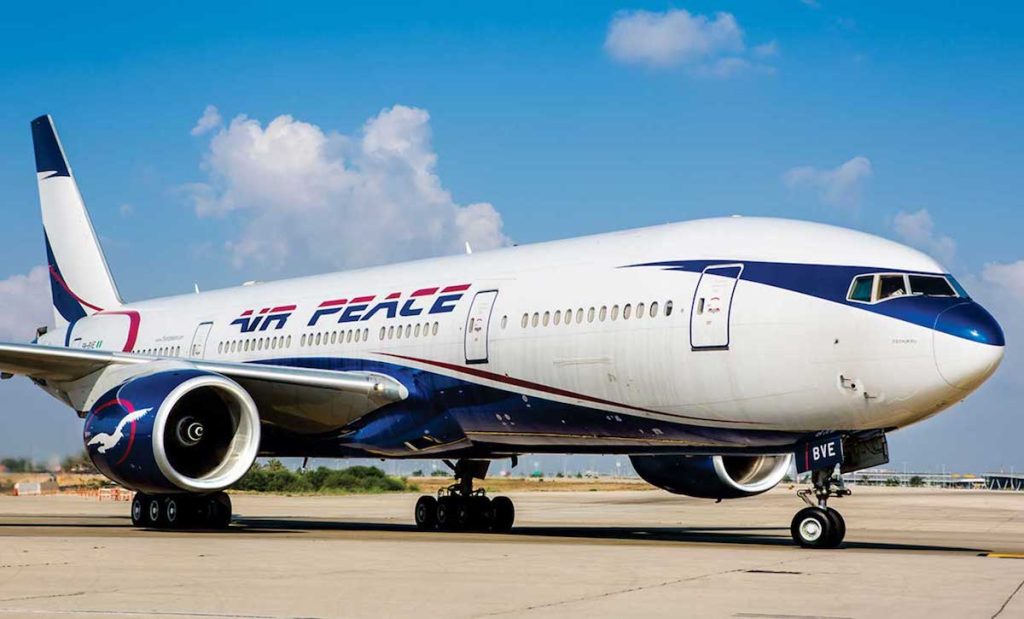
Air Peace, Nigeria’s largest airline and a leading carrier in West Africa, has announced plans to commence international flight operations from Gateway International Airport to London this summer. The airline’s Chief Executive Officer, Allen Onyema, disclosed this during an interview with journalists after inspecting the airport facilities alongside Dapo Abiodun. The visit followed the official commissioning of the airport by Bola Ahmed Tinubu. According to Onyema, Air Peace will operate flights connecting the airport to both London Gatwick Airport and Heathrow Airport, marking a significant milestone for Ogun State’s aviation sector. He praised the state government for delivering a world-class aviation facility, describing the airport as one of the best-equipped in Sub-Saharan Africa. “This is one of the best-equipped airports in Sub-Saharan Africa, and Air Peace will not sit back and watch this facility go unused,” Onyema said. “When you see a promising initiative, you must embrace it.” He emphasized that the airport’s infrastructure meets global standards and highlighted its 4-kilometre runway, capable of accommodating large aircraft such as the Airbus A380. Air Peace, he noted, plans to deploy its Boeing 777 fleet for the London route. Onyema also revealed that he had received approval from the Minister of Aviation to proceed with the operations, describing the project as a national asset rather than a purely state initiative. Governor Abiodun, in his remarks, announced plans to further expand the airport’s ecosystem with the construction of an international conference and convention centre, alongside a 550-room five-star hotel. He said the development would position Ogun State as a hub for global business and tourism. The governor also disclosed that cargo operations have already commenced with Allied Air, while Ethiopian Airlines is expected to begin operations soon. Additionally, another European carrier is set to launch cargo services into the state. Abiodun projected that approximately 50 cargo flights would operate through the airport between April and the end of the year. He further revealed the establishment of Gateway Airlines, which has acquired two Bombardier CRJ900 aircraft. The 90-seater planes are expected to enhance connectivity between Ogun State, Abuja, and other major Nigerian cities. With these developments, the governor expressed confidence that the Gateway International Airport could soon become Nigeria’s third busiest aviation hub, after Lagos and Abuja.

Aviation News

Air Peace $41m Losses Expose Stereotypes and Unfair Aviation Dealings Against Nigeria

Nigeria’s aviation industry is facing a defining credibility test. However, the scale of Air Peace losses, now exceeding $41 million, has shifted the conversation toward reciprocity in global aviation relationships. Chairman Allen Onyema argued that while Nigerian airlines are expected to honour agreements strictly, foreign partners are rarely held to the same standard. He framed the issue as a systemic imbalance. Therefore, the concern is no longer just financial exposure but the absence of equal enforcement in cross-border aviation contracts. Meanwhile, Onyema insisted that fairness must become the foundation of future partnerships involving Nigerian carriers. He made this known in Lagos at the Nigeria Aircraft Acquisition Investment Summit (NAAIS), where industry leaders, regulators, and global partners gathered to assess investment opportunities and sector reforms. At the summit, Allen Onyema used the platform to spotlight Air Peace losses as a case study in unequal treatment within international aviation. Meanwhile, the event provided a high-level forum to push for reciprocity, as stakeholders debated how Nigeria can attract investment while ensuring fair and enforceable partnerships for indigenous airlines. Air Peace losses highlight unequal enforcement in global deals The Air Peace losses narrative stems from disputed engagements with a $3m loss to Syphax Airlines and $38m SmartLynx Airlines. In both cases, Onyema suggested that contractual protections failed in practice, particularly when enforcement required international cooperation. “I released that aircraft to protect Nigeria’s image,” Onyema said. “But we paid heavily for doing the right thing.” He explained that Syphax removed an aircraft under the pretext of maintenance without fulfilling replacement obligations. However, when Air Peace escalated the issue through the Nigerian Civil Aviation Authority, there was no meaningful resolution. “That aircraft left and was re-registered elsewhere,” he stated. “Till today, that $3 million is gone.” SmartLynx case deepens Air Peace losses and trust deficit The dispute with SmartLynx Airlines significantly expanded Air Peace losses, with Onyema estimating nearly $38 million in exposure. Payments were reportedly made upfront, yet the agreed operations never materialised. “They collected colossal sums and left unannounced,” he said. “Everyone here knows this happened.” Meanwhile, Onyema stressed that such incidents rarely trigger global scrutiny. Instead, the reputational burden often falls on the Nigerian airline, regardless of the underlying facts. Therefore, he argued that the system lacks balance and transparency. Reciprocity becomes central to aviation partnerships At the core of Onyema’s argument is reciprocity. He maintained that Nigerian airlines are constantly under pressure to prove credibility, while foreign operators are not subjected to equivalent reputational consequences. “If a Nigerian airline defaults, the whole world hears it,” he said. “But when we lose millions, who speaks for us?” This imbalance, he noted, reinforces a damaging perception. In addition, it discourages indigenous operators from entering complex leasing and ACMI agreements, which are critical for fleet expansion. Therefore, Onyema called for a rules-based system where obligations are enforced equally, regardless of origin. New policy direction strengthens local confidence Despite these challenges, Onyema expressed optimism about reforms under Aviation Minister Festus Keyamo and President Bola Ahmed Tinubu. He described current efforts as a shift toward institutional protection for local airlines. “We now have leadership that supports indigenous operators,” he said. “That was not always the case.” Meanwhile, industry bodies are working to codify protections into law. Through collaboration with regulators and lawmakers, stakeholders aim to ensure that cases similar to Air Peace losses are addressed more effectively in the future. Commitment to discipline alongside demand for fairness Onyema was equally firm on internal accountability. He assured partners that Nigerian airlines will uphold their financial and operational commitments to avoid damaging the industry’s collective reputation. “No Nigerian airline will default again under our watch,” he stated. However, he emphasised that discipline must be matched with fairness. Therefore, foreign partners must also face consequences when agreements are breached. In addition, global institutions like the International Civil Aviation Organization and International Air Transport Association should strengthen dispute resolution mechanisms. A turning point for global perception of Nigerian airlines The Air Peace losses case underscores a broader industry shift. It highlights the urgent need for balanced narratives and equitable enforcement in international aviation. Meanwhile, Onyema’s position signals a more assertive stance from Nigerian operators. “We will meet our obligations,” he concluded. “But the world must also treat us fairly.” Therefore, the future of Nigeria’s aviation growth may depend not only on capacity expansion but on achieving true reciprocity in global partnerships.

Aviation News

Nigeria Leads Africa’s Traffic Surge with 10.5 million Domestic Passengers

Nigeria is driving a strong traffic surge in Africa’s aviation sector, positioning itself as a major growth hub. The country recorded about 10.5 million domestic passengers in 2025, reflecting a 10.0% year-on-year increase. Citing Official Airline Guide data, this performance places Nigeria firmly as Africa’s second-largest domestic aviation market. While Nigeria records strong double-digit growth at 10.0%, it trails Egypt (14.6%), Morocco (13.8%), and Algeria (12.7%) in year-on-year growth rates. Meanwhile, sustained demand, improved connectivity, and expanding airline capacity continue to reinforce this upward trajectory across the country’s airports. Nigeria’s Traffic Surge The traffic surge in Nigeria’s domestic passenger numbers signals rising mobility and economic activity. However, it also reflects broader structural improvements in aviation infrastructure and airline operations. In addition, Nigeria’s growth is happening alongside continental expansion, where several African markets are recovering and scaling capacity. Therefore, Nigeria’s position becomes even more significant within a competitive and evolving regional landscape. Nigeria’s aviation performance was highlighted at the ACI Africa Regional Conference in Luanda. The Managing Director and Chief Executive of the Federal Airports Authority of Nigeria (FAAN), Mrs. Olubunmi Kuku, emphasised that airports are strategic economic assets. She stated that, “airports are not simply transport facilities; they are strategic assets that connect people, unlock trade, stimulate tourism, support jobs, and strengthen national and regional economies.” Nigeria’s traffic surge is also evident at major gateways such as Lagos and Abuja. The Murtala Muhammed International Airport, Lagos recorded an 11.8% increase in air traffic movements in 2025. In cargo, Lagos achieved a remarkable 34.4% growth, the highest among Africa’s top ten airports. These figures underscore Nigeria’s expanding role in both passenger and freight segments of aviation. Meanwhile, two Nigerian airports ranked among Africa’s top ten for domestic passenger traffic. Nnamdi Azikiwe International Airport, Abuja and Lagos Airport continue to anchor domestic connectivity hence boosting said traffic surge. In addition, Nigeria’s combined traffic volume reinforces its strategic importance in continental aviation flows. According to industry data aligned with International Air Transport Association (IATA) standards, this growth reflects improving network efficiency and passenger confidence. Across Africa, domestic aviation is also expanding. South Africa remains the largest market with 28.2 million passengers, reflecting 7.8% growth. Egypt follows with 7.08 million passengers and the strongest growth among the top three at 14.6%. Morocco, Kenya, and Tanzania also posted notable gains, indicating a continent-wide recovery driven by demand, tourism, and business travel. “These are not just statistics,” Kuku commented on the traffic surge. “They reflect the growing strategic importance of Nigeria as a key aviation, logistics, and commercial hub on the continent.” However, Nigeria’s trajectory stands out due to its scale and consistency. The country’s traffic surge is supported by increasing airline frequency, infrastructure upgrades, and policy alignment. In addition, improving airport services and regulatory oversight contribute to sustained growth. Institutions such as the Nigerian Civil Aviation Authority (NCAA) continue to play a key role in maintaining safety, compliance, and operational standards across the sector. Industry stakeholders also note that Africa’s aviation growth is increasingly linked to collaboration and investment. Airports are adapting to higher passenger volumes while modernising systems to improve efficiency. Meanwhile, cargo expansion is becoming a key growth driver, particularly in hubs like Lagos. These developments highlight the need for long-term planning, innovation, and resilience across airport networks. Nigeria’s rising profile was further reinforced by its invitation to host the next ACI Africa Conference in Abuja in 2026. The event will focus on “Next-Gen Airports: Driving Performance and Resilience.” This theme aligns with ongoing efforts to strengthen infrastructure, enhance digital systems, and improve passenger experience. In addition, it signals Nigeria’s commitment to shaping the future of African aviation. The broader implication of Nigeria’s traffic surge is clear. Aviation is no longer just about movement; it is a catalyst for economic integration and national development. Airports now function as commercial ecosystems that support trade, tourism, logistics, and employment. Therefore, Nigeria’s continued growth will likely influence regional aviation trends and investment flows in the coming years. As highlighted by FAAN managing director, the future depends on partnerships, innovation, and resilience. Nigeria’s current performance demonstrates progress, but sustained growth will require continued investment in capacity, technology, and regulatory frameworks. Meanwhile, aligning with global aviation standards through bodies like International Civil Aviation Organization (ICAO) remains essential for long-term competitiveness. Nigeria’s aviation sector is clearly on an upward path. The traffic surge across its airports reflects both demand and strategic execution. In addition, the country’s expanding role within Africa’s aviation network positions it as a central hub for future growth, connectivity, and regional integration.

Aviation News

Breaking!! Airline suspends staff over alleged mistreatment of physically challenged

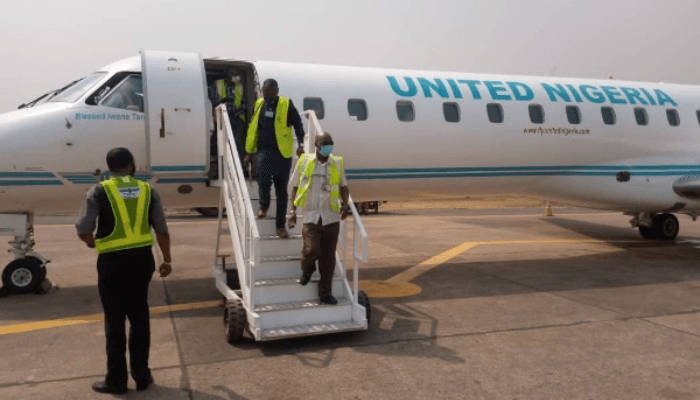
United Nigeria Airlines (UNA) has suspended an employee following allegations of unprofessional conduct involving a passenger with mobility challenges, Ms Doris Akonanya. The incident occurred during check-in for flight UN0526 from Abuja to Yenagoa on March 30, 2026. Spokesperson for UNA, Chibuike Uloka, confirmed the incident in a statement yesterday, emphasising the airline’s commitment to safety, dignity and well-being of all passengers. The statement highlighted the airline’s zero-tolerance policy towards misconduct, discrimination or abuse, particularly involving passengers requiring special assistance. The staff member will remain suspended pending the outcome of a full investigation into the matter. UNA assured that that appropriate disciplinary measures would be taken in line with its zero-tolerance for misdemeanour. It apologised to Ms Akonanya and her family for the distress caused by the incident, stating that “it does not reflect the company’s values” or standards of service. Uloka explained that the airline had maintained direct contact with the affected passenger and her family, offering apologies and ensuring that their concerns were addressed, while keeping them informed of ongoing actions. The airline also assured that it would continue to strengthen staff training, operational processes and oversight mechanisms to prevent a recurrence of such incidents. It also expressed appreciation for public concern and understanding as investigations continue.

Scroll to Top