Author name: admin

Aviation News

Unsettled Debts Owed to NAMA Exceed ₦9bn, Pressuring Operations

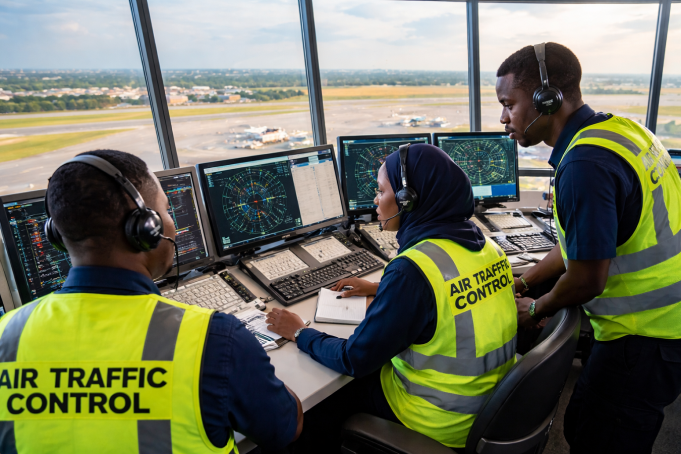
N geria’s air navigation agency is facing mounting financial strain, with unsettled debts, representing liabilities owed to the agency, estimated at over ₦9 billion when legacy and current obligations are combined.  Domestic airlines still in operation owe the Nigerian Airspace Management Agency (NAMA) ₦3,484,866,194.74 as at February 2026, while those no longer operating owe ₦5,558,689,645.25, bringing total NAMA’s unsettled debts to ₦9,043,555,839.99. This excludes international airlines and also does not capture debts owed by some state airports, investigations reveal. However, beyond the headline figure, findings show that these unsettled debts are directly constraining NAMA’s revenue flow and operational capacity. Therefore, the agency’s financial crisis is no longer isolated; it is now feeding into systemic inefficiencies across infrastructure, manpower, and service delivery. Unsettled Debts Exposes Structural Revenue Weakness In addition, NAMA’s revenue model remains fundamentally weak. Managing Director, Engr. Farouk Ahmed Umar, disclosed that navigational charges have remained unchanged since 2008. However, inflation and rising costs have significantly eroded their real value, widening the gap between income and expenditure. He stated, “N11,000 is no longer realistic, yet we must keep the system running and serviceable.” This gap between outdated tariffs and current realities has become a core driver of NAMA debt accumulation. Meanwhile, investigations show that delayed payments by active airlines continue to create liquidity pressure. At the same time, legacy debts from defunct carriers remain largely unrecoverable. Therefore, NAMA is forced to operate with constrained cash flow despite growing service demand. Debt Now Driving Operational and Training Gaps Critically, this revenue shortfall is beginning to affect core operations. Funding limitations have reduced NAMA’s ability to invest in staff training, a key requirement under global aviation standards. Training programmes for air traffic controllers and technical personnel have narrowed in scope due to financial constraints. Therefore, unsettled debts are no longer just a balance sheet issue; they are now impacting human capacity development. Without sustained training, the agency risks widening gaps in technical expertise required for modern airspace management. In addition, manpower shortages are becoming more evident. Limited recruitment and constrained training budgets have left gaps in both operational and engineering units. Consequently, existing personnel are overstretched, increasing pressure on service delivery. Rising Costs Compound Debt Crisis Meanwhile, operational costs continue to surge. The depreciation of the naira has sharply increased the cost of importing critical equipment and spare parts. In addition, energy costs, particularly diesel for power generation, have risen by over 1,000 percent since 2008. Engr. Farouk Ahmed Umar noted that NAMA still charges ₦50,000 for extended service hours despite the drastic increase in fuel prices. Therefore, the agency’s pricing model no longer reflects the true cost of operations. This mismatch has forced NAMA into difficult trade-offs. Funds meant for system upgrades are redirected to basic operational survival. Consequently, the NAMA debt is now directly linked to deferred maintenance, delayed upgrades, and operational inefficiencies. Infrastructure Strain Reflects Deepening Aviation Debt The impact is most visible in infrastructure. Ageing surveillance and navigation systems require constant maintenance, yet funding gaps limit access to spare parts. Therefore, NAMA has resorted to improvisation, including reproducing obsolete components to sustain operations. This stop-gap approach highlights the depth of the crisis. NAMA’s unsettled debts, combined with weak revenue inflow, is slowing modernisation efforts. Meanwhile, global standards set by the International Civil Aviation Organization (ICAO) require continuous investment in equipment and personnel. Oversight by the Nigerian Civil Aviation Authority (NCAA) ensures compliance, but sustaining those standards under financial strain remains a growing concern. The International Air Transport Association (IATA) also emphasises cost recovery as essential for operational sustainability. Policy Reversals Worsen Unsettled Debt Pressures In July 2024, NAMA proposed an 800 percent increase in navigational charges to address these imbalances. The proposed new rates for en-route and terminal navigation charges were to be reviewed from 2,000 and 6,000 Naira to 18,000 and 104,000 Naira per flight. Additionally, the extension of service hours will be reviewed from 50,000 to 450,000 Naira per extension. This change will enable the Agency to recover the cost of diesel and other logistics. The air space navigators emphasized that ICAO Doc 9082 recommends cost recovery for service provision. This caters to the cost of equipment, personnel, training, and other ancillary costs. He explained that NAMA operates without making a profit. Farouk had said, “NAMA has been charging as low as NGN11,000 per flight when a one-way domestic ticket cost only NGN16,000. While ticket prices today have risen to as high as NGN150,000- NGN 200,000 Naira for a one-way economy ticket owing to the prevailing economic circumstances, NAMA’s navigational charges have remained the same since June 2008.” He also mentioned some of the airspace managers’ fees and charges compared to the present situation. “NAMA charges NGN 50,000 for every hour that it extends services beyond the stipulated hours of service at aerodromes that do not have 24 hours service. In 2008, a liter of diesel was sold at around NGN113. Today, it is well over NGN1,400 Naira per liter, which represents over 1,000% increase. This makes the current charges unsustainable.” “Currently, our unit rate for international flights charges for service provision is about $70. Domestic flights are charged 6,000 Naira. While NAMA recognizes the difficult economic environment aviation operates in Nigeria, it is equally a part of the ecosystem. It goes to the same market to procure equipment and other services like training. If NAMA is to survive and continue to guarantee safety and efficiency in the airspace.” However, the decision was suspended within 24 hours on the directive of Minister of Aviation and Aerospace Development, Festus Keyamo, citing economic concerns. System Sustainability Under Threat The cumulative unsettled debts of over ₦9 billion now represents more than unpaid invoices; it reflects a structural imbalance between cost, revenue, and policy. Therefore, NAMA is increasingly forced to balance safety obligations with financial survival. Without urgent reforms, the combined pressures of debt, rising costs, limited training, and ageing infrastructure could weaken operational resilience. Consequently, stakeholders warn that the NAMA’s unsettled debts must be addressed alongside revenue reform and funding support.
Aviation News

Nigeria’s Aviation Sector Takes Off with 10.5m Passengers – FAAN Reveals

Federal Airports Authority of Nigeria (FAAN) says the country now ranks second in Africa for domestic passengers, hitting 10.5 million in 2025—a 10 percent jump. FAAN boss Olubunmi Kuku disclosed this at the Airports Council International Africa conference in Luanda, Angola. Lagos’ Murtala Muhammed International Airport posted 11.8 percent growth in air traffic movements, one of Africa’s strongest. Cargo surged 34.4 percent at Lagos, cementing its top-tier status. Abuja’s Nnamdi Azikiwe and Lagos airports cracked Africa’s top 10 for domestic traffic. Kuku stressed Nigeria’s push to host and shape African air links amid rising demand for modern, resilient airports.

Aviation News

BREAKING!! The Iran war is reshaping global aviation

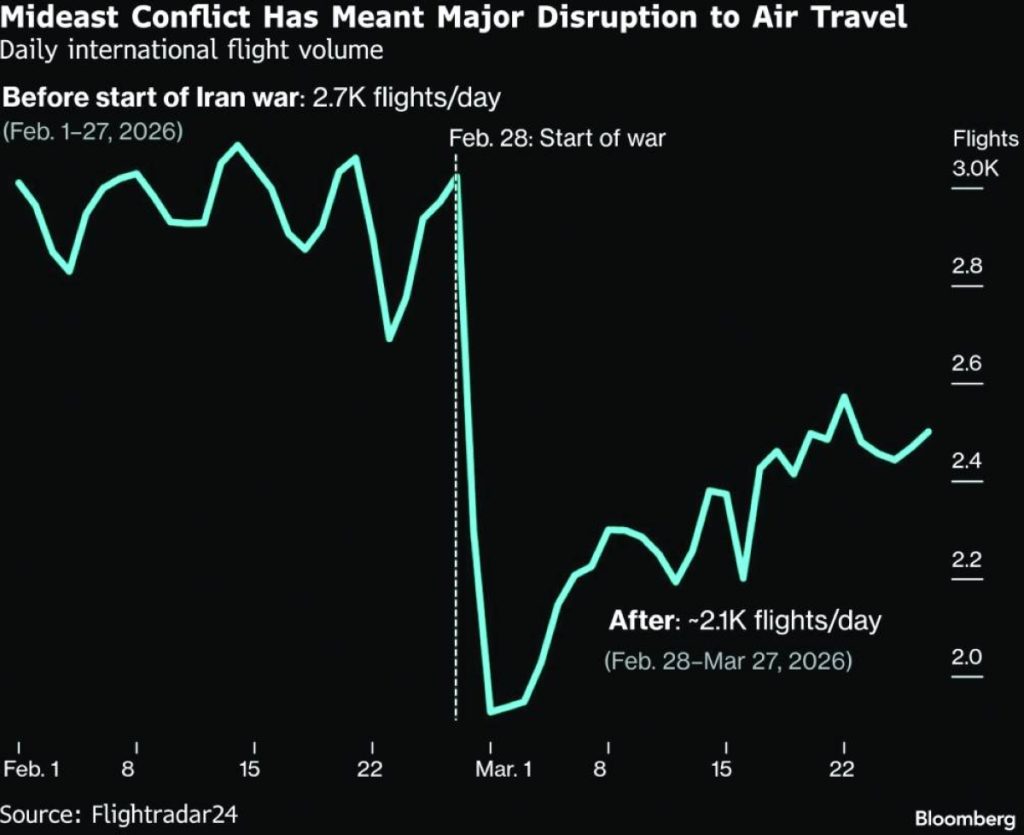
For years, airlines in the US and Europe have gawked at the rise of Middle East carriers funneling ever more passengers through their hubs in Dubai and Doha at competitive prices with the latest jets. Emirates, Qatar Airways and Etihad Airways offered a viable alternative in the Gulf, leveraging a perfect position between three continents – Europe, Africa and Asia. That dynamic changed when the Iran war broke out, shuttering airspaces, grounding planes and leaving regional airlines in disarray. While the loss of capacity from the Middle Eastern carriers has reduced long-haul flying overall, Western airlines are moving in to fill the gap. Executives have sensed an opportunity to take advantage and regain ground, adding alternative routes to steal away business. Deutsche Lufthansa AG, British Airways and Air France-KLM quickly redeployed jets into countries including India, Thailand and Singapore last month to capture passengers looking for new flights. The gains in share are small so far, however, and building something with lasting momentum isn’t simple. Bloomberg analysed widebody flights across 21 major airlines in the month before and after the war began, using data from tracking firm Flightradar24. One issue will be whether this is a short-term blip for global air travel or prove to be a more lasting change. For European carriers trying to steal a march on rivals, another challenge is surging fuel prices as the war disrupts energy markets. That means either fare hikes or absorbing those costs to lure in new customers, with little sense of how long the conflict will continue. The Middle East airlines “won’t have shelved their ambitions to be global hubs,” said Rob Walker, an aviation analyst at consultancy ICF. “The Europeans, they’ve just got to try and make hay while the sun is shining.” So far, the big increase in flight capacity has been in the US, though that reflects plans that were in motion before the Middle East disruption. The biggest carriers, such as United Airlines and Delta Air Lines have expanded long-haul widebody flying by 11% and 12%, respectively, according to tracker Flightradar24. They added flights to existing destinations in Europe, as well as new routes to cater to well-heeled American tourists. Jet fuel US airlines are more exposed to surges in jet fuel prices as they’re not hedged, though they enjoyed a bump in demand last month as passengers pounced to book before those costs pushed up fares. On the Middle East disruption, nonstop flights from the US to Asia will benefit, as will transatlantic routes where US airlines code-share with European carriers, according to Walker. The longer the war persists, the worse it will be for the carriers with bases in the Middle East. US President Donald Trump this week remained vague on the timeline of the war and pledged more aggressive actions against Iran. Given its geographical advantage, Turkish Airlines also gained market share in the month after the war began, according to the data analyzed by Bloomberg. Lufthansa saw a pickup in short-term demand, but wants to make these new route switches more permanent. Chief Financial Officer Till Streichert said there’s “absolutely” the potential to move capacity to Asia on a more lasting basis. Such moves aren’t always straightforward, particularly if there’s an aircraft mismatch. A single-aisle jet serving a European-Gulf route won’t necessarily be suitable for a longer-haul trip to Asia, and new, fuel-efficient widebody aircraft have years-long waiting lists. Plus, opening new routes takes months of preparation involving landing slots, schedules and staffing. Meanwhile, worries about a jet fuel shortage have prompted Lufthansa management to ready crisis plans that could involve grounding planes. Lufthansa shares are down 17% since the war began. British Airways parent IAG SA has fallen 13% in the same period, while Air France-KLM has dropped 27%. Morgan Stanley and UBS recently cut share-price targets on a number of European airlines, citing fuel costs. Price war While the end of the war remains unclear, what’s certain is that the Mideast carriers will return to the market hungry to regain ground, and pricing could come into play. “I would expect the Gulf carriers to offer highly attractive fares to rebuild traffic via their hubs, so maybe the European carriers will only have a short window of opportunity to exploit high demand and high fares,” said Richard Evans, senior consultant at analytics firm Cirium. The Middle East hub model saw Emirates and Etihad enjoy massive growth in recent decades. Emirates carried 55.6mn passengers in 2025, more than quadruple the number ferried just 20 years earlier. That helped to make Dubai the world’s busiest international airport, but rivals say the airlines’ expansion was for years sustained by unfair subsidies. Asian airlines have boosted their long-haul trips too, with Singapore Airlines adding services to London and Melbourne, while Hong Kong’s Cathay Pacific Airways ramped up flights to Paris, Zurich and London. Air India said it’s introduced more services and Australia’s Qantas Airways is also trying to add capacity on European routes. Flying between Asia and Europe was already tricky because many Western airlines were forced to dodge Russian airspace following its invasion of Ukraine in 2022. The Iran conflict has exacerbated that. With Iranian and Iraqi airspaces closed, aircraft are being routed through narrow strips over Georgia, Azerbaijan and central Asia. “The issue for European carriers to Asia is airspace availability, and competing with Asian airlines that are more competitive and can fly over Russia,” said Conroy Gaynor, an analyst at Bloomberg Intelligence. “We think more capacity will end up on the Atlantic but have concerns on whether there is enough demand to absorb a significant increase.”

Aviation News

Ageing aircraft plague African aviation, AASA chief warns

Fresh concerns have emerged over the state of Africa’s aviation industry, with the Chief Executive Officer of the Airlines Association of Southern Africa, Aaron Munetsi, warning that airlines are grappling with ageing aircraft, weak revenues and deep structural challenges that continue to limit growth. Munetsi made this observation during the second day of the Nigerian Aircraft Acquisition and Investment Summit in Lagos, where he painted the picture of an industry struggling to match other continents. Lamenting the disparity between Africa’s population and its aviation capacity, Munetsi said the continent’s fleet size remains alarmingly low. He said, “The whole continent has less than 1,000 aircraft. Compare that to Delta Air Lines, which alone operates about 1,500 aircraft. That tells you the size of the gap we are dealing with.” Munetsi said Africa’s aviation output is severely inadequate relative to its roughly 1.4 billion population. “Something is wrong somewhere,” he declared, attributing the situation to deep-rooted systemic challenges that continue to hold the sector back. He further revealed that out of 52 airlines and flag carriers across the continent, only a few are functioning optimally. He said, “With 52 airlines, flag carriers across the continent, only seven are fully operational, and of those seven, only one is profitable.” Munetsi noted that Africa contributes just about two per cent to global aviation, a figure he described as disproportionately low when compared to its landmass and growing demand for connectivity. According to him, the sector’s struggles are tied to economic and regulatory constraints that make expansion and sustainability difficult. He explained that “the crisis is rooted in a combination of economic limitations and regulatory inefficiencies. Many of our economies are not structured to support the financial demands of running airlines, which require heavy capital investment and long-term planning.” Hinting at the many challenges facing the industry, Munetsi disclosed that some African airlines generate extremely low revenues. “We are getting less than one million dollars in some cases. How do you build capacity, acquire aircraft, or compete globally under such conditions?” he queried. He also drew  attention to the ageing fleets across the continent, warning that Africa operates some of the oldest aircraft globally, a development that continues to erode efficiency and competitiveness. “According to industry statistics, we have the oldest fleets globally and the smallest fleets globally,” he said. Despite the terrible complaints, Munetsi maintained that Africa’s aviation industry still holds immense promise if the right policies and investments are put in place. “Yet, we are sitting on enormous potential, a vast landmass, a growing population, and increasing demand for connectivity,” he added. Meanwhile, it will be recalled that the Director-General of the Nigeria Civil Aviation Authority, Chris Najomo, had at an earlier forum said the age of an aircraft should bother no one if it is well maintained, adding that adequate maintenance is not for an aircraft and that when that is achieved, the age of an aircraft is of no concern. It stressed the need to preserve the safety and security of international air travel and urged Iran to halt the actions. “The Council urgently called upon Iran to cease its unlawful activities and respect its obligations under the Chicago Convention and other relevant international civil aviation treaties,” the statement read.

Aviation News

Air Peace London route from Gateway International Airport – Onyema Announces

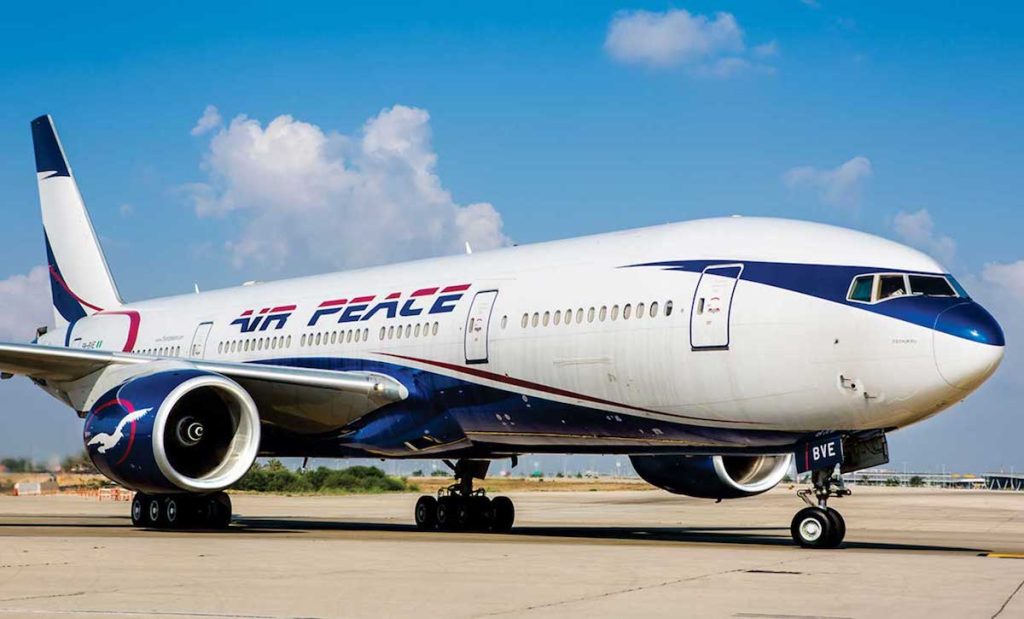
Air Peace, Nigeria’s largest airline and a leading carrier in West Africa, has announced plans to commence international flight operations from Gateway International Airport to London this summer. The airline’s Chief Executive Officer, Allen Onyema, disclosed this during an interview with journalists after inspecting the airport facilities alongside Dapo Abiodun. The visit followed the official commissioning of the airport by Bola Ahmed Tinubu. According to Onyema, Air Peace will operate flights connecting the airport to both London Gatwick Airport and Heathrow Airport, marking a significant milestone for Ogun State’s aviation sector. He praised the state government for delivering a world-class aviation facility, describing the airport as one of the best-equipped in Sub-Saharan Africa. “This is one of the best-equipped airports in Sub-Saharan Africa, and Air Peace will not sit back and watch this facility go unused,” Onyema said. “When you see a promising initiative, you must embrace it.” He emphasized that the airport’s infrastructure meets global standards and highlighted its 4-kilometre runway, capable of accommodating large aircraft such as the Airbus A380. Air Peace, he noted, plans to deploy its Boeing 777 fleet for the London route. Onyema also revealed that he had received approval from the Minister of Aviation to proceed with the operations, describing the project as a national asset rather than a purely state initiative. Governor Abiodun, in his remarks, announced plans to further expand the airport’s ecosystem with the construction of an international conference and convention centre, alongside a 550-room five-star hotel. He said the development would position Ogun State as a hub for global business and tourism. The governor also disclosed that cargo operations have already commenced with Allied Air, while Ethiopian Airlines is expected to begin operations soon. Additionally, another European carrier is set to launch cargo services into the state. Abiodun projected that approximately 50 cargo flights would operate through the airport between April and the end of the year. He further revealed the establishment of Gateway Airlines, which has acquired two Bombardier CRJ900 aircraft. The 90-seater planes are expected to enhance connectivity between Ogun State, Abuja, and other major Nigerian cities. With these developments, the governor expressed confidence that the Gateway International Airport could soon become Nigeria’s third busiest aviation hub, after Lagos and Abuja.

Scroll to Top