Author name: admin

Aviation News

NCAA, NNPCL TO STRENGTHEN COLLABORATION ON AVIATION SAFETY GUIDELINES

The Nigeria Civil Aviation Authority (NCAA) has expressed readiness to strengthen collaboration with the Nigerian National Petroleum Company Limited (NNPCL) on aviation safety guidelines. The Director-General, Civil Aviation (DGCA), Capt. Chris Najomo, gave this assurance when a team from the company, led by the Manager, Environmental Strategy, Policy & Standards, Dr. Edwin Aboh, paid him a courtesy visit at the Authority’s Headquarters in Abuja on Friday, May 15, 2026, The DGCA, represented by the Director of Airworthiness Standards and Chairman, Flight Standards Group (FSG), Engr. Godwin Balang, highlighted the Authority’s regulatory responsibilities, including the success recorded in the recent ICAO Coordinated Validation Mission (ICVM) where Nigeria achieved a record-breaking 91.4 per cent aviation safety rating. In his response, Dr Aboh thanked the DGCA and the management of the NCAA for the opportunity to interface and collaborate, stressing that the NNPCL recognizes the strategic importance of the NCAA and the critical role it is playing in ensuring safety in aviation-related activities. Dr Aboh hinted that NNPCL is currently drafting its aviation safety guidelines and expressed strong optimism that the Authority will provide necessary technical guidance and support. Senior NCAA officials present at the meeting included the Director, Legal Services/Company Secretary, Barr. (Mrs.) Mary Tufano-Eche; the Director, Air Transport Regulation, Mrs. Olayinka Babaoye-Iriobe; a host of staff members.

Aviation News

Our first flight to Lagos signals accelerated business mobility, integration – Binani Air

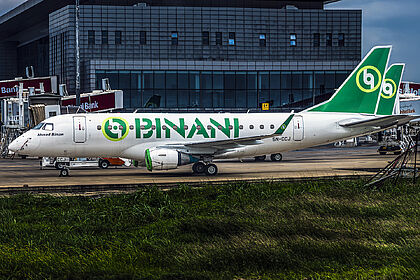
IN a bid to galvanize air transport services, BINANI AIR, Monday, said its successful first commercial flight to Lagos signals economic growth, business mobility and national integration through efficient air transport services. In a statement issued by the Airline, it also explained that the milestone achieved will further expand its route network to strengthen connectivity between major cities across the country in order to attract investors to different sectors by enabling their movement and business. Meanwhile, the flight, which departed Abuja amid excitement from passengers and aviation stakeholders, arrived in Lagos smoothly, with travellers commending the airline’s punctuality, professionalism and onboard experience. Speaking shortly before departure, the Group President of Binani Air, Aminatu Dahiru Chiroma, described the Lagos operation as a major step in the airline’s vision of building a dependable and customer-focused indigenous carrier capable of serving the needs of Nigerians. According to her, the successful commencement of flights to Lagos reflects the “airline’s determination to contribute meaningfully to economic growth, business mobility and national integration through efficient air transport services.” Chiroma said: “Today’s flight to Lagos represents more than an expansion of routes; it reflects our commitment to connecting people, businesses and opportunities across Nigeria. “We are building an airline founded on safety, discipline, professionalism and service excellence. Our goal is to continually earn the trust of Nigerians through consistency and reliability.” She also appreciated passengers for the confidence shown in the airline within the first days of operation, assuring them that customer satisfaction and operational safety would remain top priorities.

Aviation News

Tinubu Welcomes Airbus Plan To Establish Aircraft Maintenance, Hangar Facilities In Nigeria

President Bola Tinubu has welcomed aircraft manufacturer Airbus’ proposal to establish maintenance and hangar facilities in Nigeria as part of efforts to position the country as a regional aerospace and aviation services hub. The President also stressed Nigeria’s urgent need for modern helicopters and fixed-wing aircraft capable of supporting security operations, logistics, and national development priorities as part of ongoing efforts to tackle insecurity across the country. Tinubu spoke during a meeting with a delegation from Airbus led by the Head of Regional Business Growth Africa and the Middle East, Thierry Cloutet, on the sidelines of the Africa CEO Forum in Kigali, Rwanda. According to a statement issued on Saturday by presidential spokesperson, Bayo Onanuga, the President said his administration was determined to deepen collaboration with Airbus by leveraging the company’s expertise in military aircraft and aerospace development. Tinubu specifically called for the accelerated delivery of three Apache helicopters already ordered by Nigeria to support ongoing counter-terrorism and security operations nationwide. “Nigeria needs attack helicopters urgently that can be used to confront and overwhelm terrorists. That is my priority now,” Tinubu said. Discussions at the meeting also focused on Nigeria’s acquisition of the Airbus C-295 platform, broader defence aviation cooperation, and financing arrangements aimed at improving access to aircraft for domestic operators. The talks explored aircraft leasing and financing models, including export credit arrangements, sale-and-lease-back structures, and long-term financing solutions designed to reduce constraints within Nigeria’s aviation sector. As part of efforts to strengthen the partnership, Tinubu also discussed the possibility of establishing an aviation leasing company in Nigeria to unlock value across the aviation value chain and improve financing access for local airlines and operators. Cloutet commended the Tinubu administration’s economic reforms and efforts to stabilise Nigeria’s aviation sector, reaffirming Airbus’ interest in supporting the country’s long-term aerospace development goals. He also proposed what he described as a “360-degree engagement” model with Nigeria, covering commercial aviation, military aircraft cooperation, human capital development, sustainability initiatives, operational hubs, and maintenance infrastructure. The proposal forms part of broader efforts by the federal government to modernise Nigeria’s aviation sector, strengthen local capacity, and position the country as a key aviation hub in Africa.

Aviation News

Naira-For-Jet Fuel Policy May Spark Fresh Aviation Crisis

Fresh tension is brewing in Nigeria’s avi­ation industry over the extension of the Federal Government’s naira-for-crude initiative to aviation fuel, with major Jet A1 marketers warning that the policy could trigger a serious operational and financial crisis across the sector within weeks. President Bola Ahmed Tinubu intro­duced the naira-for-crude policy in Oc­tober 2024 as part of efforts to stabilise the local currency, reduce pressure on foreign exchange demand, and encour­age domestic refining. But its extension to Jet A1 pricing appears to have failed on arrival because aviation fuel remains a globally traded commodity benchmarked in United States dollars. The concerns were raised by Dr. Thomas Ogungbangbe, founder and Chief Executive Of­ficer of CITA Energies Ltd, one of Nigeria’s leading aviation fuel suppliers, during an interview with Daily Independent, where he warned that the policy, if not urgently reviewed, could destabi­lise the aviation fuel supply chain and spark another round of con­frontation between airlines and fuel marketers. Tinubu’s naira-for-crude pol­icy, introduced amid Nigeria’s worsening foreign exchange cri­sis and rising petroleum import costs, was designed to allow local refineries, including Dangote Pe­troleum Refinery, purchase crude oil from the Nigerian National Petroleum Company Limited (NNPCL) in naira instead of dol­lars. Under the arrangement, lo­cal refineries would refine petro­leum products domestically and sell products such as Premium Motor Spirit (PMS) in naira to Nigerian consumers, thereby reducing dollar demand in the downstream petroleum sector and helping to stabilise pump prices. The policy was initially wel­comed by many analysts as a strategic move to deepen local refining capacity and reduce de­pendence on imported fuel. How­ever, the aviation sector now fears that extending the arrangement to Jet A1 without considering the international pricing structure governing aviation fuel may worsen existing pressures on airlines and marketers. Speaking on the development, Ogungbangbe said the market had largely rejected the naira-de­nominated pricing framework for Jet A1 because aviation fuel pricing globally is tied to interna­tional benchmarks and formula pricing systems. “Yes, it’s currently being sold in naira but it’s not appre­ciated,” he said. “Because it’s a global commodity that is priced anywhere. I’m not sure anybody complained about selling Jet fuel in dollar because it’s dollarised and there’s formula pricing.” He described the policy as “a major disservice” to the aviation industry, insisting that the cur­rent framework heavily favours the refinery at the expense of marketers and airlines. “So taking it to naira now is a major disservice which is not ap­preciated,” he stated. “If they are going to do naira, whatever, then they should make it either-or. That is, if you want to buy in naira, fine. If you want to buy it in dollar, fine.” According to him, marketers are currently unable to align the refinery’s naira pricing with their existing contractual obli­gations to international airlines whose agreements are bench­marked against global Platts pricing indices and denominated in dollars. He claimed that the discrepan­cy between global pricing bench­marks and Dangote Refinery’s naira-based pricing structure could lead to massive financial losses for fuel suppliers. “If we do dollars out today, you are going to be buying at $15.64 but Dangote is selling at $17.50,” he alleged. “So it’s just engaging everybody like J.R.” Ogungbangbe warned that the industry may witness anoth­er major uproar in the coming month if authorities fail to re­view the policy direction. “Returning to naira is a major disservice to the industry, which will cause another uproar very soon. That’s probably what you can expect next month,” he said. “Most of the people making pol­icy lack knowledge of what the market is all about. When you put a square peg in a round hole, that’s what you get.” He further accused policy­makers of failing to understand the operational dynamics of the aviation fuel market. “That’s why we keep doing dilly-dally. The people taking decisions are people that do not understand the dynamics of the markets.” The CITA Energies boss pro­posed a dual-pricing structure that would allow marketers to buy Jet A1 either in naira or dol­lars depending on the nature of their transactions and customer obligations. “They can sell in naira for those who cannot access dollars, but they should also allow dollar pricing and formula pricing,” he said. “Leaving Dangote to be announcing refinery price is against the international norm on Jet fuel. You can do that for PMS or AGO.” He insisted that the present arrangement was unsustainable and tilted entirely in favour of the refinery. “We are not satisfied with the policy, and people are starting to be more agitated. Be expecting that there’s going to be a major showdown next month because he’s just ripping off everybody and nobody’s making profits.” Explaining the potential fi­nancial impact, he stated that marketers fixing forward prices in dollars were now exposed to se­vere exchange and pricing losses under the current regime. “For example, now I’m going to be selling next month, buying at $17.50 and I will be selling at 15-something. I’ll be losing N200 per litre. “So if I sell 10 million litres in a month, I’ll be losing N2 billion.” He added that many mar­keters might soon stop lifting products entirely if the pricing imbalance persists. “Instead of selling, we only declare that there is no product. Meanwhile, there is product and he will say ‘I have product’. So how do I buy when you have lev­eraged my price? The lever is tilt­ed. Everything is in his favour.” The growing disagreement has now culminated in a formal letter written by CITA Energies Ltd to Dangote Refinery request­ing the immediate introduction of a dual-pricing mechanism for Jet A1 purchases. In the letter addressed to Pres­ident of Dangote Group, Aliko Dangote, the company argued that restricting aviation fuel transactions to naira pricing was creating “a mismatch” within its commercial structure. The letter partly reads: “A significant portion of our clients are international airlines whose contracts, pricing benchmarks, and payment obligations are de­nominated in USD, with month­ly pricing differentials aligned to global market indices. “Restricting our purchases solely to naira pricing creates a mismatch in […]

Aviation News

A’Ibom To Launch Maiden Int’l Flight From Uyo To Accra

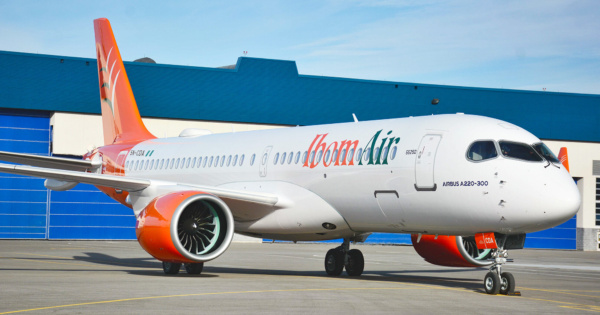
The Akwa Ibom State Government has announced that the maiden international flight from Victor Attah International Airport will take off on Saturday, May 2, 2026. According to a press release issued by the Commissioner for Information, Aniekan Umanah, on Tuesday, the flight will depart Uyo for Kotoka International Airport and will be operated by Ibom Air, the state-owned flagship airline. A return flight is scheduled for Sunday, May 3, 2026. The development follows presidential approval for the upgrade of the Uyo airport to international status, alongside significant investments by the administration of Governor Umo Eno to provide the required infrastructure and technical facilities. The state government described the launch as a strategic step toward boosting international connectivity, enhancing tourism, and attracting investment to Akwa Ibom State. It noted that while the maiden flight signals the start of international operations, full commercial flight schedules and the official commissioning of the new terminal building will be announced later. The government also expressed appreciation to President Bola Tinubu for approving the upgrade, and to the Minister of Aviation and Aerospace Development, Festus Keyamo, for his role in facilitating the project. Additionally, the contributions of past administrations in developing the state’s aviation sector were acknowledged, as the government recommits to sustaining growth in the aviation ecosystem for economic advancement.

Scroll to Top