Aviation News

United Nigeria Airlines records fifth bird strike in four months, grounds aircraft

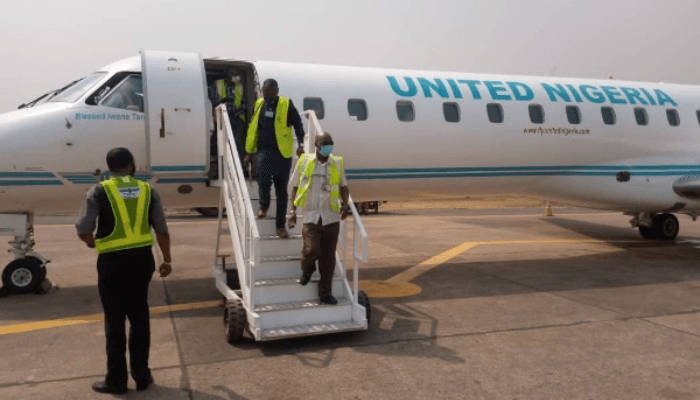
United Nigeria Airlines (UNA), has recorded another bird strike incident involving one of its aircraft. This is the fifth time the airline would experience such an occurrence since January 2026, thereby raising concerns over aviation safety hazards at Nigerian airports. A statement on Wednesday by the Public Relations Officer (PRO), UNA, Chibuike Uloka, said that the latest incident occurred during the landing of flight UN0579, which operated from Mallam Aminu Kano International Airport (MAKIA), Kano to the Nnamdi Azikiwe International Airport (NAIA), Abuja. The statement hinted that the affected aircraft, a CRJ-900, encountered a bird strike while approaching Abuja at about 18:15 hours. “While this marks the fifth bird strike involving our aircraft since January 2026, each occurrence has been managed in full compliance with applicable aviation safety regulations and established operational procedures. “We appreciate the understanding of our valued passengers and reaffirm our commitment to maintaining the highest standards of safety and operational reliability. We will continue to take all necessary measures to optimise our operations and exceed the expectations of our passengers.” In line with standard aviation safety protocols, the airline said the affected aircraft had been withdrawn from service for detailed technical inspections and necessary maintenance. UNA feared that the temporary withdrawal of the aircraft may lead to disruptions across parts of its network, with some scheduled flights likely to be affected. The carrier, however, reassured passengers that safety remained its top priority, expressing regret over any inconvenience caused by the development. “We sincerely apologise for any inconvenience this unforeseen development may cause to our passengers’ travel plans,” the statement said. Bird strikes have continuously been one of the major threats to flight operations in Nigeria, particularly during take-off and landing phases, when aircraft are most vulnerable.

Aviation News

Gateway Airport Boost: SAHCO Secures Landmark Ground Handling Role Deal

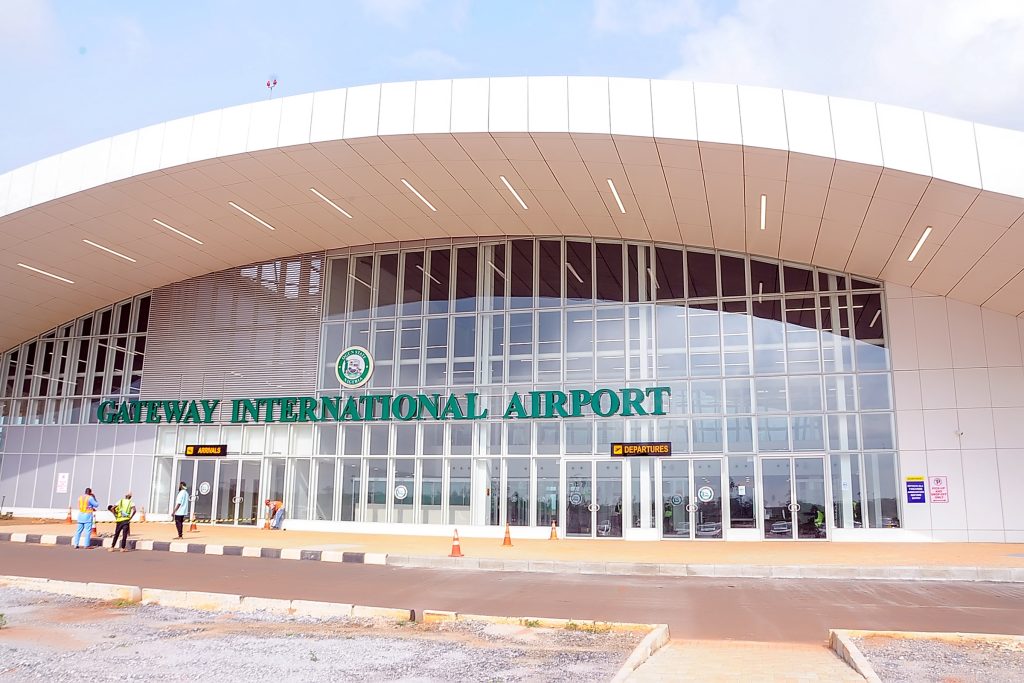
Skyway Aviation Handling Company (SAHCO) Plc has been confirmed as the sole ground handling service provider at the new Gateway International Airport in Iperu, Ogun State. This positions SAHCO at the centre of a critical infrastructure designed to boost efficiency and economic expansion in the South-West region. The airport was commissioned by the President of the Federal Republic of Nigeria, His Excellency Bola Ahmed Tinubu (GCFR), marking a defining moment for aviation development. Consequently, the project reinforces Ogun State’s ambition to become a leading gateway for commerce, logistics, and international connectivity, standing as a strategic gateway for passenger and cargo operations, strengthening regional connectivity and national trade flows. The Chairman of SAHCO, Barrister Dr Taiwo Afolabi (CON), expressed strong confidence in the company’s appointment. He stated that: “This milestone further reinforces SAHCO’s commitment to supporting the growth of Nigeria’s aviation sector through continuous investment in modern equipment, skilled personnel, and innovative service solutions.” He further emphasised that collaboration with Allied Air will enhance cargo efficiency at the new gateway, especially for high-value and time-sensitive goods. This development is expected to strengthen agricultural exports, manufacturing output, and e-commerce logistics across Nigeria. SAHCO’s role includes ramp handling, passenger facilitation, cargo services, and full operational support. These services ensure the airport begins operations with world-class efficiency, reinforcing its status as a modern vista for aviation activities. The Gateway International Airport is expected to transform Ogun State into a major economic hub. In addition, the airport is projected to stimulate investment inflows and improve trade logistics across the region. With SAHCO leading ground operations, the airport is positioned for long-term operational stability and growth. Gateway Future for Nigerian Aviation As Nigeria expands its aviation infrastructure, SAHCO remains committed to delivering excellence across emerging hubs. The newly launched airport now stands as a symbol of progress, innovation, and connectivity. Ultimately, the new facility strengthens Nigeria’s position in regional aviation, while reinforcing Ogun State as a powerful gateway for trade and mobility. The partnership between public institutions and private operators like SAHCO ensures that this gateway delivers sustainable value for years to come.

Events

Aviation sector set for overhaul as Nigeria receives 20-year development plan

Nigeria’s aviation industry is set for a comprehensive transformation following the formal presentation of the country’s Civil Aviation Master Plan (CAMP) by the International Civil Aviation Organization to Festus Keyamo, Minister of Aviation and Aerospace Development, at the opening session of the ICAO Global Implementation Support Symposium in Marrakech, Morocco. The 20-year strategic document, which spans 2025 to 2045, is designed to reposition Nigeria’s aviation sector along a structured, sustainable, and globally competitive path. Its presentation marks a major milestone in ongoing efforts by the Federal Government to modernise the industry and align it with international best practices. Speaking during a Ministerial Round Table at the symposium, Keyamo highlighted the Future of Aviation Workforce in Nigeria, noting that the government is taking deliberate steps to bridge the skills gap across the aviation ecosystem. He emphasised the importance of developing a highly skilled workforce capable of meeting the demands of a rapidly evolving global aviation landscape. According to a statement signed by Tunde Moshood, the Minister’s Special Adviser on Media and Communications, the development of the master plan was earlier approved by the Minister and executed by ICAO’s Capacity Development and Implementation (CDI) unit. The process began in September 2024 with a comprehensive training programme on civil aviation master planning, bringing together key stakeholders across the sector. The CAMP is aligned with Nigeria’s National Development Plan and other key policy frameworks, ensuring synergy with broader economic and infrastructural goals of the Federal Government. It is built on globally recognised pillars critical to advancing a modern aviation industry, including infrastructure development, safety and security, sustainability, and human capital development. A major focus of the plan is the modernisation of airport infrastructure to accommodate rising passenger and cargo traffic, alongside the deployment of advanced technologies such as unmanned aerial systems. It also prioritises strict adherence to international safety standards to sustain Nigeria’s zero-fatality aviation objective. In addition, the plan envisions the transformation of Nigerian airports into aerotropolis hubs that can drive economic activities, boost job creation, and enhance national and regional connectivity. The master plan also seeks to unlock private sector investment opportunities, particularly in key areas such as Maintenance, Repair and Overhaul (MRO) facilities and the development of modern cargo terminals, while promoting environmentally responsible practices in line with global green aviation initiatives. The presentation of the CAMP at the global forum underscores Nigeria’s increasing visibility in the international aviation space and its commitment to building a resilient, efficient, and future-ready aviation sector. The ICAO, which sets global standards for aviation safety, security, efficiency, and environmental protection, continues to play a pivotal role in supporting Nigeria’s aviation modernisation drive.

Aviation News

Airport upgrade: Oyo presents specialised vehicle to NAMA

As part of efforts to enhance airspace management and support critical aviation infrastructure at the Samuel Ladoke Akintola Airport, Alakia, Ibadan, the Oyo State Government has presented a well-equipped specialised vehicle to the Nigerian Airspace Management Agency (NAMA). The presentation of the special vehicle, which is fully equipped with communication system, is part of the ongoing upgrade of the facility to an international airport. Speaking shortly after presenting the vehicle at the runway side of the airport on behalf of the state government, Chairman of the Airport Upgrade Committee, Honourable Bimbo Adekanmbi, noted that the vehicle is equipped with communication aids and is expected to enhance airspace management and support critical aviation infrastructure. He added that the donation underscores the government’s commitment towards upgrading the airport, stating that local flights have already been restored as works are ongoing on the international terminal. He said: “As part of the commitment of His Excellency, the Governor, and the Government of Oyo State to the continued upgrade of the Samuel Ladoke Akintola Airport, we are presenting this vehicle. “It is a specialised vehicle and fully kitted. It has all the communication aids and it is going to aid the Nigerian Airspace Management Agency (NAMA) and their work. “NAMA has a critical function to perform at the airport because they are the ones that grant access to the airside, and this vehicle will be speaking to the instrument landing system and all critical aviation infrastructure. “This vehicle donation goes to show our commitment, and we are still continuing. The airside and local flights are ongoing, and we are committed to delivering the international terminal and for international operations to resume after the construction of the terminal.” While responding, NAMA Manager, Mr. Gbenga Famosipe, represented by Mr. Olumide Odutayo, expressed gratitude to the governor for the vehicle donation, stating it would enhance operational safety.

Aviation News

Nigerian aviation at risk as the country begins losing its ability to monitor its airspace

Nigeria’s aviation sector is currently confronting a new dilemma as the Nigerian Airspace Management Agency sounds the alarm on its old radar systems, which could hamper the country’s ability to properly monitor its skies. Nigeria’s airspace surveillance is at risk due to aging and obsolete radar systems, notably the TRACON system. The equipment, installed between 2008 and 2010, has exceeded its ten-year operational lifespan and now lacks spare parts and backup. Budget constraints, including a 30% cut from the Federal Government, hinder necessary system upgrades and maintenance. Revenue from air navigation fees has become outdated, but attempts to raise charges face resistance, affecting equipment sustainability. Air traffic controllers, who rely on the Total Radar Coverage of Nigeria (TRACON) system, are expressing increasing concern regarding its reliability. During a meeting with Mahmoud Kambari, the Permanent Secretary of the Ministry of Aviation and Aerospace Development, Farouk Umar, Managing Director of NAMA, described the current condition of the TRACON system as substandard. Per an assessment by the Punch Newspaper, initiated in 2001, the multibillion-naira Total Radar Coverage of Nigeria (TRACON) project was designed to provide comprehensive radar surveillance across the country. For an extended period, this infrastructure functioned as the primary framework for air traffic monitoring, enabling controllers to maintain real-time tracking of aircraft. While TRACON was formerly regarded as the fundamental component of national air surveillance, its current operational integrity is reported to have significantly deteriorated. What the Managing Director said about Nigeria’s radar systems “Our area of urgent attention includes the air traffic surveillance service. The TRACON system has aged. Components are becoming obsolete with no spare parts, and most parts are working without backup. The airspace is at risk of losing surveillance service,” Mr. Umar stated. The Managing Director noted that although the system was implemented between 2008 and 2010, it has since surpassed its projected operational lifespan. “The lifespan of this kind of high-tech equipment is about ten years. Since 2014, the technology has been going out of fashion globally, with many countries migrating to more advanced systems,” he stated. “Without a reliable surveillance system, maintaining safe distances between aircraft becomes more difficult, increasing risks in an already complex aviation environment. Nigeria could also struggle to meet international standards. Providing air navigation services in line with ICAO requirements might become a challenge if urgent steps are not taken,” he added. In addition to the technical challenges, the managing director revealed that the agency is struggling with budgetary limitations that make upgrading vital systems much more difficult. Speaking about the difficulty of a 30% Federal Government cut from NAMA’s internal earnings, Umar maintained that, “This deduction is affecting our ability to meet critical obligations.” He also added that. “Revenue challenges persist as well. Since 2008, we have been charging N11,000 per aircraft for each flight. That amount is no longer realistic, yet we face resistance every time we propose an increase. We must sustain our equipment, and that requires funding.” Furthermore, he spoke of a lack of manpower and limited training opportunities for staff, which has been detrimental to the system. In response, Mahmoud Kambari, the Permanent Secretary of the Ministry of Aviation, committed the ministry to aligning Nigeria’s aviation sector with international standards. “We will continue to work closely with all agencies to ensure they succeed. Nigeria’s aviation industry must remain a key economic driver and a hub of global connectivity,” Kambari stated.

Scroll to Top