Aviation News

Aviation News

NCAA, experts clash over 5% air ticket charge

Stakeholders in the country’s aviation sector have deepened calls for a review of the sharing formula of the five per cent Ticket Sales Charge/Cargo Sales Charge, TSC/CSC, saying the Nigerian Airspace Management Agency, NAMA, required a larger share of the revenue to upgrade air navigation infrastructure. This development comes as the NCAA expressed fears over the issue and warned that any reduction in its statutory allocation could weaken aviation safety oversight and regulatory effectiveness. Addressing newsmen in Abuja recently, Director of Public Affairs and Consumer Protection at the NCAA, Michael Achimugu, said while NAMA was established as a self-sustaining agency, the NCAA relied largely on the TSC to fund its statutory regulatory functions. Meanwhile, under the revenue sharing formula contained in the Nigeria Civil Aviation Act, 2022, proceeds from the five per cent TSC/CSC collected on passenger tickets and cargo are distributed among the NCAA, which receives 56 per cent; NAMA 22 per cent; the Nigerian Meteorological Agency, NiMet, nine per cent; Nigerian College of Aviation Technology, NCAT, seven per cent; and the Nigerian Safety Investigation Bureau, NSIB, six per cent. However, a bill currently before the National Assembly, which has passed second reading, seeks to amend the sharing formula by reducing the NCAA’s allocation from 56 per cent to 40 per cent, while increasing NAMA’s share from 22 per cent to 40 per cent. In separate conversations with Vanguard weekend, aviation experts backed the proposed amendment, saying the current formula was not a reflection of the critical infrastructure responsibilities shouldered by NAMA. Leading the charge is think-tank aviation group, Aviation Safety Round Table Initiative, ASRTI/ART, whose President, Air Commodore Ademola Onitiju, retd, said increasing NAMA’s allocation was justified, given the agency’s responsibility for providing aeronautical and air navigation services. He said: “It is alright, especially because of the aeronautical and navigational services NAMA provides. If the bill is seeking to reduce the NCAA’s share from 56 per cent to 40 per cent and NAMA’s allocation from 22 per cent to 40 per cent, then it is okay. The NCAA regulates safety and security of the aviation sector and ensures the maintenance of standards. “Aviation in Nigeria is better off if we equip those that discharge those critical functions that also make NCAA relevant. NAMA’s infrastructure and equipment that would ensure the safe management of Nigerian airspace are crucial. ‘’It’s not just for the Nigerian airspace, but even to the international community too. The overall safety of air travel in Nigeria is enhanced when there is state-of-the-art equipment.” Onitiju, however, urged government to provide additional funding for the NCAA because the authority carried out Nigeria’s obligations under the International Civil Aviation Organisation, ICAO. On his part, aviation safety and security expert, Group Captain John Ojikutu, retd, also faulted the existing revenue-sharing formula, saying it was inequitable. He said: “In each of the airports, there are a minimum of three navigational and aerodrome approach equipment. Equipment such as the Instrument Landing System, ILS, radar and the Very High Frequency Omnidirectional Range, VOR, must be calibrated at least twice a year. ‘’Some of these systems cannot be calibrated locally, so experts have to be brought in from abroad and paid in foreign currency. “I raised this issue with the National Assembly as far back as 2022 because the formula is wrong.  What is the rationale for allocating only 22 per cent to NAMA? It is the only agency providing aeronautical services, yet it receives far less than the NCAA, which is essentially a regulatory inspector. The NCAA’s share should be reduced to 40 per cent.” However, former Managing Director of NAMA, now Trustee Member of the Airline Operators of Nigeria, AON, Mr Roland Iyayi, has faulted the five per cent TSC, saying it was unsustainable for domestic carriers. He described it as a sham that had long defeated the purpose for which it was introduced, which was to develop aviation infrastructure, and proposed replacing it with an Aviation Development Fund that would be insulated from government revenue accounts and dedicated to infrastructure projects within the sector. He said: “The five per cent TSC is useful, but not for the purpose for which it is currently being used. What it was intended for and what it is being used for today are two different things. It was intended for aviation development. ‘’Yet aviation has remained in deficit for the past four or five decades because those funds have consistently been diverted to purposes outside aviation.”


Aviation News

Nigeria Cannot Modernise Airports Without Concession, says Ex-FAAN MD

Former Managing Director of the Federal Airports Authority of Nigeria (FAAN), Dr. Richard Aisuebeogun, has declared that airport concession is no longer a choice but an inevitable strategy if Nigeria is to modernise its airports, attract investment and compete globally. Presenting a paper titled “Airport Concession: The Inevitable” at the Airport Business Summit in Lagos, Aisuebeogun said governments across the world are increasingly embracing private sector participation because airports perform better when operated as commercial businesses rather than government agencies. He cited data from Airports Council International (ACI) Europe showing that by 2015, about 205 European airports had private shareholders, representing 22 percent of airports in the region, a development he described as evidence of the growing confidence in private investment. According to him, “Airport makes an excellent investment if and when properly managed as a business,” stressing that commercialisation encourages competition, improves operational efficiency and accelerates infrastructure development. He added that “when airports are run as a business, that is when they become an economic catalyst. If they are not run as a business, they become a drawback to the growth of the region.” Drawing examples from Greece, Spain, Peru, Argentina, Brazil and Mexico, Aisuebeogun said concession agreements have transformed airports into world-class facilities. He noted that Peru’s Lima Airport concession requires 47 percent of airport revenue to be remitted to the government, while Mexico granted 50-year concession agreements for groups of airports, with options for renewal. The Former FAAN boss, also highlighted Brazil’s model, where concessionaires pay 5 percent of annual airport revenue in addition to concession fees while assuming full responsibility for airport operations and future investments. Aisuebeogun argued that governments are under increasing pressure to reduce public spending and mobilise private capital, making airport concession a practical solution. However, he acknowledged concerns such as resistance to privatisation, transition challenges and the risk of poor investment by concessionaires, stressing that regulatory agencies must ensure compliance with concession terms. “The truth is that it is inevitable that our airports have to be privatised,” he said, adding that effective public-private partnerships would improve operational performance, enhance customer service, reduce risks, maximise returns and stimulate broader economic growth.

Aviation News

Registration Opens for AeroWest 2026 Aviation and Tourism Summit in Lagos

Registration has opened for AeroWest 2026, a major aviation and tourism summit designed to drive investment, strengthen regional connectivity and accelerate sustainable growth across West and Central Africa. The summit with the theme “Financing Connectivity: Unlocking Aviation and Tourism Growth in West and Central Africa,” will hold in Lagos from September 2 to 4, 2026. It is being organised by Jet Afrique Aviation Services Limited in collaboration with the West Africa Tourism Organisation (WATO). Organisers say the event comes at a critical time for Africa’s aviation industry, following a series of policy, financing and regulatory milestones that have created fresh opportunities for investment and expansion across the region. Among the developments is the African Development Bank’s 7-billion-dollar Integrated Aviation Transformation Programme (IATP), launched earlier this year to mobilise private investment in Africa’s aviation sector. The programme is expected to support infrastructure development, fleet expansion and improved regional connectivity. The organisers also cited Nigeria’s 91.45 per cent score in the International Civil Aviation Organisation’s Effective Implementation audit, the country’s highest ever safety compliance rating and well above the global average of 70.4 per cent, describing it as a significant boost to investor confidence. According to industry projections, Africa’s air transport market is expected to grow to about 411 million passengers by 2044, while full implementation of the Single African Air Transport Market (SAATM) could generate about 268,000 tourism-related jobs and reduce intra-African airfares by as much as 35 per cent. Despite the growth prospects, organisers noted that challenges such as the 774 million dollars in blocked airline funds across Africa continue to constrain the sector, making stronger financing mechanisms and regional cooperation increasingly important. Chief Executive Officer of Jet Afrique Aviation Services Limited, Theodore Chikelu, said AeroWest 2026 is designed to move the industry beyond discussions to tangible investments and partnerships capable of unlocking more than 25 billion dollars in aviation infrastructure and fleet development opportunities across the region. Chief Executive Officer of WATO, Ola Wright, said the summit aligns with the organisation’s West Africa Integrated Travel (WAIT) initiative, stressing that stronger air connectivity remains essential to expanding tourism and regional economic integration. The summit will feature high-level policy discussions, investment forums, business-to-business meetings and exhibitions covering aviation finance, aircraft leasing, airport infrastructure, fleet modernisation, maintenance, regulatory harmonisation, sustainable aviation, tourism development, insurance, risk management and implementation of the African Continental Free Trade Area. Decision-makers from more than 25 countries, including airlines, airport operators, aircraft manufacturers, financiers, regulators and tourism organisations, are expected to participate in the event aimed at translating Africa’s aviation and tourism potential into concrete investments and stronger regional connectivity.

Aviation News

Kenya Airways to Increase Lagos Dreamliner Service, Eyes Abuja Flights

Kenya Airways says it is strengthening its commitment to Nigeria with increased investment in capacity and connectivity to Kenya and other destinations through its Nairobi hub. Speaking at an appreciation dinner for travel trade partners in Lagos, the airline’s Country Manager, James Nganga, said Nigeria remains a strategic market, noting that the airline is “enhancing connectivity out of Lagos,” while promoting Kenya as both a holiday and medical tourism destination through a partnership with Aga Khan University Hospital. General Manager for West Africa and the Americas, Stephen Ngamau, announced that from next week, Kenya Airways will operate its Dreamliner service to Lagos six times weekly. He added that the airline also plans to launch Abuja flights and is exploring partnerships with Nigerian carriers to improve connectivity across the country. Chief Commercial and Customer Officer, Julius Thairu, described Nigerian travel agents as vital to the airline’s growth, saying, “A significant part of our business is done through our trade partners. They are a critical part of the ecosystem.” Also speaking, Kenya’s Ambassador to Nigeria, Isaac Keen Parashina, described Nigeria as a key market, saying Kenya Airways is “the bridge between Kenya and Nigeria.” He attributed the increase in Nigerian visitors to Kenya to the country’s visa-free policy and said seamless air connectivity is essential to Africa’s integration. The event also featured awards for outstanding travel agencies and tour operators, with Wakanow emerging as one of the top winners for its exceptional sales and revenue performance across multiple categories.

Aviation News

Air Peace Aircraft Grounded After NAHCO Baggage Vehicle Crashes Into Engine

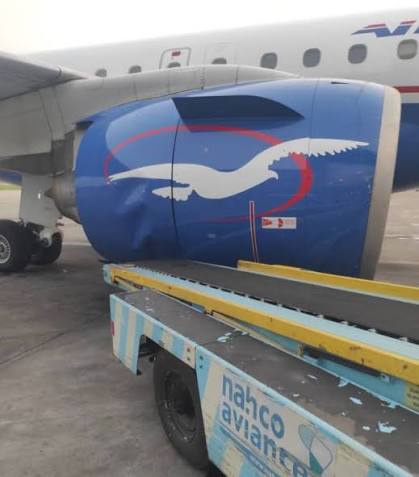
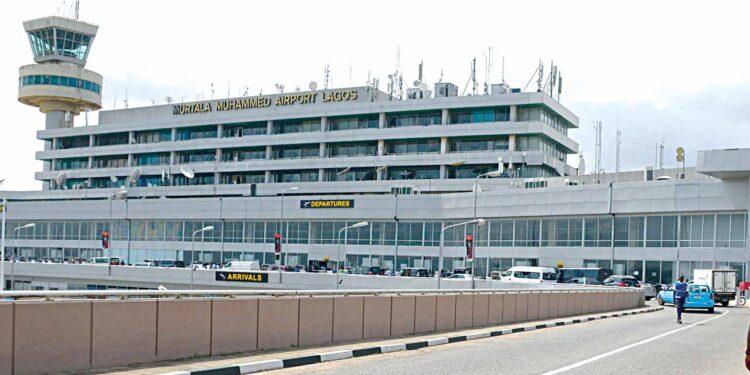
Air Peace has suffered a major operational setback after one of its Airbus A320 aircraft was severely damaged on the ground at the Murtala Muhammed Airport, Lagos, when a baggage conveyor belt vehicle operated by the Nigerian Aviation Handling Company (NAHCO) crashed into one of the aircraft’s engines shortly after passengers from Flight P47427 from Kano had safely disembarked. The airline said the impact left the aircraft completely unserviceable, forcing it out of operation and disrupting scheduled flights across its network. Air Peace apologised to passengers for the delays and possible cancellations, assuring them that alternative arrangements were being made while investigations into the incident continue. The carrier reaffirmed that safety remains its highest priority and pledged full cooperation with aviation authorities to determine the cause of the accident and prevent a recurrence. Reacting to the incident, the Nigeria Civil Aviation Authority (NCAA) said it had already intensified oversight of ramp and ground handling operations through the establishment of a dedicated Ground Handling Safety Oversight Department. Director of Aerodrome and Airspace Standards, Ahmed Abba, described the occurrence as a stark reminder that safety begins on the ground, not just in the air. He disclosed that the Authority will next week convene a stakeholders’ harmonisation meeting to strengthen regulations, improve ramp safety standards and align Nigeria’s ground handling operations with International Civil Aviation Organization (ICAO) best practices.

Scroll to Top