
Aviation News

Aviation News

Breaking!! AFDB appoints Keyamo to champion aviation revolution in Africa

The African Development Bank (AfDB) has appointed Nigeria’s Honourable Minister of Aviation and Aerospace Development, Festus Keyamo as the African Champion for its newly launched $7 billion Integrated Aviation Transformation Programme for Africa (IATP). The Minister during the signing of Letter of Intent (LOI) with the Bank at Congo Brazzaville yesterday said the appointment positions Nigeria at the forefront of a continent-wide aviation renaissance aimed at unlocking Africa’s vast air transport potential through strategic investments, policy coordination, and infrastructure modernization. Keyamo described the role as a historic mandate to drive the long-awaited transformation of Africa’s aviation sector and accelerate the continent’s integration into the global air transport economy. He stated that, the AfDB personally designated him to champion the implementation of the IATP, a $7 billion continental platform designed to mobilize private, institutional, and concessional financing for aviation development across Africa. “This is not merely a title; it is a call to action,” Keyamo stated. “It is a responsibility to drive tangible and transformative aviation projects that will redefine connectivity, safety, efficiency, and economic growth across Africa.” Speaking further on the significance of the appointment, Keyamo noted that the AfDB acknowledged his unwavering commitment to aviation reform and the strategic policy direction currently being implemented in Nigeria’s aviation sector. He emphasized that Africa’s aviation industry remains significantly underdeveloped despite the continent accounting for nearly 18 percent of the world’s population while contributing less than 3 percent of global air traffic. “This imbalance is unacceptable and must change,” he said. The statement signed by the Director, Press and Public Affairs Chindaya Ahmadu Audu Adamu stated that as champion of the programme, Keyamo will lead continental advocacy efforts, coordinate policy alignment among member states, and support the deployment of the $7 billion investment package targeted at modernizing airport infrastructure, enhancing aviation safety, improving operational efficiency, and strengthening regional connectivity across Africa. He further stated that Nigeria would serve as both a model and catalyst for the initiative, leveraging its strategic market size, ongoing sectoral reforms, and growing investor confidence to attract the first wave of aviation investments under the programme. “This appointment is a testament to what intentional leadership can achieve,” the Minister said. “I accept this challenge not only on behalf of Nigeria but for every African nation yearning for seamless, safe, efficient, and world-class aviation services. The era of Africa being an afterthought in global aviation is over.”
Aviation News

Nigeria sets up aircraft leasing arm for carriers

The Nigerian government has approved the establishment of a privately funded aircraft leasing company aimed at easing local airlines’ access to aircraft and reducing the country’s chronic flight disruptions, aviation minister Festus Keyamo announced. In a statement, he said the Federal Executive Council on April 30 approved the creation of the Nigeria Aircraft Leasing Company, an incorporated special purpose vehicle (SPV) that will be commercially operated and fully privately funded, with no obligation for direct federal investment. The government will instead provide sovereign guarantees to international lessors and manufacturers to lower investor risk and facilitate asset repossession, while holding equity through Ministry of Finance Incorporated (MOFI). First announced in November 2025, the leasing company will act as a central vehicle to acquire or lease aircraft globally for Nigerian operators, allowing domestic airlines to lease aircraft through a single entity backed by government support. Keyamo said the initiative is intended to strengthen local airlines’ ability to serve domestic routes, which have been plagued by delays and cancellations, and improve their competitiveness against foreign carriers that dominate the Nigerian market. USD7 billion initiative Keyamo has also been appointed “champion” of the African Development Bank’s Integrated Aviation Transformation Programme for Africa (IATPA), a USD7 billion continent-wide platform aimed at modernising the continent’s aviation sector and mobilising investment through a proposed Pan-African Aviation Financing Platform. A letter of intent between the bank and Nigeria is due to be signed at the lender’s annual meeting in Brazzaville on May 28, according to a Nigerian government statement. It was not immediately clear if, and by how much, the AfDB would bankroll Nigeria’s new aircraft leasing company. Speaking at a news conference ahead of the Brazzaville conference, Keyama said: “I should announce for the first time that the African Development Bank has keyed into this initiative, because they have an integrated programme for this kind of thing in Africa, and Nigeria is one of their pilot countries.” Since becoming aviation minister in 2023, Keyamo has been credited with pushing reforms aimed at improving Nigerian airlines’ access to aircraft financing, including signing practice directions in September 2024 for the Cape Town Convention to restore lessors’ confidence and so lower leasing costs, addressing blocked airline funds, reviewing airport concession plans, and advocating stricter enforcement of bilateral air service agreements to support local carriers. The AfDB has already begun supporting aircraft financing initiatives, most notably through a January 2026 letter of intent with Air Côte d’Ivoire to explore affordable aircraft acquisition financing for African airlines under the IATP. The arrangement includes work on financing structures for fleet acquisition and renewal, alongside training and sustainability programmes, and has been described as an early milestone of the bank’s continent-wide aviation strategy. The African Export-Import Bank (Afreximbank) planned to launch a pan-African aircraft leasing platform in 2025, but by March 2026 the platform was not yet up and running, according to ch-aviation research. African airlines in general face high leasing costs due to their weaker currencies, fragmented regulation, weak profitability, skills shortages, blocked funds, and limited intra-African connectivity, which continue to hamper the sector despite Africa’s potential presented in its growing population and urbanisation.

Aviation News

Aviation Fuel: Domestic Airlines Imperilled Despite Hike in Flight Ticket

There are strong indications that some Nigerian airlines are in danger of going under unless the price of aviation fuel is reduced. Aviation industry experts have observed that despite the increase in base fair to N200,000 by some airlines, the situation remains very dire for them High cost of flight ticket, experts said, cannot help operators who are already steeped deeply in debt. Their cost of operation, he stated, exceed their revenue since March 2026, when the price of crude oil went up due to Iran-US war. The experts were of the view that as long as the airlines buy aviation fuel, known as Jet A1 between N1, 650 and N2, 037 per litter, they would continue to face fiscal uncertainty. They also noted that the high cost of flight ticket would drastically reduce the number of air travellers after the Sallah festivities, regretting that the financial challenge airlines are facing is already affecting other organisations in the aviation industry, including aviation agencies, handling companies and other service providers. Industry analyst and second Vice President of Aviation Round Table, Dr. Alex Nwuba, said the escalating cost of Jet A1 fuel takes nearly half of total airline operating expenses and has forced domestic carriers to raise fares to levels that many Nigerians can no longer afford. “Unlike international carriers, domestic operators have a much smaller fuel footprint, consuming approximately 600,000 litres of Jet A1 per day,” Nwuba said, adding that as long as the cost of aviation fuel is still high, airlines will continue to accumulate debts because the revenue they are generating cannot defray their cost of operation. Recently the federal government pledged to forgive airlines 30 per cent of the debts they owe aviation agencies in a bid to remedy the situation According to the statement, “As an interim response, President Bola Ahmed Tinubu graciously granted us a 30 per cent concession. We are still waiting for the government decision on the other aspects of the AON intervention request. While the AON acknowledges and appreciates this gesture, we had appealed for a meeting with Mr. President to discuss further reliefs, a request that is yet to be granted.” Nwuba said Aviation Round Table, has developed and is putting forward the Fuel‑for‑Stability Programme (FFSP) as a policy recommendation to the federal government. “The federal government’s proposal to forgive 30 per cent of airline debts—estimated at roughly N200 billion—would eliminate N60 billion in receivables owed to Federal Airports Authority of Nigeria (FAAN), Nigerian Airspace Management Agency (NAMA), Nigeria Civil Aviation Authority (NCAA), Nigeria Meteorological Agency (NIMET) and other aviation service providers. This is not only insufficient but counterproductive. “It weakens the financial position of aviation agencies, encourages future non‑payment, and fails to address the structural cause of airline distress: the cost of fuel.  Without reducing the price of Jet A1, airlines will continue to accumulate new debts even after old ones are forgiven. The write‑off becomes a temporary relief that does not prevent future insolvency,” he said. Nwuba further explained that the Fuel‑for‑Stability Programme (FFSP), as recommended by the Aviation Roundtable, offers a more sustainable and economically rational solution, remarking that the programme is designed exclusively for domestic operators and implemented strictly through local refiners. Commenting, the Managing Director and CEO of Aero Contractors, Captain Ado Sanusi, said that for the aviation industry to survive, government should adopt policies aimed at long term survival of the airlines. He frowned at the many taxes the airlines pay, which he said erodes their chance of operating profitably. He noted that government must ensure that the airlines survive, considering the critical role they play in the economic development of the country. Sanusi reiterated that aviation agencies should not rely on airlines to generate revenues, hence the high taxation and charges levelled at the airlines which impinge on their survivability. To have robust aviation industry, he added, government must not see aviation agencies as revenue generating concerns but organisations that thrive on debt recovery to sustain their services. Sanusi observed that the aviation industry is facing a systemic problem, which must be addressed in order to have a progressive sector. He emphasised that government must enunciate policies that will ensure the sustainability of operating airlines successfully in Nigeria and it is only then that domestic airlines will start growing. “Aviation agencies are not supposed to depend on the money paid to them by the airlines. Even if the Nigerian economy improves in the future, the idea of airlines paying the agencies for their sustenance is not sustainable,” Sanusi further said.

Aviation News

Nigeria’s Rano Air halts routes citing 300% fuel spike

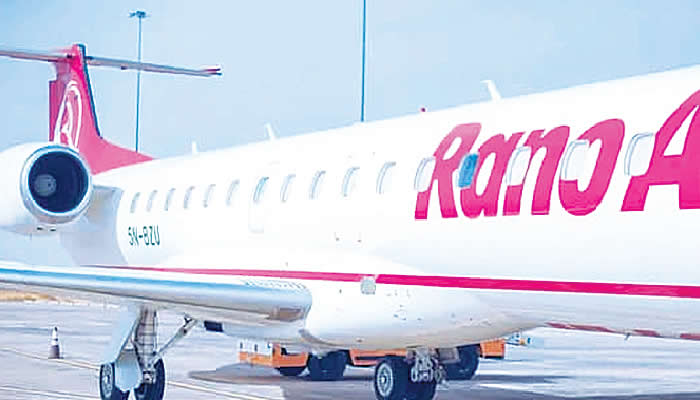
Rano Air (R4, Kano) has announced the suspension of several routes rendered “commercially unsustainable” following a 300% price spike of Jet A1 aviation fuel in Nigeria. In a statement, the airline said the hike had made keeping up certain routes “extremely challenging” and that scaling back operations was necessary to ensure the airline could continue to provide “safe, reliable and sustainable operations.” Rano Air did not name the routes to be paused, but confirmed that the suspensions are temporary. “Operations on the affected routes will resume as soon as the situation improves and becomes operationally viable for the airline,” it stated. According to ch-aviation data, Rano Air operates a fleet of five E145s, of which three are currently active. Rano Air previously operated 10 domestic routes, but according to ADS-B data, it is now focusing on the higher-yield triangular trunk routes between its base at Kano and Abuja and Lagos, while services on thinner destinations have been scaled down, including to Kaduna, Gombe, Maiduguri, Bauchi, Sokoto, Katsina, and Warri.

Aviation News

Airlines project stability after Dangote fuel price cut

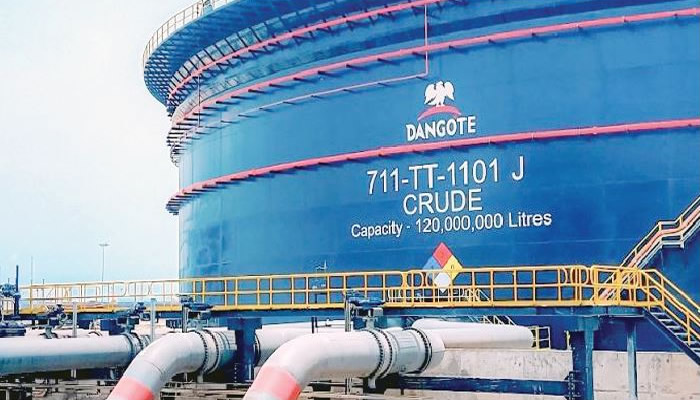
Domestic airline operators in Nigeria have welcomed the reduction in aviation fuel price by the Dangote Petroleum Refinery, describing the move as a major relief for carriers battling rising operational costs and mounting financial pressure. The operators said the reduction in the price of aviation fuel, also known as JetA1, would not only ease the burden on airlines but could also eventually translate into improved ease of doing business for the entire ecosystem if the trend is sustained. Speaking with our correspondent about the development, United Nigeria Airlines spokesperson, Uloka Chibuike, said domestic airlines had long been operating at unsustainable margins despite public perception that ticket prices had increased significantly. Chibuike said, “There was never an increase in airfares. If airlines still have ticket classes of N95,000, it simply means there was never any increase. Instead, airlines have been operating at a loss.” The optimism among operators comes amid weeks of growing concern over the sharp rise in aviation fuel prices in Nigeria, which airlines said had increased disproportionately compared to global crude oil prices. Under the umbrella of the Airlines Operators of Nigeria, domestic carriers had repeatedly warned that the rising cost of Jet A1 was becoming unsustainable, noting that while global crude prices recorded moderate increases of about 30 per cent, aviation fuel prices in Nigeria surged far beyond that margin. The operators said they had continued to absorb the rising costs over the past four weeks in order to sustain flight operations nationwide, despite worsening financial strain and persistent foreign exchange challenges. Recently, Ibom Air raised fresh concerns over the deepening crisis, revealing that it now spends about N7.6 million to fuel a single flight. The disclosure underscored the scale of pressure confronting domestic carriers, with industry stakeholders warning that continued increases in aviation fuel prices could lead to severe disruptions in flight operations if urgent interventions are not sustained. However, the UNA publicist added that the reduction in fuel prices would provide much-needed breathing space for operators who have struggled to maintain services amid skyrocketing costs. “The reduction, perhaps, will give operators some breath,” he added. Also sharing his view, the Managing Director of Aero Contractors, Capt Ado Sanusi, described the development as a welcome relief across the aviation value chain, noting that passengers would ultimately benefit from lower fuel costs. “Any price reduction is a relief to operators and everybody within the ecosystem. Because as the prices of fuel reduce, the flying public will also experience the same relief,” Sanusi said. He commended the refinery for what he described as transparent pricing, saying the publication of fuel prices on its website would help curb arbitrary market practices. Sanusi added that transparency in pricing would discourage fuel marketers from exploiting airlines through arbitrary charges. He stated, “One of the things we have been advocating is transparent pricing, and we thank Dangote Refinery for being very transparent. It publishes prices on its website for everybody to see and compare with what is obtained in other parts of the world. “I don’t think marketers will be able to take undue advantage anymore. If it was done in the past, it can also be checked now because the prices are publicly available and everybody already knows what the rates are.” Source – Punch

Scroll to Top