Aviation News

Aviation News

Aviation consultant urges FG to intensify private airstrips, airports monitoring

More facts have emerged on the controversial private jet incident that landed on an uncompleted road in Ogwashi-Uku, Asaba, Delta State, last week. Searches on the site of the Federal Aviation Administration (FAA) indicated that the aircraft is owned by an American company, Best Aircraft Deals LCC in Salt Lake City, United States of America (U.S.) and operated in Nigeria by VMO Aero Limited. The aircraft was manufactured in 1988 by Canadair Ltd with the serial number: 5021 and currently carries the registration number: N989BC. A source close to the aircraft company told The Guardian that the captain and the co-pilot were both Americans at the time of the incident. The incident, which involved a Bombardier Challenger CL-601 business jet, has triggered multiple investigations by aviation regulators, security agencies, and accident investigators, following revelations that the aircraft landed on a roadway and later departed the scene without regulatory clearance. Speaking on the issue, aviation security consultant Olufemi Adeniji, in an interview with The Guardian over the weekend, called for a comprehensive security investigation involving all individuals connected to the flight. He also charged the Federal Government to intensify vigilance on private airports and airstrips across the country, especially at this time of a high insecurity situation in the country. Adeniji insisted that the unauthorised departure of the aircraft from the road raises serious questions about the authorisation of the takeoff and whether standard procedures were deliberately ignored by the aircraft’s four crew. Adeniji further questioned how a fixed-wing aircraft could land on a public roadway, discharge passengers, and subsequently took off again without attracting immediate intervention from security agencies. He argued that if the aircraft had crashed during the unauthorised departure or landing, lives and property within the surrounding communities could have been impacted.

Aviation News

Guinea-Bissau Seals Deal with United Nigeria Airlines to Launch National Carrier, Air Bissau

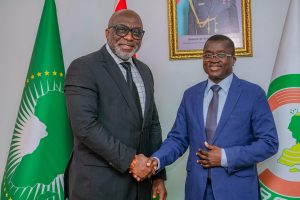
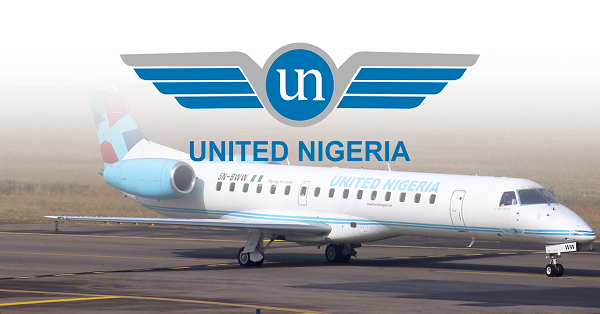
The Government of Guinea-Bissau has signed a Memorandum of Understanding with Nigeria’s United Nigeria Airlines to establish a national carrier, AIR BISSAU, for the West African country, to boost its aviation industry and reduce its dependence on foreign airlines. The agreement, signed in Bissau, the capital of Guinea-Bissau, was disclosed in a statement made available by the airline on Sunday. The MoU was signed by Guinea-Bissau’s Minister of Transport, Telecommunications and Digital Economy, Dr Florentino Pereira, and the Executive Chairman of United Nigeria Airlines, Prof Obiora Okonkwo. Recall that Nigeria currently has no national carrier despite repeated calls by industry stakeholders for its establishment to facilitate reciprocal flight rights to foreign destinations, particularly the United States. Attempts to establish a national carrier through a partnership with Ethiopian Airlines also hit a brick wall following lawsuits by the Airline Operators of Nigeria, an association for which Okonkwo once served as spokesperson. Other factors that contributed to the failure of the national carrier project included deep-seated political issues, allegations of fraud and a controversial ownership structure. In the latest agreement between the Nigerian airline and Guinea-Bissau, which was made available to our correspondent, both parties will “explore a comprehensive cooperation framework aimed at establishing a fully operational national airline with Osvaldo Vieira International Airport in Bissau serving as the operational base and hub for the carrier’s initial routes.” For decades, Guinea-Bissau has relied largely on regional carriers and charter services to connect its citizens and businesses to other countries. A key component of the MoU is the creation of a joint venture company that will operate as Guinea-Bissau’s national airline. Under the arrangement, United Nigeria Airlines will provide the majority of the financial investment, operational expertise, aircraft and management for the new carrier. Extending beyond commercial operations, the Nigerian carrier is expected to “provide and operate an executive jet for the use of the President and Government of Guinea-Bissau.” To facilitate the project, the government pledged to “facilitate the registration and licensing of the new national carrier in line with domestic laws and streamline authorisation processes through both the Civil Aviation Authority of Guinea-Bissau and the Civil Aviation Authority of Nigeria.” Guinea-Bissau also agreed to designate AIR BISSAU as its official national carrier, granting it “full rights over all existing Bilateral Air Services Agreement entitlements.” According to the MoU, the designation would give the airline “significant leverage in securing route rights and authorisations to regional and international destinations,” described as an important commercial and diplomatic asset. The government further committed to ensuring that Osvaldo Vieira International Airport receives the infrastructure support required for the airline’s operations, including access provisions, ground support services and assistance with customs, immigration and security compliance. Additionally, Guinea-Bissau pledged to invest in the establishment of the airline and create mechanisms that would protect and incentivise investment through the existing Investment Code and applicable tax frameworks. As part of efforts to develop local aviation expertise, United Nigeria Airlines plans to train “qualified Guinean nationals including pilots, cabin crew, and technical maintenance personnel” and employ local staff wherever feasible in line with government employment policies. The MoU makes it clear that operational control of the airline will remain with the Nigerian carrier. “For the purposes of safety, reliability, and efficiency, the overall management, operational control, and general direction of the new airline will rest with the management team of United Nigeria Airlines,” the statement noted. Both parties also agreed to provide full liability and hull insurance coverage for all flight operations, conduct annual independent safety and maintenance audits, and establish asset protection mechanisms for investors. The agreement takes immediate effect and will remain valid for 18 months or until a substantive joint venture agreement is concluded.

Aviation News

United Nigeria Airlines surprises passengers with latest Samsung phones

One of Nigeria’s leading carriers, United Nigeria Airlines, on Monday, June 1, rewarded its passengers with the recently released Samsung Galaxy phones in the Awesome Row partnership it has with the phone company. The winners, Hamid Ibrahim, Chidi Chinedu, and Gbenga Bello, were among passengers selected through an onboard lucky dip on the Lagos–Abuja and Abuja–Lagos flights on the day. Passengers also got exclusive in-flight access to the new Samsung Galaxy A57 and A37 and winners emerged from the live experience. Speaking on the outcome of the initiative, UNA’s Chief Commercial Officer, Dayo Olawuyi, expressed delight at the success of the promotion, saying that it reflects the airline’s deepest commitment to its passengers and the values that drive the brand. He said: “At United Nigeria Airlines, we fly to unite. Every route we operate, every flight we run, is about bringing Nigerians together, whether for business, work or family functions. “This partnership with Samsung is an extension of that mission because they share our belief in delivering the very best to Nigerians, and together, we wanted to create a moment that passengers would never forget. We are very thrilled for Hamid, Chidi, and Gbenga, and we congratulate them on their wins. “We are very passionate about ensuring our customers have the best experience, and that is exactly the kind of thing we want people to associate with flying United Nigeria Airlines.”

Aviation News

Breaking!! Aviation operators, regulators locked in debt row

In the last couple of days, the aviation industry in Nigeria has been experiencing drama in ‘seasons and episodes’ between the regulators, the Nigeria Civil Aviation Authority, and operators under the umbrella of the Airline Operators of Nigeria. The fragile industry may be heading into another turbulent phase as tensions deepen between the Nigeria Civil Aviation Authority and domestic airline operators over disputed statutory charges running into billions of naira. What began as an internal regulatory directive quickly escalated into a public confrontation after the NCAA slammed 11 airlines with a controversial “No-Pay-No-Service” order over alleged unpaid remittances linked to the five per cent Ticket Sales Charge and Cargo Sales Charge. The storm revolves around some of the country’s largest carriers, such as Air Peace, Ibom Air, Arik Air, United Nigeria Airlines, Max Air, ValueJet, among others, who have been accused by the regulator of failing to remit statutory payments. An internal memo dated 22 May 2026 directed all NCAA departments to withhold regulatory and administrative services from the affected airlines pending financial clearance from the Directorate of Finance and Accounts. “The DGCA has directed that no directorate should render any service to the above airline without financial clearance from the Director of Finance and Accounts,” the memo stated. The order immediately sent shockwaves across the industry, triggering fears of disruptions in flight schedules, operational bottlenecks and fresh uncertainty for thousands of passengers relying daily on domestic air travel. Defending the decision, Director-General of the NCAA Chris Najomo insisted the regulator could no longer ignore the non-remittance of charges critical to sustaining aviation oversight and safety functions. According to the NCAA, the controversial five per cent Ticket Sales Charge and Cargo Sales Charge are statutory funds collected by airlines on behalf of the aviation ecosystem to support safety oversight, personnel training and economic regulation. Industry insiders say the regulator’s position reflects growing concerns within the agency over dwindling financial liquidity and the implications for Nigeria’s compliance with international aviation standards. Although the NCAA acknowledged the severe economic realities confronting local airlines, it maintained that delayed remittances could undermine its ability to sustain risk-based safety surveillance and meet global oversight obligations. But barely 24 hours after issuing the hardline directive, the regulator backtracked and announced a temporary suspension of the “No-pay-No-service” order. According to them, the sudden reversal followed intense consultations within the industry. “This decision follows extensive consultations within the sector and a careful review of current operating realities, particularly the rising cost of aviation fuel and its impact on airline operations and overall industry stability,” the NCAA said in a follow-up statement. The body also stressed that the suspension did not amount to debt forgiveness, stating, “It is important to state clearly that this suspension does not represent a cancellation, waiver, or forgiveness of outstanding statutory financial obligations.” Yet, rather than calming tensions, the NCAA’s actions opened another chapter in the long-running battle between regulators and operators over the controversial Ticket Sales Charge. Within hours, the Airline Operators of Nigeria fired back strongly, accusing the NCAA of misleading the public and attempting to regulate airlines through media pressure. In one of its strongest statements in recent years, the umbrella body for domestic airlines declared that its members do not owe the NCAA “a dime” in regulatory service charges. The AON aims to clarify recent media publications attributed to the NCAA, which depicted member airlines as owing the regulatory agency for services provided to operators, stating, “These publications are not only misleading but represent a worrisome and unacceptable attempt to use the media to regulate operators outside the established regulatory framework. The AON condemns such behaviour in the strongest possible terms.” The airline operators argued that every regulatory service rendered by the NCAA, from aircraft inspections to crew licence validations and documentation renewals, is all paid for upfront before approvals are granted. The AON stated, “For clarity, the NCAA issues an invoice for every regulatory service it provides. Operators are then required to settle all such invoices in advance. “In practice, no domestic airline in Nigeria receives NCAA regulatory services without first making the full payment of invoices issued to it by the NCAA.” According to the operators, the real issue revolves around the five per cent Ticket Sales Charge, which they insist is fundamentally different from regulatory service fees.

Aviation News

United Nigeria Airlines Boss Okonkwo Gets Dual Honour at ABUAD’s 14th Convocation

The Executive Chairman of United Nigeria Airlines, Prof. Obiora Okonkwo, has been selected to deliver the 14th Convocation Lecture of Afe Babalola University (ABUAD) and will also be honoured with an honorary degree during the institution’s 2026 convocation ceremonies scheduled for October. The university announced that Okonkwo would present the convocation lecture on Tuesday, October 20, 2026, at the Alfa Belgore Multipurpose Hall on the ABUAD campus, while the conferment of the honorary degree will take place during the grand finale of the ceremonies on Wednesday, October 21. According to a letter signed by the university’s Chancellor, Afe Babalola, the institution’s Senate approved Okonkwo’s selection as the convocation lecturer in recognition of his accomplishments and contributions. The letter noted that Okonkwo would be one of three distinguished Nigerians to receive honorary degrees during the event. It explained that the awards are reserved for individuals whose lives and careers have made meaningful impacts on humanity. Commending the airline chief’s credentials, Babalola stated that his achievements and pedigree made him the ideal choice for the prestigious lecture. “With your antecedents and pedigree, you are certainly the right person to be invited to deliver the 14th Convocation Lecture,” the Chancellor wrote. He added that beyond the information available on the university’s platforms, the invitation would provide Okonkwo with the opportunity to witness first-hand what ABUAD has accomplished within 16 years in advancing quality and functional education in Nigeria, while also opening avenues for collaboration in the institution’s mission of service to humanity. The university further highlighted its strides in the education sector, noting that it has spent the last 16 years championing reforms aimed at transforming higher education through the institutionalisation of quality learning and practical education. Responding to the honour, Prof. Okonkwo expressed profound appreciation to the university and its founder, describing the dual recognition as a privilege. He said he was deeply humbled by the invitation and reaffirmed his admiration and respect for Afe Babalola, while confirming his participation in the ceremonies. “It is my absolute delight to accept both proposed designations as Convocation Lecturer and as a recipient of the University’s Honorary Degree,” Okonkwo said. He added that he regarded the recognition as an opportunity to join the league of eminent statesmen and technocrats who had graced previous convocation ceremonies and contributed to discussions on building a better society. According to him, he has always valued opportunities to serve humanity and considered the invitation another avenue to contribute to that cause. The forthcoming convocation ceremonies are expected to bring together academics, public figures, industry leaders and dignitaries from across the country, as ABUAD celebrates another milestone in its mission to promote excellence and innovation in higher education.

Scroll to Top