Aviation News

Aviation News

NCAA, Nigerian Army Sign MoU To Strengthen Canine Aviation Security

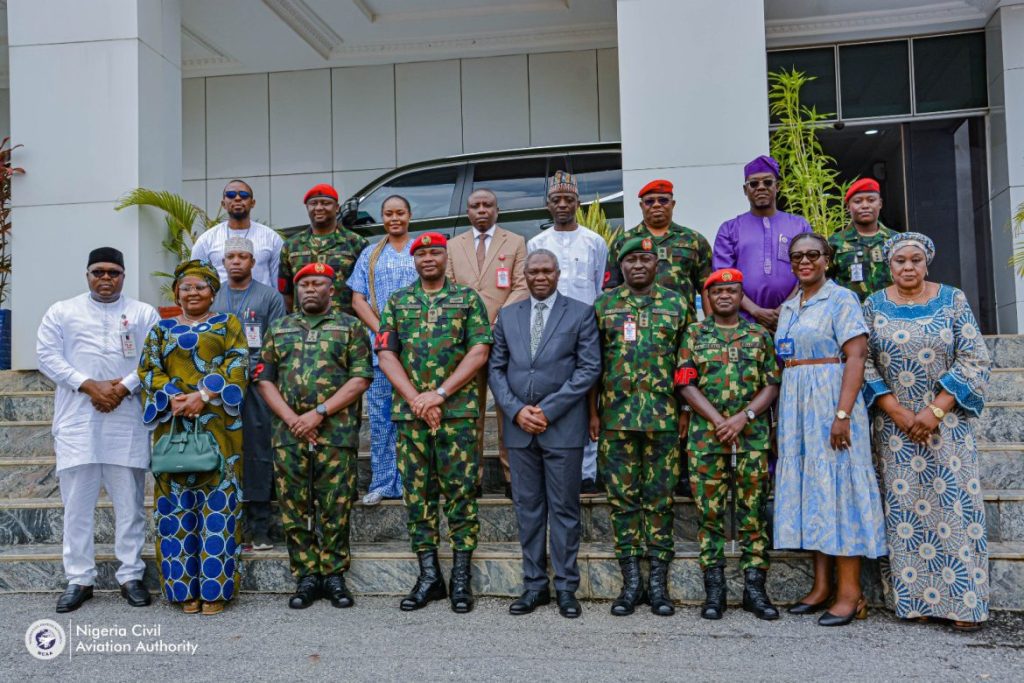
The Nigeria Civil  Aviation Authority (NCAA) and the Nigerian Army today, July 10, 2026, signed a Memorandum of Understanding to strengthen canine security operations and enhance  aviation security across Nigeria’s airports and critical aviation infrastructure. The ceremony took place at the Headquarters of the Nigerian Army Corps of Military Police, Shehu Musa Yar’Adua Barracks, Asokoro, Abuja. The MoU covers collaboration in the deployment, training, and development of canine units for aviation security, including Army qualification of canine trainers and operators, licensing by the NCAA, and training of NCAA inspectors. Representing the DGCA, Capt. Chris Najomo, the Director of Aviation Security, and Dr Ben Omogo, described canine operations as an indispensable part of modern aviation security, given emerging threats, and thanked the Nigerian Army for its collaboration in the drive to uphold security in Nigeria’s aviation sector. Representing the Chief of Army Staff (COAS), Lieutenant General Waidi Shaibu, the Provost Marshal (Army) Major General MO Erebulu, described canine units as a key force multiplier, noting that trained military dogs and handlers boost explosive detection, tracking, and search capabilities. He said the partnership reflects a shared commitment to safeguarding Nigeria’s aviation sector through professionalism and global best practices, and commended the NCAA for its resilience in bringing the initiative to fruition. Director of Corporate Services, Dr Rebecca Eyiuche, described the MoU as a strategic milestone that would strengthen institutional collaboration, foster knowledge transfer, and ensure long-term sustainability in aviation security. In attendance from the NCAA were Mrs Morenike Igbinoba, DGM Evaluation and Regulation; Mr Austine Okeze, DGM AVSEC; Mr Wole Oludare, DGM Quality Control; and Achi Christopher, AVSEC Inspector.

Aviation News

FG pushes fleet renewal, deepens aircraft partnership with bombardier

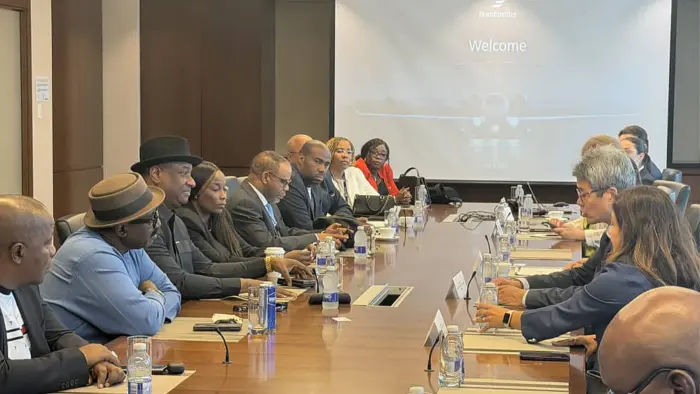
The Federal Government has reaffirmed its commitment to modernising Nigeria’s aviation sector through the acquisition of newer, safer and more fuel-efficient aircraft, while strengthening collaboration among aircraft manufacturers, financiers, lessors and indigenous airline operators. Minister of Aviation and Aerospace Development, Festus Keyamo, reiterated the commitment during a working visit to Bombardier’s Laurent Beaudoin Completion Centre (LBCC) in Montréal, Canada, where he led a delegation of Nigerian airline operators and senior aviation officials. A statement issued by the Minister’s Special Adviser on Media and Communications, Tunde Moshood, said the visit marked the conclusion of the Federal Government’s strategic engagement with the world’s leading aircraft Original Equipment Manufacturers (OEMs). According to the statement, Keyamo said the administration remains committed to creating an enabling environment that will allow indigenous carriers to expand and modernise their fleets. “Our objective has always been clear: to connect Nigerian operators directly with the world’s leading aircraft manufacturers and create opportunities that will strengthen indigenous capacity, modernise our fleets, improve safety, enhance operational efficiency, and ensure the long-term sustainability of our aviation industry,” the minister said. Moshood explained that the Bombardier visit forms part of the government’s broader fleet modernisation agenda aimed at encouraging Nigerian operators to acquire newer, safer and more fuel-efficient aircraft while strengthening partnerships with aircraft manufacturers, financiers and leasing companies. He added that the successful completion of engagements with Boeing, Airbus, Embraer and Bombardier underscores the commitment of the President Bola Tinubu administration to reposition Nigeria as Africa’s preferred aviation hub through strategic international partnerships, private-sector collaboration and sustainable industry reforms. According to the statement, the government’s comprehensive OEM engagement programme is expected to support fleet renewal, improve access to aircraft financing, expand technical cooperation, strengthen maintenance capabilities and enhance the competitiveness of Nigerian airlines. The minister was accompanied on the visit by the Director-General of the Nigeria Civil Aviation Authority (NCAA), Capt. Chris Najomo; Managing Director of the Federal Airports Authority of Nigeria (FAAN), Mrs Olubunmi Kuku; Nigeria’s Representative on the Council of the International Civil Aviation Organisation (ICAO), Engr. Mahmoud Sani Ben-Tukur; and other senior government officials and industry stakeholders. The statement noted that the visit fulfils a commitment made by Keyamo upon assuming office in 2023 to establish direct partnerships between Nigerian operators and leading global aircraft manufacturers. It added that with the conclusion of the Bombardier visit, the Federal Government has completed strategic engagements with the four major OEMs—Boeing, Airbus, Embraer and Bombardier—as part of efforts to support fleet renewal, improve aircraft financing opportunities and strengthen the long-term competitiveness of Nigeria’s aviation industry.

Aviation News

Sowore knocks United Nigeria Airline, NCAA over 11-hour flight delay

Presidential candidate of the African Action Congress, AAC, Omoyele Sowore, has criticised United Nigeria Airlines and the Nigeria Civil Aviation Authority, NCAA, over the alleged poor treatment of passengers affected by a prolonged flight delay. Sowore said several passengers scheduled to travel from Lagos to Owerri on United Nigeria Airlines were left stranded at the airport for more than 11 hours without proper information or adequate support from the airline. In a statement posted on his official page, the activist said he met some of the affected passengers after they had spent the entire day at the airport waiting for their flight.According to him, the airline repeatedly shifted the departure time without giving clear explanations to travellers who had been waiting for hours. “Yesterday, I met several passengers scheduled to travel from Lagos to Owerri on United Nigeria Airlines. They had been abandoned to their fate after spending the entire day at the airport,” Sowore said. “Some had been stranded for more than 11 hours, while the airline repeatedly postponed their departure time without providing clear explanations or adequate care.” Sowore said the incident reflected a deeper problem in Nigeria’s aviation sector, where passengers are often subjected to long delays, poor communication and inadequate care by domestic airlines. He accused the NCAA of failing to properly regulate domestic operators and protect passengers from what he described as irresponsible conduct. “Although we had a cordial interaction, that does not prevent us from once again stating the obvious: Nigeria’s aviation regulators, especially the Nigeria Civil Aviation Authority, have failed in their responsibility to rein in the irresponsible conduct of domestic airlines,” he said.

Aviation News

Airline’s Direct Flight Cuts Nigeria-Brazil Travel Time To 7 Hours

Air Peace said on Saturday that Brazil’s National Civil Aviation Agency (ANAC) has approved it to operate scheduled air services between Nigeria and Brazil. The airline said that ANAC Ordinance No. 19.449/2026 authorised the carrier to operate regular passenger, cargo and mail services between Brazil and destinations across its international network. The approval, it said,  allows for direct flights that would reduce travel time between the two countries from about two days with stopovers to roughly seven hours. Observers say a direct route could increase tourism, trade, investment and people-to-people exchanges, and expand cargo links between Nigeria, Brazil and the South American region. Air Peace has also applied for landing rights in Toronto and New York, and is finalising arrangements to resume flights to Jeddah and Guangzhou. The airline plans three weekly flights to Manchester and recently announced new regional services to Libreville, Conakry, Bamako and Douala starting August 1. Its current international network includes London, Barbados and a number of West African cities such as Accra, Freetown, Dakar, Banjul, Monrovia and Abidjan.

Aviation News

From airports to airlines, govs sink over N500b in new carriers, fleet

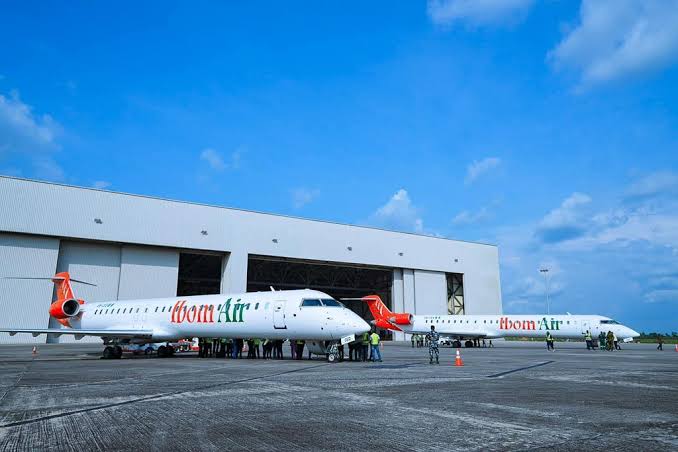
No fewer than four state governments have set up their own airlines in the last seven years, spending an estimated N500 billion in the carriers’ set-up and fleet acquisition. Apart from the four states, at least three others – Ogun, Anambra and Lagos – are at different stages of establishing their own carriers, with a promise to provide jobs for hundreds of their indigenes and Nigerian aviation professionals. The emergence of state-owned airlines has further increased the number of scheduled carriers to about 15, serving a stagnant 15 million passengers over almost a decade, except in 2021, when the country recorded about 16 million travellers locally and on international routes. The emerging trend has raised questions among aviation experts on the logic and viability of state governments investing billions in airline operations at a time of pressing basic infrastructure deficits, healthcare challenges, educational funding gaps, and rising expenditure. Moreover, only a handful of Nigerian states can survive on internally generated revenue (IGR), while the majority depend on monthly disbursements from the Federal Allocation Account Committee (FAAC) to pay salaries and cover other essential spending. Recall that the first state-owned airline was Imo Air, launched in January 2017 by the past Imo State Governor, Rochas Okorocha, in partnership with the former Dana Air. Despite the fanfare that accompanied the launch, the 10-year partnership deal between Dana Air and the Imo State government did not stay in the air long before it was eclipsed. And none of the plans itemised for the airline’s growth materialised. Okorocha had promised to acquire five airplanes under the Imo Air project within a year, while hundreds of the state’s indigenes were also promised employment. Today, state-owned airlines in the country include Ibom Air (owned by the Akwa Ibom State Government), Cally Air, backed by Cross River State, Enugu Air (the Enugu State Government’s carrier) and Bayelsa State’s newly launched Pioneer Airline. Ibom Air was launched in 2019, while Cally Air (operated by Aero Contractors and later ValueJet was unveiled in 2020. Also, Enugu Air (operated by XeJet) was established last July, while Pioneer Airlines was born last month. In 2019, the Akwa Ibom State government claimed to have spent over N10 billion on Ibom Air during its startup phase and fleet acquisition, including three leased Bombardier CRJ900 aircraft. Also, in February 2023, the Akwa Ibom State Executive Council approved a major capital injection of N14 billion to recapitalise the airline and prepare it for regional flight expansion across Africa. The state government’s overall investment has grown significantly over time as it has made heavy capital commitments, including a commercial agreement to purchase 10 brand-new Airbus A220-300 aircraft to drastically expand the airline’s operations, valued at several billion naira. For Cally Air, the Cross River State Government said its initial acquisition of two aircraft cost it about $32.5 million. It has also expanded its fleet with an additional two aircraft, but has not made the cost implications public. Also, the Enugu State Government spent an initial N62 billion on startup and fleet acquisition for the establishment of Enugu Air, while plans were laid to further expand the fleet in subsequent budgets. The initial fleet was financed in partnership with a commercial bank in Nigeria. The Bayelsa State government budgeted about N25 billion to purchase aircraft for commercial operations for Pioneer Air. The state government recently acquired two aircraft – ATR 72-600 turboprops for non-scheduled flight operations. The costs are not static, as state governments continue to increase their spending on state-owned airlines by ordering brand-new aircraft. Of all the state-owned carriers, only Ibom Air has opened its books to the public, while Enugu Air and others are projecting profits. At its maiden Annual General Meeting (AGM) in June 2025, Ibom Air reported N96 billion in revenue and N16.6 billion in operating profit, with net profit of N6.8 billion. Imo also planned to divest some of its shareholding and bring on board new investors. Earlier in the year, the Enugu State government projected a net profit of N60 billion for Enugu Air over four years. The state’s Commissioner for Transportation, Dr Obi Ozo, said that setting up the airline and acquiring the three Embraer jets through outright purchase cost the government between $28 and $40 million, with plans for a gradual increase in the fleet. Ozo also said that Enugu State owns 100 per cent stake in the airline with a management agreement with Xejet Airline. According to him, the airline forms part of the state’s broader economic development strategy aimed at transforming Enugu into a major investment and tourism destination. All the state governments have expressed optimism about the success of the new airlines and the projected contributions to their economic development. But despite the optimism, concerns continue to mount over whether Nigeria’s aviation market is large enough to sustain the growing number of operators. Also, experts are concerned about continuity and transparency, especially when the costs of acquiring some equipment are not made public by the State governments. The Managing Director of Mainstream Cargo Limited, Seyi Adewale, in an interview with The Guardian, said that Nigeria’s air passenger growth remained tied to the expansion of Nigeria’s middle class. According to him, the upper-income segment of the population already flies regularly and contributes a stable share of passenger traffic. Adewale stated that, irrespective of the number of indigenous airlines, as long as the middle class remained stretched, the sub-sector would continue to record low traffic. He, however, argued that the country needed more airlines to serve yet-untapped routes across the country. He said, “The good thing about it is that we are connecting the dots and expanding the potential and the capacity to move ourselves around. When the middle-class blossoms, you see a quick jump in that passenger number. It is because we are correcting our economy that it appears stagnant, but when we stabilise, and the middle class begins to grow, then you will see an increase in passenger numbers. “Now, why are they setting up airlines? Because they have seen models that work. It will not surprise you that […]

Scroll to Top